Which interior finish are you choosing?
No votes yet. Yours will be the first. · saved on this device
Loading...
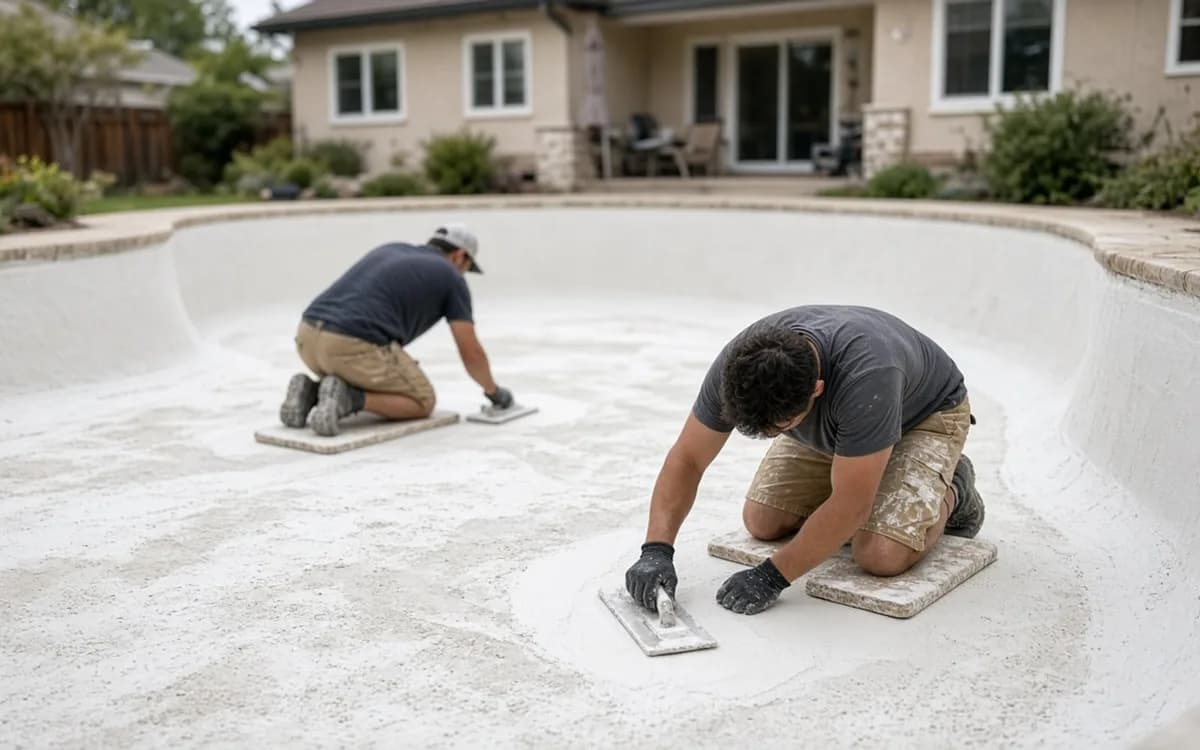
Pool Renewal Notes · Standard plaster vs Pebble aggregate
Choose plaster when you expect to sell within a few years, want the smoothest feel or have a fixed budget; choose pebble when you will keep the pool for a decade or more, live with freeze-thaw or hard water, or want fewer drain cycles. Shasta Pools gives plaster 5 to 10 years and pebble more than 20, which usually makes pebble cheaper per year of service.
The plaster-versus-pebble decision looks like a price question and turns out to be a time question. A plaster job costs less today and returns sooner; a pebble job costs more today and returns much later. Which is cheaper depends on how many years you will own the pool, how harsh the water and climate are, and whether the preparation under either finish is done well.
This page works through realistic owner situations, the cost across two decades, climate effects, resale, the common mistakes and the bid lines that separate a durable job from a short-lived one. For the full resurfacing process, see the resurfacing service page. The comparison table gives the short version; the sections below show how the factors play out on real pools.
Plaster is the classic smooth white or colored interior at Shasta's $3,500 to $6,500 with a 5 to 10 year life. Pebble is an exposed-aggregate finish at $6,000 to $15,000 with a 20-plus year life that hides mottling and staining. Pebble costs more per job and usually less per year; plaster is smoother and cheaper if the horizon is short.
| Factor | Standard plaster | Pebble aggregate |
|---|---|---|
| Upfront cost | $3,500 to $6,500 per pool (Shasta 2026); ~$5,500 per 1,000 sq ft (HomeAdvisor 2026) | $6,000 to $15,000 per pool (Shasta 2026); ~$6,500 per 1,000 sq ft aggregate (HomeAdvisor) |
| Lifespan | 5 to 10 years (Shasta 2026) | 20+ years (Shasta 2026) |
| Maintenance | Shows etching, stains and mottling; needs tight chemistry; acid washes shorten life | Hides mottling and stains; tolerates chemistry swings better; scale still forms |
| Appearance and feel | Smooth, uniform, classic; water reads light blue on white | Textured natural look, many colors; can feel rough on steps |
| Climate fit | Freeze-thaw and hard water shorten life | Better in freeze-thaw and hard water; fades less in sun |
| Time out of service | About 3 days of work plus cure (CostHelper) | Similar days; exposure step adds a day |
| Resale / ROI | Reads as maintained; buyers ask when it was done | Reads as upgraded; long remaining life is a selling point |
| Best for | Short ownership horizon, tight budget, smooth feel priority | Long ownership, freeze or hard water, fewer drain cycles |
Plaster wins when the horizon is short or the budget is fixed. Selling within five years, a $5,000 replaster presents a maintained pool in photos and the buyer inherits the next cycle. It also wins for owners who dislike texture on steps and benches, though a smoother pebble grade narrows that gap at higher cost. The resurfacing page covers the preparation that decides whether plaster reaches ten years or five.
Pebble wins over a long ownership. Two plaster cycles at $5,000 each over twenty years is $10,000 and two drain-and-startup events; one pebble job at $10,000 is one. In freeze climates and hard-water regions the lifespan gap widens, and a pebble surface forgives startup and chemistry errors that would mottle plaster. Run both through the calculator on your square footage.
Consider three owners. The first plans to list the house in two years and needs a pool that photographs well and passes a buyer's walk-around; plaster delivers that at the lowest outlay, and the next cycle belongs to the buyer. The second just bought a house with a twenty-year-old pool and plans to stay; pebble spreads its cost over most of that ownership. The third has young children who spend hours on the steps; comfort may argue for plaster or a smooth-grade aggregate there.
A fourth situation is common and often overlooked: an owner whose plaster is only six or seven years old and already rough. That usually signals aggressive water, loose startup care or a thin application, and simply repeating plaster may repeat the result. In that case, the stronger finish or a stricter startup plan matters more than the price gap between the two. Ask the contractor what they think shortened the last finish before choosing the next one.
Shasta Pools prices a whole-pool replaster at $3,500–$6,500 and pebble at $6,000 to $15,000, with a lifespan comparison of 5–10 vs 20+ years. Over twenty years, a plaster pool typically needs two or three resurfacings, each with a drain, refill, startup and weeks out of service. A pebble pool may need one. Pebble Tec, which makes the pebble finish it describes, gives plaster 5 to 15 years and pebble 20-plus, so even the manufacturer's generous plaster figure leaves one extra cycle over two decades. HomeAdvisor's draining line alone, $45–$65 per hour, repeats with each cycle.
The simple version: divide the job cost by years of service and add the per-cycle overhead. A mid-range plaster job repeated three times usually exceeds one mid-range pebble job plus maintenance, even before counting lost swim weeks. The math reverses only when the horizon is short or when a pebble job is priced at the very top of its range because of a premium product. Run both finishes through the calculator with your square footage. Add a drain, refill and startup to each plaster cycle when you compare.
| Twenty-year view | Standard plaster | Pebble aggregate |
|---|---|---|
| Job cost (Shasta 2026) | $3,500 to $6,500 each | $6,000 to $15,000 once |
| Lifespan (Pebble Tec, a pebble maker) | 5 to 15 years | 20+ years |
| Expected cycles in 20 years | Two to three | One, sometimes two |
| Drain, refill, startup events | Two to three | One |
| Weeks without swimming | Repeated each cycle | Once |
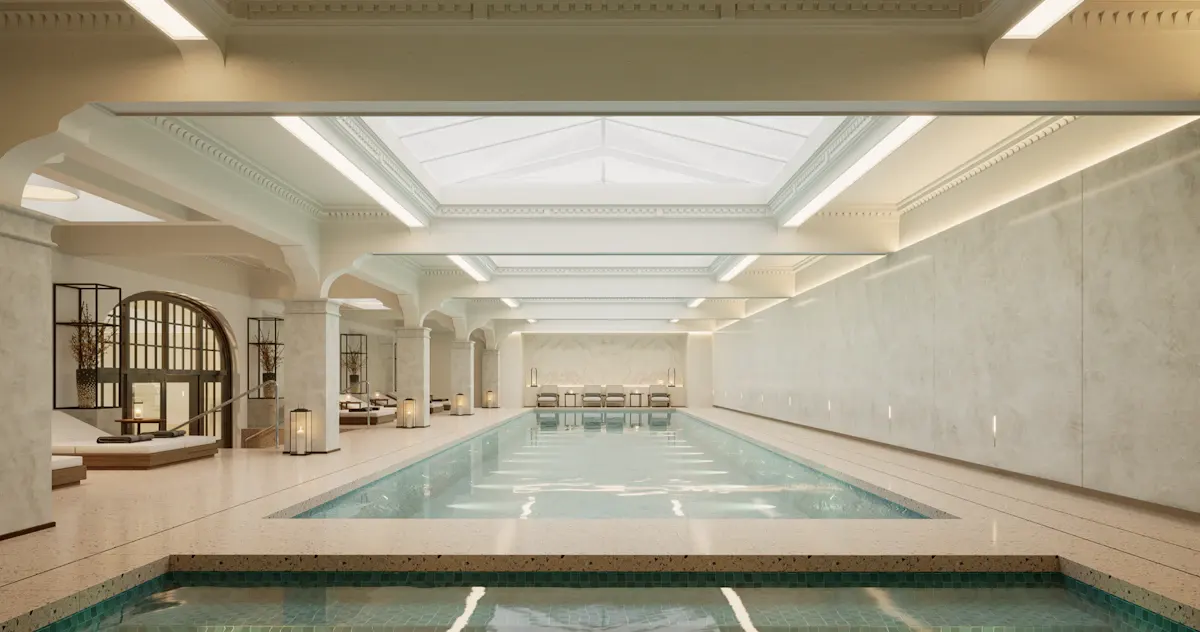
Freeze-thaw punishes plaster. Water enters fine cracks, freezes and expands, and a finish that came through summer smooth returns rougher each spring. Pebble's exposed aggregate tolerates that cycle better. In the Northeast, where our analysis of EIA's 2024 household survey found 94.88% of pool homes swim one to six months, against 41.9% nationally, each resurfacing also costs part of a short season, which strengthens the case for a longer-lived finish.
Hard water shifts the balance too. In the Southwest, calcium scale and aggressive startup chemistry can etch and discolor plaster quickly, and strong sun fades colored plaster. Pebble hides mottling and minor staining. In mild, soft-water regions with year-round use, the pattern for the 47.7% of U.S. pool homes that swim all twelve months by our EIA analysis, plaster performs closer to the top of its range, and the price gap matters more. The materials guide covers the other finish options in between.
Either, if it is fresh and even. Buyers and their inspectors mostly check whether the surface is smooth, stain-free and intact. A recent plaster job reads as a maintained pool; a recent pebble job reads as an upgrade with a long remaining life, which is a selling point in markets where pools are common. Opendoor puts a pool in good condition at 5–8% of home value, so either finish protects that equity. What hurts at sale is a rough, stained or patched surface, whichever material it is.
For a sale within two or three years, the cheaper finish usually gives the better return because the buyer does not pay for the extra decade of pebble life. Shasta Pools puts standard plaster's life at 5 to 10 years, which covers a short ownership horizon; on that horizon, plaster is the defensible choice. For a sale further out, pebble is more likely to still look good at listing, while plaster may need attention again. Document the product, date and startup care either way; buyers value paperwork.
Weak preparation is the leading one. A new finish bonded over delaminating plaster, unrepaired hollows or loose fittings fails early, whether it is plaster or pebble. The second is skipped startup care: plaster dust left unbrushed, water left out of balance, heating or salt added too soon. The third is resurfacing over an undiagnosed leak, which wastes the finish entirely.
Specific to pebble, choosing a coarse product for steps and benches leads to complaints about texture, and applying it too thin shortens its life. Specific to plaster, acid washing repeatedly to remove stains removes finish thickness each time. Both finishes also suffer when a pool is left drained for days before the new surface goes on. The replaster versus remodel comparison explains when fixing other problems in the same drain cycle protects the new finish.
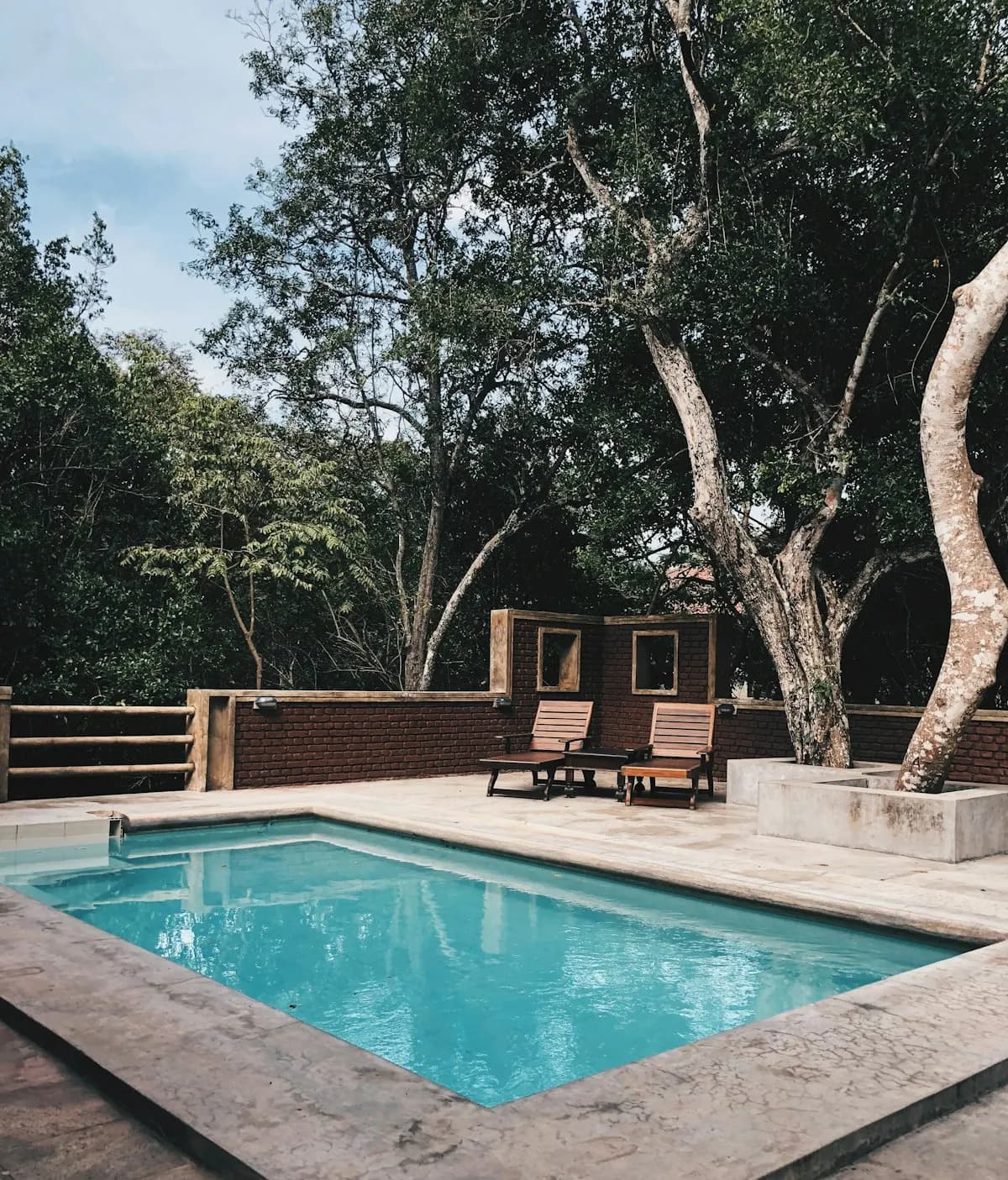
Many owners land between the two. Quartz keeps a smooth, plaster-like feel with better stain resistance and a longer cycle, and Shasta prices it at $7,000 to $10,000 with a 10 to 15 year life. Polished aggregate exposes the stone and then grinds it smooth, giving a pebble-like look with a comfortable surface for steps and benches, at a higher price than standard pebble and a 15 to 20 year life in Shasta's table.
These middle options make sense when the horizon is around ten years, when family members dislike texture, or when a bidder's pebble price sits at the top of its range. The overlap in Shasta's ranges means a standard pebble can undercut a premium quartz, so price both. The resurfacing cost guide shows how finish grade and preparation combine into a total.
Confirm the interior square footage is the same in both. Then compare preparation: chip-out or bond coat, the hollow allowance, and crack repair. Then the product: plaster mix and any color, or pebble manufacturer, product line and grade. Then startup days and written care conditions. Only then compare price. A pebble bid that includes a full chip-out may be worth more than a cheaper pebble bid over a bond coat.
Ask each contractor whether they recommend a smoother grade for steps and benches and what it adds. Ask to see a pool they finished with the same product at least three years ago. Send the same brief through the estimate request so the bids come back on the same basis.
Homeowner polls
No votes yet. Yours will be the first. · saved on this device
Shasta gives standard plaster 5 to 10 years and pebble 20 or more.
No votes yet. Yours will be the first. · saved on this device
Yes. Shasta prices quartz at $7,000 to $10,000 with a 10 to 15 year life; it is smooth like plaster, more stain resistant, and priced between the two. Many owners who want smooth feel and a longer cycle land there.
Over a sound, roughened plaster with a bond coat, yes, though a chip-out to gunite is the more durable preparation and many pebble manufacturers require it for their warranty. Ask which the proposal assumes.
No. Both are cementitious and raise pH during cure; pebble's exposed aggregate is less reactive at the surface once cured. Chemistry demand is driven by sun, bathers and water balance, not by the finish choice.
Often within about a week, once the water is balanced and early brushing has removed surface residue, but the finish continues curing for about a month. Most manufacturers ask owners to delay heating and salt until the cure period ends. Follow the product's startup sheet, since it is usually part of the warranty terms.
It hides stains better because its varied color and texture disguise small marks, and it resists etching better. It still collects scale if chemistry is off and can show metal stains from untreated fill water. Keep calcium, pH and alkalinity in range regardless of finish.
Yes. The next resurfacing would chip out or prepare the pebble surface and apply plaster, much like any resurfacing. Owners occasionally switch for a smoother feel. The preparation needs to account for the aggregate texture, which may add labor. Expect the proposal to describe how the pebble surface will be roughened or removed.
White plaster shows everything: mottling, stains, algae shadows and scale. It rewards careful chemistry and regular brushing. Pebble hides small lapses far better. If you do not want to watch chemistry closely, the more forgiving finish may be worth its price.
Standard pebble can wear suits faster on steps and benches, and some cleaners designed for smooth surfaces work less well on textured floors. Smoother pebble grades reduce both issues. Check that your cleaner is rated for aggregate surfaces before the new finish goes in.
The targets are similar because both are cementitious. New finishes of either type need tight balance during the first month to prevent scaling or etching. After cure, pebble tolerates small swings better, but neither benefits from low pH or low calcium for long.
 ComparisonReplaster only vs Coordinated remodel
Replaster alone when the interior is the only diagnosed problem and the tile, coping, deck and equipment are sound.
 ComparisonResurface the deck (overlay) vs Replace the deck
Resurface a pool deck when the slab is flat, drains away from the house and pool, and has only surface wear or hairline cracks.
 ComparisonElectric heat pump vs Natural gas heater
Choose a heat pump if you heat the pool steadily through a warm season, especially in the South, with a cover and a variable-speed pump.
 ComparisonConvert to saltwater vs Stay on chlorine
Convert to salt when the pool has a long season, compatible heater and fixtures, and salt-tolerant coping, and when you value softer water and fewer chemical purchases.
ComparisonWaterline retile only vs Full interior retileRetile only the waterline when the interior finish is sound and the goal is to fix popped, scaled or dated tile; it costs Shasta Pools' $25 to $30 per linear foot with the water lowered, not drained.
 Service guidePool Resurfacing
Pool resurfacing replaces a worn interior finish on a concrete pool with new plaster, quartz, pebble aggregate or tile, or replaces the liner on a vinyl pool.
 Service guideTile & Coping Replacement
Tile and coping replacement renews the waterline band and the edge cap on the bond beam after the cause of the failure is understood.
 Service guideEquipment Upgrades
Equipment upgrades replace or add the pump, filter, heater, sanitizer, lights, automation and safety hardware on an existing pool.
 Service guideComplete Pool Remodel
A complete pool remodel coordinates several diagnosed repairs and desired changes, typically interior finish, tile and coping, deck, equipment and features, into one sequence with one drain cycle and one contractor accountable.
 Free toolPool resurfacing and renovation cost calculator
Size, material tier and complexity in, a realistic budget range out.
 Free toolPool renovation quiz: nine facts to know before the first proposal
9 questions that show what you already know and what to check next.
 Free toolPool renovation polls
See what other planners chose and add your vote.
Tell us the size, the condition of what is there now, and what you want to change. Pool Renewal Notes passes your request to independent local professionals, who reply with written, no-obligation estimates. The service is free to use.