Which interior finish are you choosing?
No votes yet. Yours will be the first. · saved on this device
Loading...
Pool Renewal Notes · Materials
The right renovation materials depend on how long you will own the pool, your climate and water, and how the pool is used. Plaster is cheapest but shortest-lived, pebble lasts longest among cementitious finishes, frost-rated porcelain is the dependable waterline tile, dense stone or precast suits salt pools, and a variable-speed pump is the default equipment choice. Heater fuel and sanitizer depend on season length.
By Pool Renewal Notes editorial · Updated 2026-09-25
Material choice in a pool renovation is less about taste than about exposure. Every surface sits in chemically treated water, in sun, and in many regions through freeze and thaw. A finish that is beautiful for one season and rough by the third is not a bargain, and a coping stone that pits in salt water becomes a repair within a few years. This guide ranks options by where they hold up, not by how they look in a showroom.
It covers the interior finish, the waterline band, the coping and deck, and the equipment pad, in that order. Prices here are brief; the cost guide and the per-service cost pages carry the full ranges. For head-to-head decisions, each section links to the matching comparison. Where a figure comes from a manufacturer or installer, the text names it so you can weigh the source.
Shasta Pools' 2026 lifespan table is the clearest way to think about it: 5–10 vs 20+ years, with quartz at 10 to 15 years and polished aggregate at 15 to 20. River Pools says concrete pools need resurfacing every 10–15 years, and your finish choice decides whether you are at the short or long end of that window.
Plaster suits an owner selling within a few years or one who prefers a smooth feel and accepts shorter cycles. Quartz adds stain resistance and color at a moderate premium. Pebble suits long ownership, freeze climates and hard water, since its texture hides mottling and its lifespan spreads the cost. Full tile interiors last the longest of all but cost several times more and demand a perfectly stable shell. The plaster versus pebble comparison runs the per-year math.
| Finish | Feel | Lifespan (Shasta 2026) | Suits |
|---|---|---|---|
| Standard plaster | Smooth | 5 to 10 years | Short horizon, tight budget |
| Quartz aggregate | Smooth, flecked | 10 to 15 years | Smooth feel with longer cycle |
| Polished aggregate | Smooth exposed stone | 15 to 20 years | Premium look, comfortable steps |
| Pebble aggregate | Textured | 20+ years | Long ownership, freeze, hard water |
| Full tile | Glazed or matte | Longest | Stable shell, premium budget |
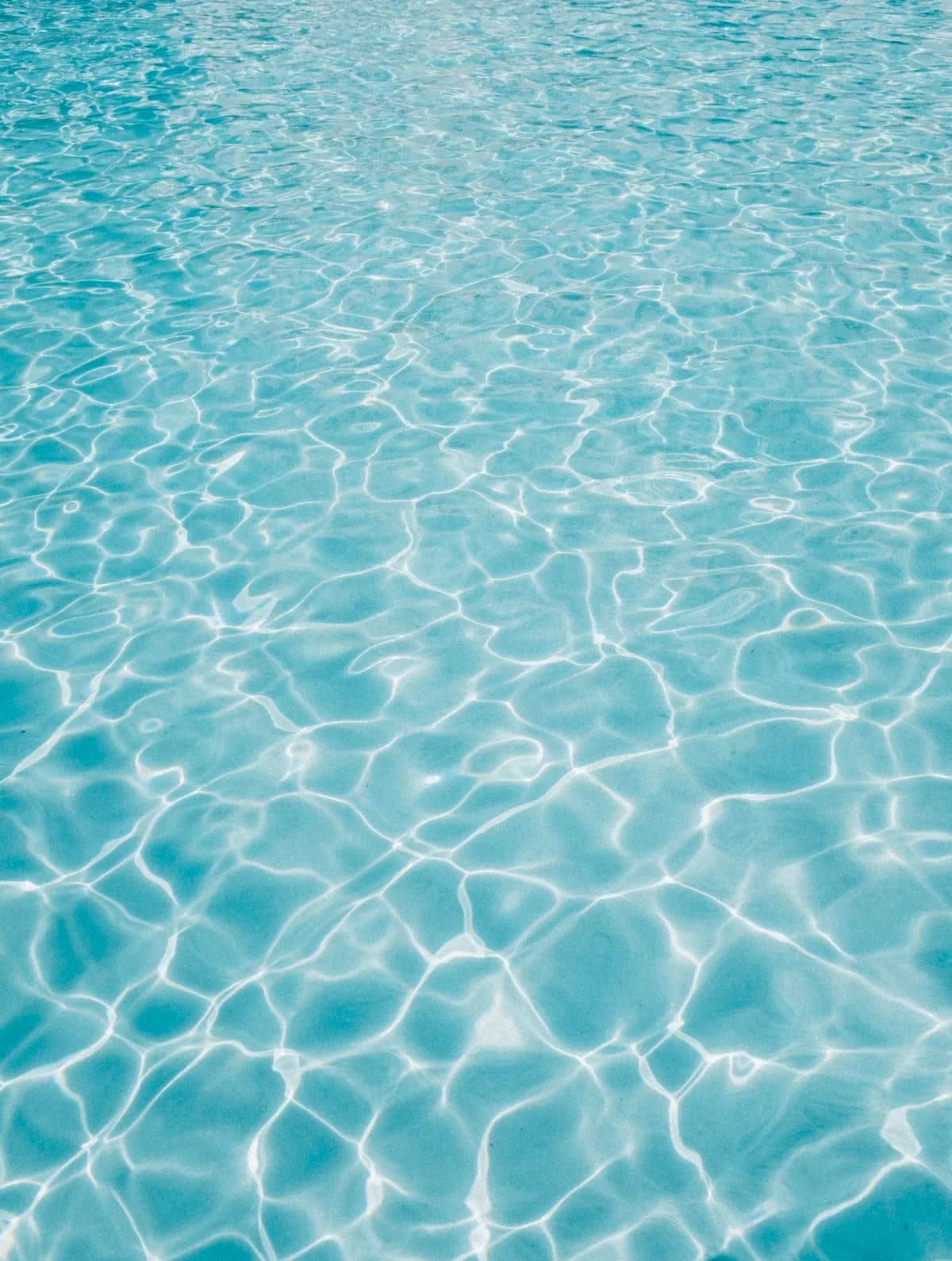
Water color comes from the finish color filtered through depth and sky. White and light finishes read pale aqua, mid-gray and blue finishes read deeper blue, and tan or brown blends read green-blue, which suits natural stone surroundings. Darker finishes warm the water slightly in sun but show scale and fading more readily in hard, bright climates. Always look at a finished pool with the same product rather than a dry sample chip.
Texture matters most where skin meets surface: steps, benches and tanning ledges. Standard pebble can feel rough underfoot, so many owners choose a smaller-grain or polished product for horizontal surfaces and standard pebble for walls and floor. That split raises the price slightly but removes the most common complaint about aggregate finishes. Ask the contractor whether the product line offers a matching smoother grade.
Vinyl pools replace a liner rather than a finish. HomeAdvisor puts the average at $2,588, and Bob Vila gives liners 5–10 years. Thicker liners resist punctures and wrinkles better; printed patterns hide debris and fading. Inspect the wall panels and floor base when the old liner comes out, because rusted panels and washed-out floors are the costs that surprise vinyl owners.
Fiberglass shells are refinished with gelcoat or a specialized epoxy system when they fade, chalk or blister, which is uncommon before the shell has aged considerably. The equipment choices below apply equally to all shell types, and waterline tile and coping on vinyl and fiberglass pools sit on a concrete collar, so the tile and coping guidance here applies to them too.
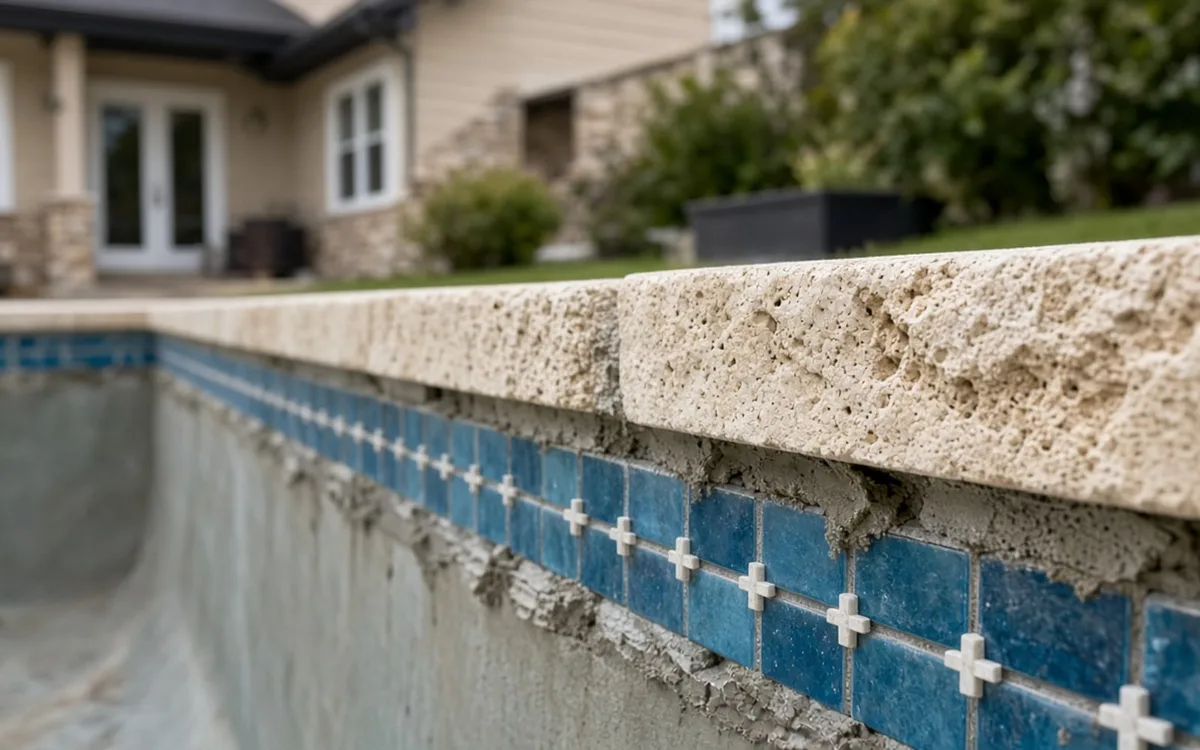
Frost-rated porcelain is the dependable default. It absorbs little water, tolerates freeze-thaw, and resists the calcium line that forms where water evaporates. Glazed ceramic works well in mild climates. Glass tile is the premium look and performs well on a flat, fully bedded beam in warm regions, but it shows any void behind it and is a risk wherever water can freeze in the setting bed. Natural stone at the waterline scales and stains in hard water.
Grout matters as much as tile. Epoxy grout or a polymer-modified cement grout rated for submersion resists chemical attack and keeps water out of the bed. We Fix Ugly Pools prices waterline retiling at $15–$60 per linear foot, with the high end mostly glass and specialty tile. The waterline versus full retile comparison helps decide how much tile the pool needs.
Coping takes foot traffic, sun, splash and, in salt pools, chloride exposure. Dense travertine, granite and precast concrete hold up well; soft limestone and some sandstones pit in salt water. Precast and cut stone are set piece by piece and can be replaced individually, while cantilevered concrete is poured with the deck and replaced only with it. Bullnose edges are comfortable to sit on; drop-face edges give a heavier, modern line.
For the deck, the question is overlay or replacement. SKIN Microplaster's 2026 guide says resurfacing instead of replacing saves roughly 40–60% on a sound slab, and light cool-deck textures reduce surface heat underfoot. Shasta prices full replacement of a 900 square foot deck at $5,400–$13,500. The deck comparison explains which slab conditions rule out an overlay.
A variable-speed pump is the default for nearly every pool. ENERGY STAR notes an old pump can cost up to $310 per year to run, and Pentair, citing Department of Energy figures, says variable-speed models cut pump energy by up to 90%. Pentair makes pumps, so treat its figure as a ceiling; Pool Goods models about 65% savings for typical schedules.
Large cartridge filters pair well with variable-speed pumps because they run efficiently at low flow and skip backwashing. Sand filters are simple and inexpensive; DE filters capture the finest particles but need more handling. Automation is a convenience that earns its keep on pools with a spa, water features or a heater managed remotely, and an attached spa is the less common setup: our analysis of the EIA's 2024 household survey found 69.1% of hot-tub homes report no pool at all. On a simple pool, the pump's own scheduler covers most of what automation would do.
Our analysis of EIA's 2024 household survey found 60.1% of U.S. pool homes unheated and 15.8% heating with natural gas. Heat pumps are efficient when the air is warm, which covers most Southern pools most of the year and much of the country in summer. Gas heaters work in any weather and heat quickly, which suits spas and weekend use. Solar has near-zero running cost but no on-demand heat.
Fixr's operating ranges, $200–$1,800 vs $800–$6,000 per year for heat pump against natural gas, make the heat pump the long-run choice for continuous heating in warm regions, especially with a cover. In short Northern seasons or for a spa that must heat fast, gas keeps its place. The heater comparison covers the crossover points in detail.
A salt chlorine generator makes chlorine from dissolved salt, giving softer-feeling water and fewer chemical purchases. Fixr prices a generator at $1,500–$2,500, with replacement cells needed every several years. The saving on chlorine is real but modest, and cell output drops in cool water, so short-season pools gain less. Most owners who convert do it for the water feel rather than the math.
Compatibility decides whether salt is wise. Older heaters with copper exchangers, unsealed metal fixtures, soft stone coping and steel-walled vinyl pools can all suffer. A renovation is the cheapest time to convert, since the pad is open and the coping may be new anyway, but only if those items are salt-tolerant. The salt versus chlorine comparison lists the checks.
Homeowner polls
No votes yet. Yours will be the first. · saved on this device
No votes yet. Yours will be the first. · saved on this device
No votes yet. Yours will be the first. · saved on this device
Often, if you plan to keep the pool more than a decade. Quartz adds stain resistance and a longer cycle than plain plaster while keeping a smooth feel. On a pool you will sell within a few years, plain plaster presents just as well in listing photos. If you are already considering pebble, compare it with quartz directly, since Shasta's price ranges for the two overlap.
Yes, within one product family. Many aggregate manufacturers make a smoother grade meant for steps, benches and ledges. Mixing across unrelated products can produce color mismatches, so ask the contractor to use a matched system and to show a finished pool that used the same combination.
Slightly, in direct sun, because darker surfaces absorb more light. The effect is modest compared with a solar cover or a heater, and darker finishes show fading and white scale more readily in hard-water, high-sun regions. Choose color for the look you want rather than as a heating strategy.
Dense stone such as granite or high-quality travertine, or precast concrete, sealed before the pool is filled and resealed periodically. Soft limestone and some sandstones absorb salt water and flake over time. Ask for the stone's absorption rating and, if possible, look at a sample that has been sitting in salt water.
Usually, especially while the pool is drained or the niche is accessible. LED fixtures use a fraction of the power of incandescent lights, last much longer and offer color options. Bob Vila prices LED lights at $450 to $1,700 in a remodel. If the old niche or conduit is leaking, replace it while the shell is dry.
Not always. A variable-speed pump can be programmed to suit the existing filter's design flow. If the filter is old, undersized or a type that needs frequent backwashing, replacing it with a large cartridge at the same visit often makes sense. The installer should confirm flow rates rather than matching horsepower.
Light-colored textured cool-deck overlays and light natural stone such as pale travertine stay noticeably cooler than dark concrete or dark pavers. Ask for a sample panel you can place in full afternoon sun before choosing, because color names vary widely between manufacturers.
Converting a vinyl pool to a concrete or plaster interior is possible but involves building a new structural shell inside or in place of the old walls. It is closer to new construction than a renovation, and costs reflect that. Most vinyl owners stay with liners and put the savings toward a thicker liner, coping and equipment.
 Service guidePool Resurfacing
Pool resurfacing replaces a worn interior finish on a concrete pool with new plaster, quartz, pebble aggregate or tile, or replaces the liner on a vinyl pool.
 Service guideTile & Coping Replacement
Tile and coping replacement renews the waterline band and the edge cap on the bond beam after the cause of the failure is understood.
 Service guideEquipment Upgrades
Equipment upgrades replace or add the pump, filter, heater, sanitizer, lights, automation and safety hardware on an existing pool.
 PlanningPlanning a pool renovation in the order the work actually happens
Plan a pool renovation by confirming the symptom, ruling out leaks and structural movement, deciding which scopes share one drain cycle, choosing a season that fits your climate, and sending a written brief that separates required repairs from wishes.
 CostsWhat a pool renovation costs in 2026, scope by scope
In 2026 a pool resurfacing averages about $11,000 per HomeAdvisor, a waterline retile runs roughly $1,500 to $2,500 per Shasta Pools, coping costs $30 to $50 per linear foot per Bob Vila, and a remodel averages around $10,500 with multi-scope jobs far higher.
PermitsPermits and codes for pool renovation work, explained plainlyPermit rules for pool renovation vary by city and county, but electrical work, gas lines and heaters, structural changes, deck replacement and barrier changes commonly require a permit and inspection, while a like-for-like replaster often does not.
 Free toolPool resurfacing and renovation cost calculator
Size, material tier and complexity in, a realistic budget range out.
 Free toolRenovation comparisons, decided by your pool's condition
Side-by-side tables for the decisions that change the price most.
 Free toolPool renovation quiz: nine facts to know before the first proposal
9 questions that show what you already know and what to check next.
 Free toolPool renovation polls
See what other planners chose and add your vote.
Tell us the size, the condition of what is there now, and what you want to change. Pool Renewal Notes passes your request to independent local professionals, who reply with written, no-obligation estimates. The service is free to use.