What caused your tile or coping failure?
No votes yet. Yours will be the first. · saved on this device
Loading...
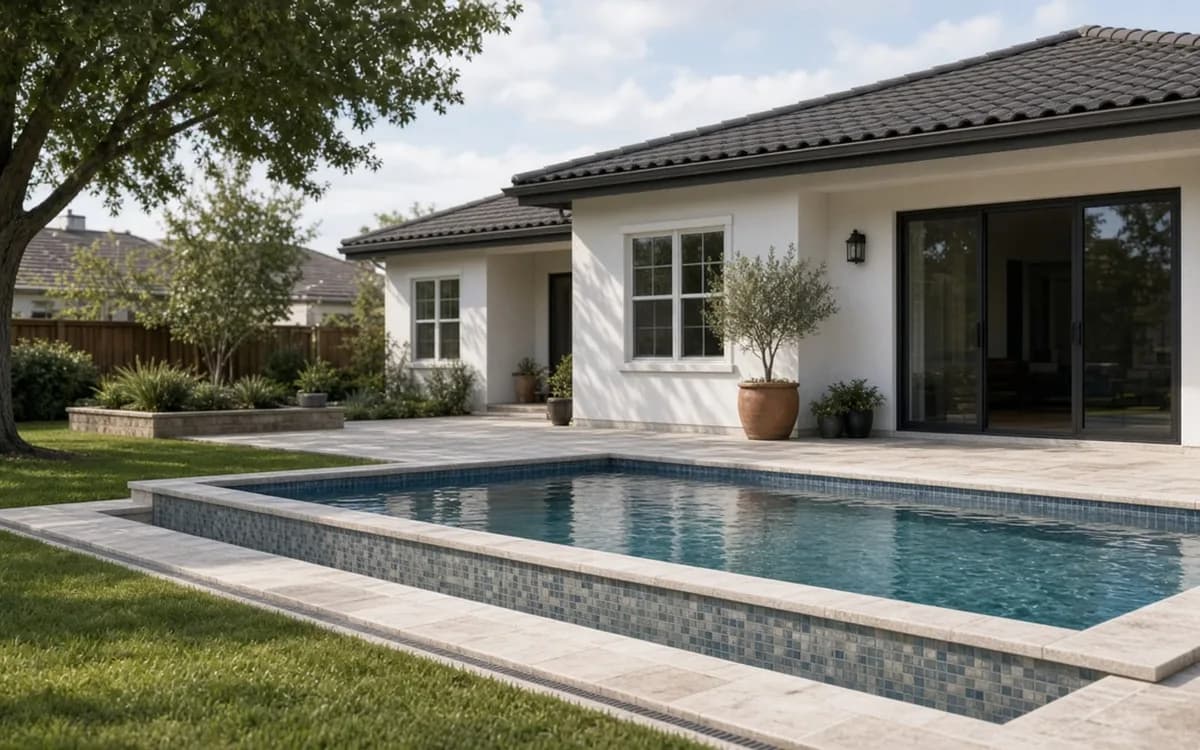
Pool Renewal Notes · Service guide
Tile and coping replacement renews the waterline band and the edge cap on the bond beam after the cause of the failure is understood. It suits popped or cracked tile, loose or chipped coping, and calcium scale that will not clean, on a beam that has stopped moving. Waterline retiling is a modest job; a full retile or coping change is a larger one; neither lasts on an unfixed expansion joint.
Tile falls off pools for a handful of reasons, and none of them is 'old tile.' Water gets behind the grout and freezes. The deck expands into the coping because the joint between them hardened years ago. The bond beam cracks because the soil under the deck moved. Calcium builds up at the waterline until it lifts the glaze. Replacing the tile without answering which of those happened produces the same failure on a schedule.
Priced correctly, the work is well understood. Shasta Pools' January 2026 guide puts waterline tile at $25–$30 per linear foot, We Fix Ugly Pools puts a typical 60 to 100 linear foot job at $15–$60 per linear foot, and Bob Vila prices coping replacement at $30–$50 per linear foot. This page covers the diagnosis, the options, the joint detail that decides longevity, and how to compare tile proposals. For the interior below the tile, see resurfacing.
Want the numbers only? Read the tile & coping replacement cost guide for 2026 ranges, what moves the price, and sample budgets.
| Item | Low | High | Unit | Notes |
|---|---|---|---|---|
| Waterline tile, ceramic or porcelain | $25 | $30 | per linear ft | Shasta 2026 |
| Waterline tile, including glass options | $15 | $60 | per linear ft | We Fix Ugly Pools 2026 |
| Full interior retile | $20 | $60 | per sq ft | $15,000 to $30,000+ for 500 sq ft |
| Glass tile material | $7 | $50 | per sq ft | HomeAdvisor 2026 |
| Coping replacement | $30 | $50 | per linear ft | Bob Vila 2026; premium stone higher |
| Demolition and beam prep | $500 | $2,500 | flat | HomeAdvisor 2026 |
| Expansion joint cut-out and reseal | $8 | $15 | per linear ft | |
| Permit | $50 | $300 | flat | Where required |
Look at the pattern. Tile missing in a band along one side, with the deck tight against the coping and no visible gap, is deck pressure: the expansion joint has failed and the slab is pushing on the beam. Tile missing in patches with cracked grout above the waterline in a freeze climate is water intrusion and ice. A horizontal crack through the beam behind the tile, or coping stones rocking, is beam movement, usually from soil. Scale so thick the tile face has lifted is chemistry.
Each has a different prerequisite. Deck pressure needs the joint cut out and re-sealed, and sometimes a strip of deck removed. Ice damage needs a proper grout and sealer and a winter closing that keeps water off the tile line. Beam movement needs an assessment and possibly beam repair, which is remodel territory. Chemistry needs a plan. Bob Vila prices re-grouting at about $3 per square foot and patching at $65 per linear foot, which is where a small problem is caught before it is a retile.
The waterline band is a 6-inch strip around the perimeter, so a 15 by 30 pool has about 90 linear feet. Shasta's $25 to $30 per foot gives $1,500 to $2,500 for a 10 by 20 pool; We Fix Ugly Pools' $15 to $60 range reflects tile choice and region, with labor alone $20 to $40 per square foot. HomeAdvisor's 2026 tile guide adds demolition and prep at $500 to $2,500, waterline replacement at about $25 per linear foot and permits at $50 to $300.
A full interior retile is a different project. HomeAdvisor's range is $3,000–$20,000, with glass tile at $7 to $50 per square foot and labor at $4 to $32; We Fix Ugly Pools puts a 500 square foot full retile at $15,000 to $30,000 or more. Coping is priced by the linear foot: Bob Vila's $30 to $50 covers precast and standard stone; cut travertine, granite and cantilever concrete each land at different points. Shasta puts a full tile replacement at roughly $15,000 on average, with a range of $1,500 to $80,000.
| Scope | Unit price | Typical pool total | Source |
|---|---|---|---|
| Waterline retile (ceramic/porcelain) | $25 to $30 per linear ft | $1,500 to $2,500 (10 x 20) | Shasta 2026 |
| Waterline retile (range incl. glass) | $15 to $60 per linear ft | $1,200 to $6,000 (60 to 100 ft) | We Fix Ugly Pools 2026 |
| Full interior retile | $20 to $60 per sq ft | $15,000 to $30,000+ (500 sq ft) | We Fix Ugly Pools 2026 |
| Pool tile installation, all scopes | $4 to $32 per sq ft labor | $3,000 to $20,000 | HomeAdvisor 2026 |
| Coping replacement | $30 to $50 per linear ft | $2,700 to $4,500 (90 ft) | Bob Vila 2026 |
| Re-grouting / patching | $3 per sq ft / $65 per linear ft | Hundreds | Bob Vila 2026 |
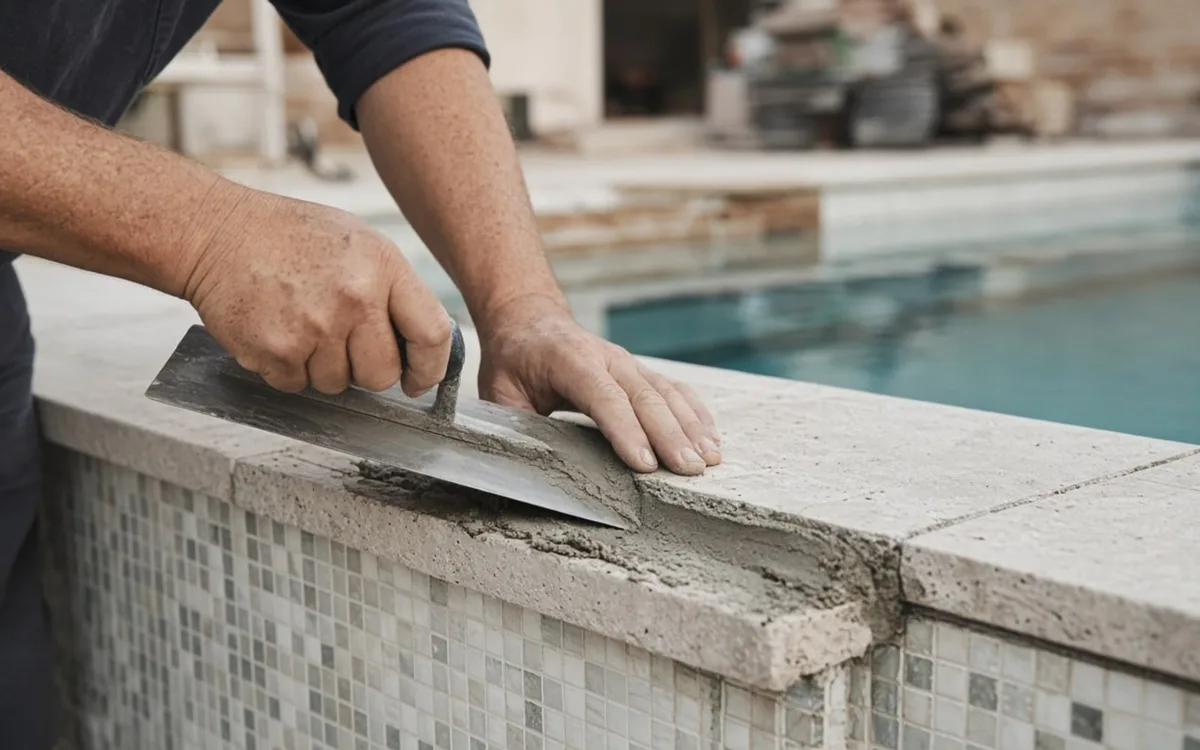
Waterline tile has to survive chlorine, salt, sun, freeze and the calcium line. Frost-rated porcelain and ceramic in 6-inch or 3-inch formats are the workhorses. Glass tile is the premium look and is unforgiving of a poorly prepared beam, because it shows every void behind it and pops in freeze if water gets in; it needs a full mortar bed, not spot bonding. Natural stone at the waterline scales badly in hard water. Grout should be epoxy or a polymer-modified cement rated for submersion.
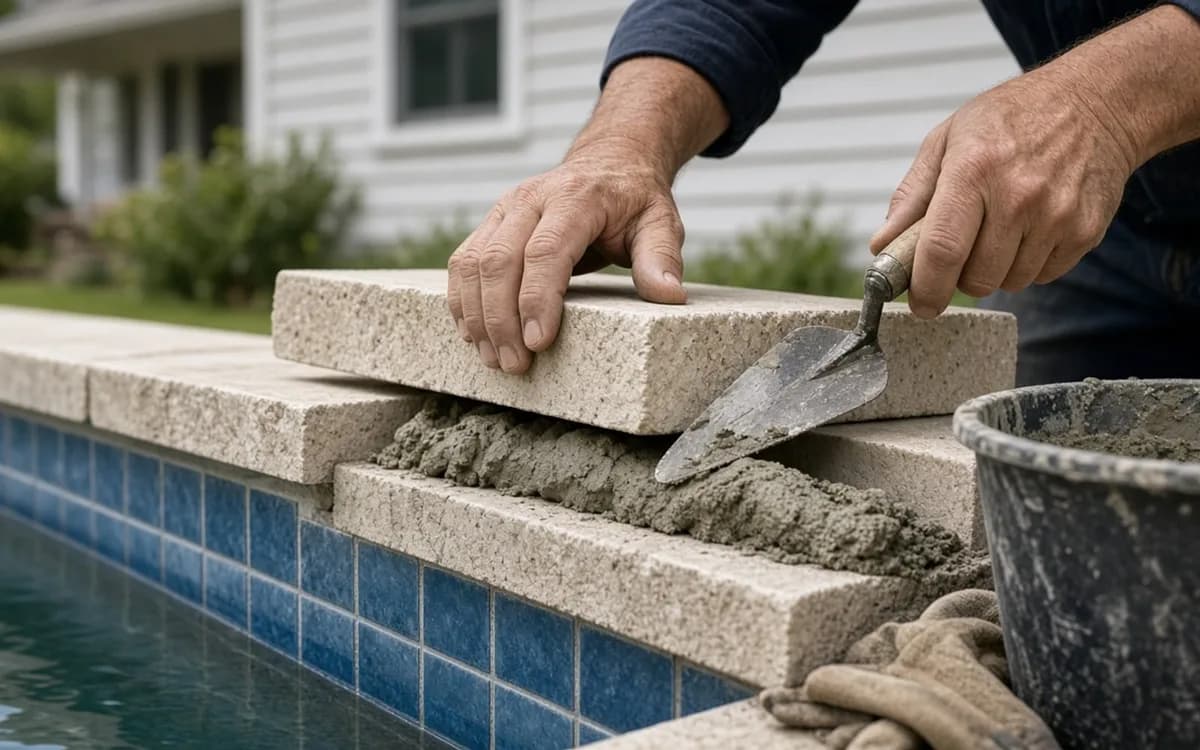
Coping choices are cantilevered concrete poured with the deck, precast concrete in bullnose or flat profiles, and cut stone: travertine, limestone, granite, bluestone. Cantilever is cheapest and cannot be replaced piecemeal; precast and stone are set individually and can be. In salt pools, soft limestone and some sandstones pit; dense travertine, granite and concrete hold. Ask for the stone's absorption rating and for a sealed sample that has sat in salt water.
Between the coping and the deck there should be a half-inch gap filled with foam backer rod and a flexible sealant, running the full perimeter. The deck expands in summer heat and heaves in winter frost; the joint absorbs that so the slab does not push on the beam. When the sealant hardens, cracks or is skipped, the deck loads the beam and the tile line is the first thing to go. On pools over five years old, a failed joint is the most common cause of a retile.
Any tile or coping proposal should include cutting out the old joint, checking that the gap goes full depth, and re-sealing with a pool-rated flexible sealant. It costs a few hundred dollars on most pools and it is the difference between new tile that lasts fifteen years and new tile that lasts two. If the deck has already cracked the beam, the beam is repaired first; Bob Vila prices full step-wall replacement at around $4,500 as a reference for structural concrete work at the edge.
For waterline-only work the pool is lowered a foot or two below the tile, not drained, which keeps the finish wet and avoids groundwater risk. Old tile and grout are chipped off, the beam face is ground flat and patched, tile is set in a mortar bed, grouted, and the joint at the coping is re-sealed. Three to five days for a typical pool, then a day for grout cure before refilling. Coping replacement adds a day or two per side for removal and mortar set.
A full retile requires draining, with all the groundwater cautions from the resurfacing page, and one to two weeks of work. If the interior finish is also due, doing both in one drain cycle saves a second drain, a second refill and a second startup; CostHelper's average of 3 days vs 11 days for a full upgrade reflects that sequencing.
In freeze regions the tile line lives at the water's edge where ice forms, so the winter closing matters: water lowered below the tile, a cover that keeps rain off, and grout sealed each fall. Glass tile is a risk there. In the Sun Belt the enemies are calcium scale from hard fill water and salt splash from salt-chlorinated pools; a dense tile, a sealed stone coping and a chemistry plan keep the line clean. Weekly brushing at the waterline is the cheapest tile maintenance there is.
Our analysis of the EIA's 2024 household survey found 63.15% of Southern pool homes use the pool year-round, against 47.7% nationally, which means the waterline is wet twelve months and scale accumulates continuously. In the Northeast, where 94.88% of pool homes swim one to six months, well above the national 41.9%, the tile spends half the year exposed. The regional notes cover both cases.
Linear feet of waterline and of coping, stated. Tile product named, with grout type. Beam preparation described: chip-out, grind, patch, and what happens if the beam is found cracked. Joint replacement included, with the sealant named. For coping, the stone or precast product, thickness, edge profile and how the mortar bed is bonded. Water lowering or draining responsibility. A proposal that lists all of that at $3,000 is comparable to one at $2,200 only if the second also does the joint.
Bob Vila prices coping replacement at $30–$50 per linear foot, and tile with coping is the natural bundle since both sit on the beam. Use the calculator for the interior and add the waterline as a line; send the tile line photo and the coping joint photo through the estimate request so responders can see the failure pattern before the visit.
Homeowner polls
No votes yet. Yours will be the first. · saved on this device
No votes yet. Yours will be the first. · saved on this device
 Service guidePool Resurfacing
Pool resurfacing replaces a worn interior finish on a concrete pool with new plaster, quartz, pebble aggregate or tile, or replaces the liner on a vinyl pool.
 Service guideComplete Pool Remodel
A complete pool remodel coordinates several diagnosed repairs and desired changes, typically interior finish, tile and coping, deck, equipment and features, into one sequence with one drain cycle and one contractor accountable.
No. The old tile and its mortar are removed to the beam so the new mortar bed bonds to concrete. Setting tile over tile adds thickness that changes the coping line, and the old bond is the weak layer that will let go. If a contractor proposes it, ask for a different contractor.
Light scale comes off with a pumice stone or a scale-removal product and a nylon brush. Heavy scale is bead-blasted by a tile cleaning service, typically a few hundred dollars, which restores tile that is still bonded. If the scale has lifted the glaze or the tile is loose, cleaning will not help.
Not necessarily. If the coping is sound, level and not rocking, and only the tile has failed, retile alone is fine. If coping stones are loose or cracked, or the mortar bed has washed out, replacing both at once avoids disturbing new tile later. Bob Vila notes they are often done together because both sit at the bond beam.
Usually a bond beam that has cracked from deck pressure, soil movement or freeze in a beam with poor drainage. It is structural and must be repaired, typically by cutting out the failed section, adding steel and re-forming, before tile goes back. A retile over a cracked beam fails quickly.
It is the premium waterline and feature-wall look and costs $7 to $50 per square foot for material per HomeAdvisor, plus more labor. It demands a perfectly flat, fully bedded beam and is a poor choice in freeze climates or on any beam with movement history. On a sound beam in a warm climate, it lasts as long as any tile.
The level is dropped about 12 to 18 inches, just below the tile band, so the beam face can be worked dry. The rest of the pool stays full, which protects the finish and avoids groundwater risk. Refilling a foot of water costs little. A full retile of the interior requires a complete drain.
Yes. Switching from cantilever concrete to stone, or from bullnose to drop-face, is a common upgrade during a retile. Cantilever removal means cutting the deck edge back, so the deck may need a new border. Ask for a corner mock-up because the corner detail is where a profile change looks right or wrong.
Inspect it yearly and expect to replace it every 5 to 10 years, sooner in strong sun or heavy freeze. Signs of failure are sealant that has hardened, cracked, pulled away from one side or sunk. It costs a few hundred dollars on most pools and prevents the tile-line failure that costs thousands.
 Free toolPool resurfacing and renovation cost calculator
Size, material tier and complexity in, a realistic budget range out.
 Free toolRenovation comparisons, decided by your pool's condition
Side-by-side tables for the decisions that change the price most.
 Free toolPool renovation quiz: nine facts to know before the first proposal
9 questions that show what you already know and what to check next.
 Free toolPool renovation polls
See what other planners chose and add your vote.
Tell us the size, the condition of what is there now, and what you want to change. Pool Renewal Notes passes your request to independent local professionals, who reply with written, no-obligation estimates. The service is free to use.