Which interior finish are you choosing?
No votes yet. Yours will be the first. · saved on this device
Loading...
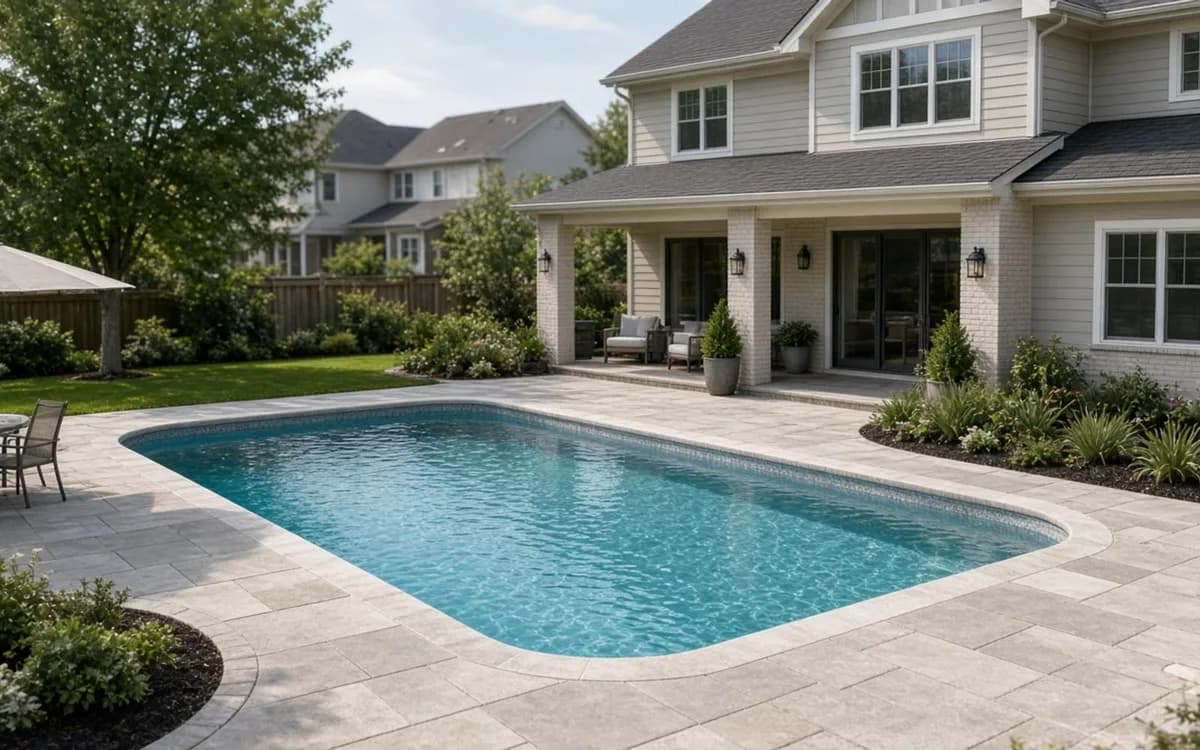
Pool Renewal Notes · Service guide
Pool resurfacing replaces a worn interior finish on a concrete pool with new plaster, quartz, pebble aggregate or tile, or replaces the liner on a vinyl pool. It suits a rough, stained or delaminating surface on a shell that holds water and shows no active movement. Preparation and repairs under the finish decide how long it lasts; the finish decides what it costs.
Resurfacing is the single largest recurring cost of a concrete pool. River Pools' 2025 ownership guide puts it at every 10–15 years, and HomeAdvisor's 2026 average of $11,000 agrees on the order of magnitude. Which finish you choose sets both the price and when you will be back: Shasta Pools' 2026 lifespan table runs from 5 to 10 years for standard plaster to 20-plus for pebble.
The work is straightforward on paper: drain, chip or grind the old surface, repair hollows and cracks, apply a bond coat, trowel the new finish, fill and brush. The trouble arrives when a step is skipped, when the pool was leaking before it was drained, or when the shell floats on a high water table because nobody checked. This page covers the finishes, the preparation, the startup and what to insist on in writing. The resurfacing calculator gives a first number by interior square footage.
Want the numbers only? Read the pool resurfacing cost guide for 2026 ranges, what moves the price, and sample budgets.
| Item | Low | High | Unit | Notes |
|---|---|---|---|---|
| Standard plaster, whole pool | $3,500 | $6,500 | flat | Shasta 2026; Swimply 2026 gives $5,000 to $10,000 |
| Quartz aggregate, whole pool | $7,000 | $10,000 | flat | Shasta 2026 |
| Pebble aggregate, whole pool | $6,000 | $15,000 | flat | Shasta 2026; 20+ year finish |
| Full tile interior | $15,000 | $30,000 | flat | Labor about half of cost |
| Plaster, per 1,000 sq ft | $5,000 | $6,000 | per 1,000 sq ft | HomeAdvisor 2026; aggregate ~$6,500 |
| Draining | $175 | $225 | flat | Plus refill water and balancing |
| Vinyl liner replacement | $1,125 | $3,688 | flat | Bob Vila 2024; avg $2,393; 28-mil adds $300 to $500 |
| Resurfacing labor | $45 | $65 | per hour | HomeAdvisor 2026 |
| Paint or epoxy coating, whole pool | $1,500 | $5,000 | flat | Swimply 2026; shorter life than plaster |
| Resurfacing permit | $250 | $2,500 | flat | Swimply 2026; varies by jurisdiction |
Right: the plaster feels like sandpaper, shows exposed aggregate, has stains that acid washing does not lift, is delaminating in sheets, or has reached the age where the finish is simply done. Standard plaster at Shasta's 5 to 10 years, quartz at 10 to 15, and a pool that is holding water and whose deck and coping are stable. Also right: a vinyl liner that is faded, brittle at the waterline or past ten years, which HomeAdvisor prices at $2,588 on average.
Wrong: any pool losing more than evaporation, any pool with a crack that is opening, any pool whose deck has heaved against the coping. The site's own rule is that a finish replacement is not a confirmed answer to unexplained water loss. Get the leak found at HomeAdvisor's $100 to $500, get the movement assessed, then price the finish. A coordinated remodel may be the honest scope if the list is long.
HomeAdvisor's 2026 per-finish pricing gives plaster at about $5,500 per 1,000 sq ft, aggregate about $6,500 per 1,000 square feet, and tile up to $30,000, and notes tile is five to six times the cost of plaster but the longest-lasting interior. Shasta's January 2026 guide prices whole pools: replaster $3,500–$6,500, quartz $7,000 to $10,000, pebble $6,000 to $15,000, tile $15,000 to $30,000. Swimply's June 2026 guide runs higher, with basic plaster at $5,000–$10,000 and pebble from $9,000 to past $20,000; the resurfacing cost guide sets the two side by side with pool-size bands.
Lifespans run the other way. Shasta's table gives 5–10 vs 20+ years. Divide cost by years: a $5,000 plaster job lasting eight years is $625 a year; a $10,000 pebble job lasting twenty is $500 a year, with fewer drain cycles and fewer weeks of an empty pool. Pebble finishes have become the mid-market default for that reason, and the plaster versus pebble comparison lays the math out in full.
| Finish | Typical cost per pool (Shasta 2026) | Lifespan (Shasta 2026) | Feel and look |
|---|---|---|---|
| White or colored plaster | $3,500 to $6,500 | 5 to 10 years | Smooth, classic, shows stains and etching |
| Quartz aggregate | $7,000 to $10,000 | 10 to 15 years | Smooth with color flecks, stain resistant |
| Pebble aggregate | $6,000 to $15,000 | 20+ years | Textured, natural look, hides mottling |
| Polished aggregate | $9,000 to $16,000 | 15 to 20 years | Smooth exposed aggregate, premium |
| Glass or ceramic tile | $15,000 to $30,000 | Longest | Any pattern; grout is the maintenance item |
| Vinyl liner (vinyl pools) | $1,125 to $3,688 (Bob Vila) | 5 to 10 years | Soft, printed patterns, puncture risk |
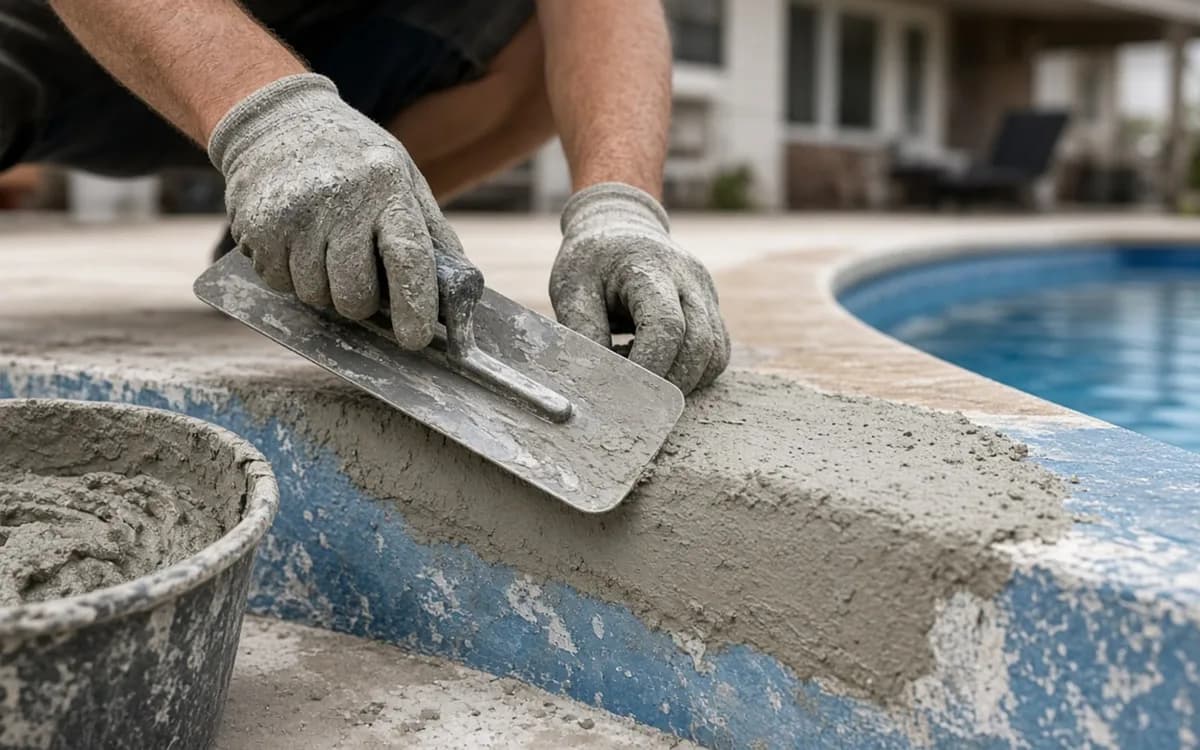
Three approaches exist. A full chip-out removes the old finish to the gunite so the new material bonds to the structure; it costs the most and lasts the longest. A bond coat over a roughened old finish is faster and cheaper, and depends entirely on the old finish being sound and the bond coat being applied correctly. A sand-and-overlay on a thin old finish is the cheapest and the most likely to delaminate. Proposals that say 'prep as needed' have chosen the third for you.
Then come the repairs: sounding the walls with a hammer to find hollow spots, opening them, and patching; routing and filling cracks; replacing rusted rebar showing through; resetting loose fittings and the light niche; replacing the main drain cover with a compliant anti-entrapment model. HomeAdvisor's labor rate of $45–$65 per hour is where the cost lives, and skipping a day of it costs years of finish life.
Draining is a pump, a hose and HomeAdvisor's $175 to $225, plus a place for 20,000 gallons of chlorinated water to go that the city allows. The danger is groundwater. A concrete shell in saturated soil is a boat; drained without a working hydrostatic relief valve or a dewatering well, it can lift several inches and crack. This is a Florida, Gulf Coast and low-lying-lot problem, but it happens anywhere after a wet spring.
The proposal should name who assesses groundwater before draining, who opens the relief valve, and who carries the risk if the shell moves. Ask directly. A contractor who has never floated a pool has either been lucky or careful; you want the second. Timing matters too: a drained pool should be refilled within days of the new finish, so the schedule should have no gaps between chip-out and plaster.
Most pool resurfacing jobs take 10–14 calendar days from the start of draining to the first swim, according to D&J The Pool Resurfacers, a Central Florida contractor. Roughly half of that is on-site work: draining, chip-out, repairs and the new finish. The rest is the refill and about a week of brushing before anyone swims.
The crew's working days are shorter than the calendar: CostHelper's user reports put 3 days vs 11 days for a replaster against a complete upgrade. Heavy repairs, a pebble finish instead of plaster, rain on an open shell or an inspection hold each stretch the middle phase. The finish keeps curing for about 28 days after the fill, which the startup section covers.
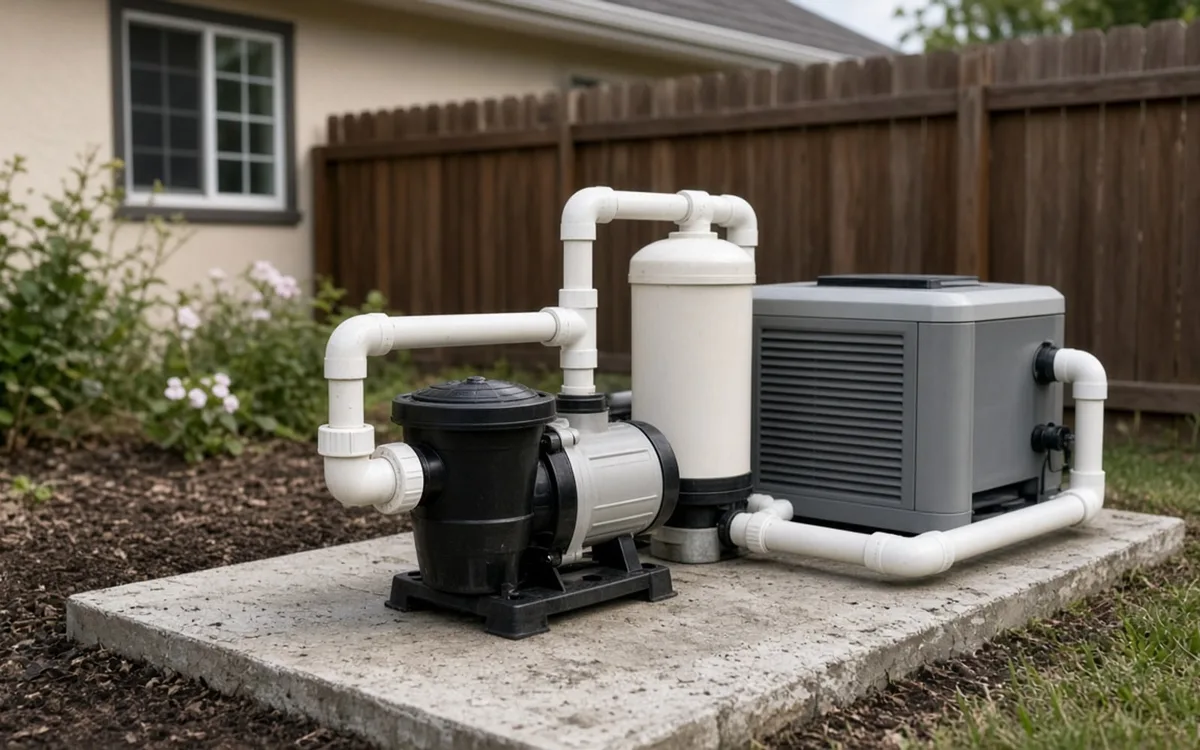
New plaster and aggregate finishes cure underwater. The first 28 days set the surface: the pool is filled without stopping, the water is balanced within hours, and the finish is brushed once or twice daily for a week or two to remove plaster dust and prevent scale. Calcium, pH and alkalinity are held in a narrow band; heating and salt are delayed. Skip the brushing and the finish mottles, scales or streaks, and most finish warranties exclude exactly that.
CostHelper's timeline of 3 days vs 11 days does not include this month, but your calendar should. Ask whether the contractor performs startup, for how many days, and what written instructions you receive for the rest of the cure. The equipment page covers why a variable-speed pump set to circulate continuously during cure makes this easier.
Freeze-thaw is hard on plaster: water in micro-cracks expands, and a pool closed with a marginal finish comes back rougher each spring. Pebble and quartz tolerate it better. In the Northeast, where our analysis of the EIA's 2024 household survey found 94.88% of pool homes using the pool one to six months, against 41.9% nationally, the work window is spring or early fall with the cure finished before frost. In the South, where 63.15% of pool homes swim year-round against 47.7% nationwide, winter is the resurfacing season because the pool is least missed.
Hard water in the Southwest scales new plaster fast if startup chemistry is loose, and intense sun fades colored plaster; pebble hides both. Hot dry air also means an empty pool dries and cracks quickly, so the refill must follow the finish the same day. The regional notes cover the calendar by region.
Interior square footage first, because contractors measure differently; ask each to state the number they priced. Then preparation method, hollow-spot allowance and crack repair. Then the finish brand and product line, since 'pebble' covers several manufacturers at different prices. Then draining, groundwater and refill responsibility, then startup days and the warranty's care conditions. Two proposals for pebble can differ by $4,000 on preparation alone and be equally honest.
Shasta Pools prices a standard replaster at $3,500–$6,500 against $6,000 to $15,000 for pebble. On a resurfacing, the place to save is not the preparation; it is the finish grade, where standard pebble instead of polished aggregate cuts thousands with little lifespan penalty. Send the same brief through the estimate request and compare on those lines.
Homeowner polls
No votes yet. Yours will be the first. · saved on this device
Shasta gives standard plaster 5 to 10 years and pebble 20 or more.
No votes yet. Yours will be the first. · saved on this device
No votes yet. Yours will be the first. · saved on this device
 Service guideTile & Coping Replacement
Tile and coping replacement renews the waterline band and the edge cap on the bond beam after the cause of the failure is understood.
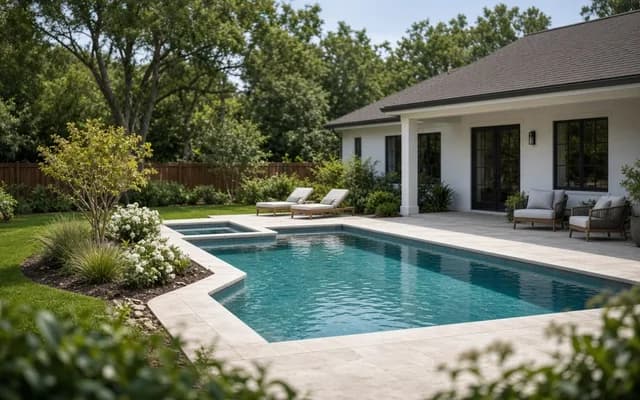 Service guideComplete Pool Remodel
A complete pool remodel coordinates several diagnosed repairs and desired changes, typically interior finish, tile and coping, deck, equipment and features, into one sequence with one drain cycle and one contractor accountable.
 Service guideEquipment Upgrades
Equipment upgrades replace or add the pump, filter, heater, sanitizer, lights, automation and safety hardware on an existing pool.
Most contractors allow swimming after the water is balanced and the initial brushing period, often 7 to 14 days, but the finish keeps curing for about 28 days and some manufacturers ask for no heating or salt until then. Pebble finishes are similar. The exact schedule is in the manufacturer's startup sheet, and following it is usually a warranty condition.
Mottling, gray or streaky patches, is common on white plaster and comes from uneven hydration, troweling and startup chemistry. It is cosmetic and often fades, but it is also the most common warranty dispute. Colored plaster shows it more; quartz and pebble hide it. Consistent brushing and balanced water in the first weeks are the best prevention.
Standard pebble has noticeable texture, which some people dislike on the steps and tanning ledge. Smaller-pebble and polished aggregate finishes are smoother at higher cost. Ask to feel samples wet, and consider a smoother finish on the steps and bench with standard pebble on the walls and floor.
Yes, and it is the main design decision in a resurfacing. Water color comes from the finish color plus depth and sky: white plaster reads light blue, gray reads deeper blue, tan and brown read green-blue. Look at finished pools with the same product, not chips, because the chip is dry and the pool is not.
An area where the old finish has separated from the gunite behind it, found by tapping the wall and listening for a drum sound. Hollows must be opened and patched before a new finish goes on or they will delaminate again. The proposal should state how hollows are found and whether there is an allowance per square foot beyond a base count.
Depends on local rates; a 20,000-gallon pool is roughly 2,700 cubic feet, which in many cities runs $100 to $300 on the water bill, more in drought-priced areas. Some utilities offer a sewer credit for pool fills. Trucked water is far more. The refill is usually the owner's cost and should be in the plan.
Only if the leak is a surface crack that the preparation opens and fills properly, and even then the cause should be understood. Leaks at fittings, the light niche, the skimmer or underground plumbing are unaffected by a new finish. Rule out those with a leak detection before draining for a resurface, or you will pay twice.
No. A liner replacement involves draining, removing the old liner, repairing the floor base and wall panels, replacing gaskets and faceplates, and setting the new liner with vacuum. HomeAdvisor's guide says a 28-mil liner adds $300 to $500 over 20-mil and that wrinkle repair runs $100 to $250. Wall rust and floor washouts are the hidden costs.
 Free toolPool resurfacing and renovation cost calculator
Size, material tier and complexity in, a realistic budget range out.
 Free toolRenovation comparisons, decided by your pool's condition
Side-by-side tables for the decisions that change the price most.
 Free toolPool renovation quiz: nine facts to know before the first proposal
9 questions that show what you already know and what to check next.
 Free toolPool renovation polls
See what other planners chose and add your vote.
Tell us the size, the condition of what is there now, and what you want to change. Pool Renewal Notes passes your request to independent local professionals, who reply with written, no-obligation estimates. The service is free to use.