How old is your pool pump, and what type?
EIA found 48% of pool homes without a variable-speed pump.
No votes yet. Yours will be the first. · saved on this device
Loading...
Pool Renewal Notes · Service guide
Equipment upgrades replace or add the pump, filter, heater, sanitizer, lights, automation and safety hardware on an existing pool. They suit a defined fault or a defined goal, such as a lower electric bill or a longer season, after the existing system has been reviewed for compatibility and flow. The pump is the fastest payback; the heater is the biggest operating-cost decision.
The equipment pad is where an old pool wastes the most money and where the fixes are cheapest. ENERGY STAR notes an old pool pump can be a home's second-largest energy user at up to $310 per year, and our analysis of the EIA's 2024 household survey found 48.2% of U.S. pool homes still report no variable-speed pump, rising to 73.4% in the Northeast, against 47.7% that have one. That is roughly 4.6 million pools running the most expensive pump technology available.
This page ranks the upgrades by what they save against what they cost, using HomeAdvisor's, Fixr's and Pool Goods' 2025 and 2026 figures, and it covers the questions the site's own checkpoint asks: model numbers, sizing logic, compatibility, electrical work and service access. Efficiency claims are kept separate from any promise of savings, because your run schedule and your electric rate decide the real number.
Want the numbers only? Read the equipment upgrades cost guide for 2026 ranges, what moves the price, and sample budgets.
| Item | Low | High | Unit | Notes |
|---|---|---|---|---|
| Variable-speed pump, installed | $1,200 | $2,500 | flat | Payback 1 to 3 years (Pool Goods 2026) |
| Heat pump, installed | $2,500 | $7,500 | flat | HomeAdvisor 2026 |
| Gas heater, installed | $1,500 | $6,000 | flat | Plus gas line; 7 to 12 year life |
| Solar heating system | $2,500 | $9,500 | flat | Up to 30 years; no on-demand heat |
| Saltwater conversion | $500 | $2,500 | flat | HomeAdvisor 2026; cell $200 to $700 every 5 to 7 years |
| Automatic safety cover | $3,594 | $10,782 | flat | Fixr 2024 |
| LED light retrofit | $450 | $1,700 | per fixture | Bob Vila 2026 |
| Electrical subpanel | $400 | $1,800 | flat | When panel capacity is short |
The pump, almost always. Pool Goods' May 2026 modeling shows a variable-speed pump saving about $345–$735 per year against a single-speed, with a medium pool dropping from about 4,800 kWh to 1,650 kWh a year and a large one from 7,000 to 2,400, paying back the premium in one to three years. Bob Vila gives pumps an 8 to 12 year life and says variable-speed models save 80% or more. If your pump is single-speed and past eight years, it is first regardless of what else is wrong.
The heater comes second if you heat, because fuel choice sets the largest annual bill after the pump. The filter is third and usually a like-for-like swap unless it is undersized. Sanitizer and automation are conveniences with modest payback. Safety hardware, the main drain cover and a compliant barrier, is not an upgrade in the payback sense; it is a requirement worth doing while the pad is open. The comparison pages put pump, heater and sanitizer choices side by side.
Since July 19, 2021, pumps over 1.0 total horsepower sold in the U.S. must be variable speed, so a failed single-speed pump is replaced by one whether you planned it or not. Pentair's DOE page cites savings of up to 90% on pump energy and about $550 a year in operating cost; In The Swim's explainer gives 40 to 80% depending on schedule and plumbing resistance. ENERGY STAR adds that cutting filter run time from 24 to 6 hours a day cuts energy 75%, which a programmable pump makes automatic.
The install is a few hours: unbolt, re-plumb the unions, wire to the existing circuit or a new timer, program the schedule. It needs a 230-volt circuit, which most pads have, and it works with any filter and heater as long as the low-speed flow meets the heater's minimum. Ask the installer to program at least two speeds, a low filtration speed for most of the day and a higher speed for the skimmer, cleaner and any water feature, and to show you the schedule.
| Pool size | Single-speed kWh/yr | Variable-speed kWh/yr | Annual saving | Source |
|---|---|---|---|---|
| Small (under 15,000 gal) | about 3,000 | about 1,000 | about $345 | Pool Goods 2026 |
| Medium (15,000 to 25,000 gal) | about 4,800 | about 1,650 | about $500 | Pool Goods 2026 |
| Large (25,000+ gal) | about 7,000 | about 2,400 | about $735 | Pool Goods 2026 |
| Regional range | $477 (Pacific NW) to $1,743 (Hawaii) | Pool Goods 2026 |
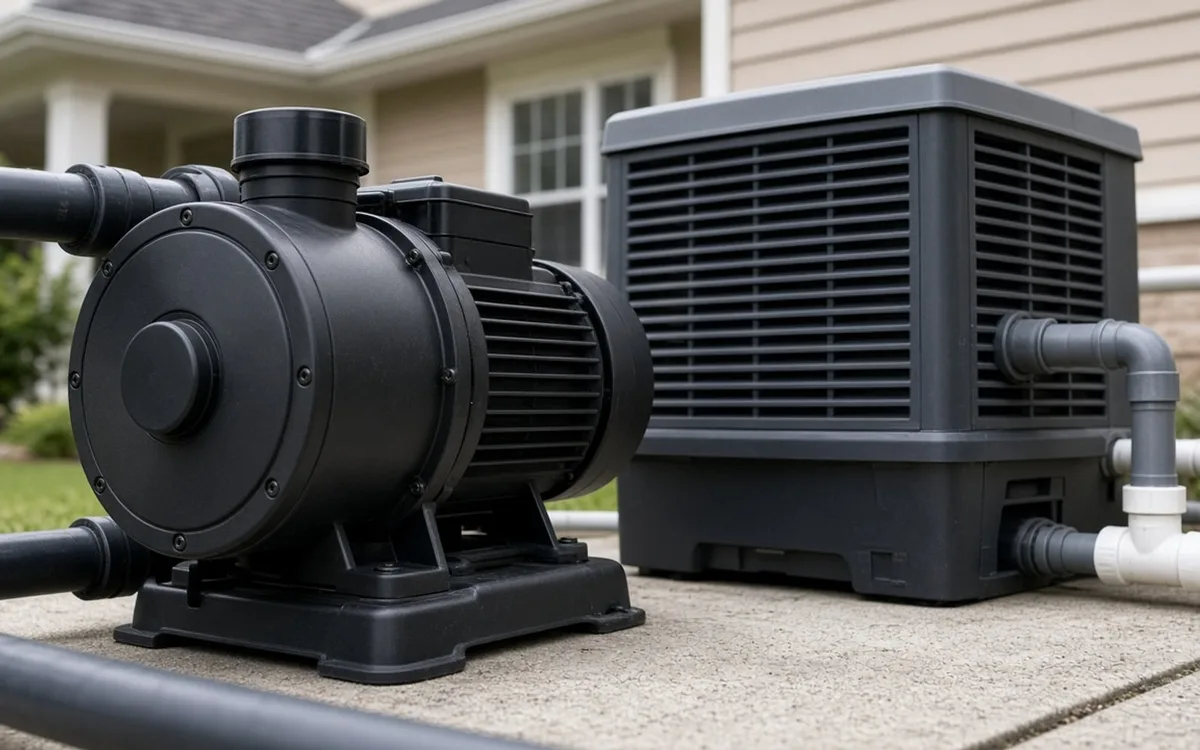
HomeAdvisor's 2026 guide prices heater installation at $3,094 on average, with heat pumps at $2,500 to $7,500, gas at $1,500 to $6,000 and solar at $2,500 to $9,500, and gives gas units 7 to 12 years against up to 30 for solar. If a gas heater is past ten years, HomeAdvisor's advice is that replacement usually beats another repair. Fixr's 2025 guide puts operating cost at $200–$1,800 vs $800–$6,000 per year, with propane reaching $12,000 a year and solar $0 to $120.
Our analysis of the EIA's 2024 household survey found only 35.8% of U.S. pool homes report a pool heating fuel: 15.8% natural gas and 13.3% electricity, which includes heat pumps, while 60.1% report an unheated pool. Swapping an old gas heater for a heat pump is a high-payback upgrade in warm humid climates. For a spa that must heat fast, gas keeps its place, though 52.7% of hot-tub homes heat the tub with electricity. The gas versus heat pump comparison covers the crossover.
HomeAdvisor's 2026 guide prices conversion at $500–$2,500 and notes a 20,000-gallon pool needs 10 to 12 forty-pound bags of salt to start and about $50 a year in added electricity for the cell. Fixr's 2025 guide puts the generator at $1,500–$2,500 and annual salt at $100 to $400 against $300 to $800 in chemicals for a chlorine pool, with Bob Vila giving cells a 5 to 7 year life. The payback is real but slow, and the water feel is the reason most owners cite.
Compatibility is the question. An older heater with a copper heat exchanger, unsealed metal ladders and light rings, and soft stone coping all suffer from salt. The bonding grid must be intact. Cells slow below about 60-degree water, so a short-season pool gets less benefit. Ask the installer to inspect the heater exchanger and the coping before quoting, and to size the cell to the pool's gallons with margin.
The main drain cover. The Virginia Graeme Baker Pool and Spa Safety Act took effect on December 19, 2008 to address drain entrapment, and while it applies to public pools, its anti-entrapment covers are the standard for residential upgrades. Replacing an old flat cover is inexpensive and is done any time the pool is drained or the plumbing is opened. CPSC's June 2026 report found over 70% of fatal child pool and spa drownings happened at a residence, which is the argument for doing safety work during any renovation rather than someday.
An automatic safety cover is the other hardware item. Fixr prices it at $3,594–$10,782, and it cuts evaporation, heat loss and debris while adding a rated safety layer, which is how it justifies the price on an older pool. Door alarms, gate latches and a compliant barrier are cheaper still. Ask the pro you hire to check the barrier against current local code while on site.
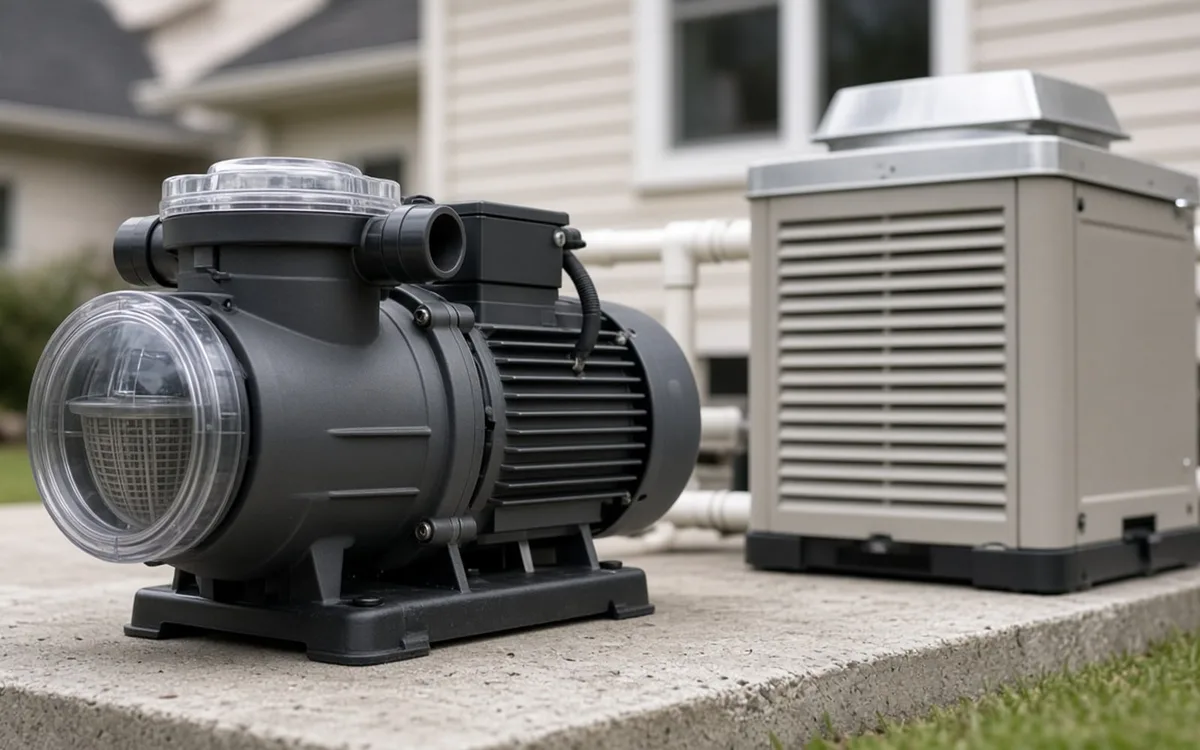
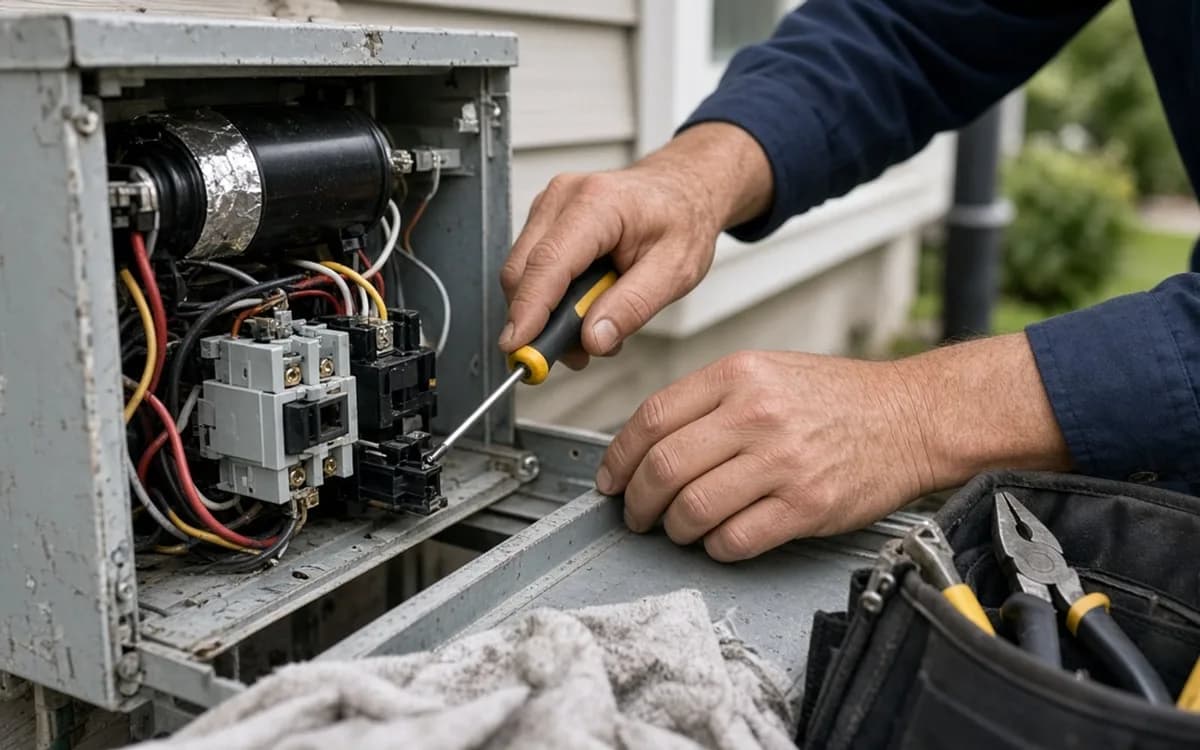
A variable-speed pump uses the existing 230-volt circuit. A heat pump typically needs a dedicated 50-amp circuit, which may mean a subpanel; a gas heater needs a gas line sized for 200,000 to 400,000 BTU, which is larger than most household appliances and often the biggest cost of the swap. A salt cell needs a power supply on the pump's circuit. Automation needs a control panel and low-voltage runs to valves. Every one of these needs the equipotential bonding checked and, in most jurisdictions, an electrical permit.
Access matters for the next fifteen years. Heaters need clearance on the service side and, for gas, from windows and property lines; filters need room to open the tank; pumps need a union on each side so they can be pulled without cutting pipe. A pad that has grown crowded over twenty years often benefits from being re-plumbed in one go, which the remodel page covers as a scope.
Model numbers, first and always. A 'variable-speed pump' can be a 1.65 or a 3 horsepower unit at very different prices; a 'heat pump' can be 110,000 or 140,000 BTU. Then the sizing logic: gallons, turnover target, plumbing size and the heater's minimum flow. Then the electrical scope as its own line, since a subpanel at $400 to $1,800 or a gas line trench changes the total more than the unit does. Then warranty terms, which often require installation by a registered dealer to reach the longer term.
HomeAdvisor's 2026 maintenance guide puts annual pool upkeep at $960–$1,800 per year, and every upgrade here moves a piece of that. Ask each responder to show which piece and by roughly how much, based on your run schedule and your electric rate, not on a brochure. Use the estimate request to send a photo of the pad with labels visible; it saves a site visit.
Homeowner polls
EIA found 48% of pool homes without a variable-speed pump.
No votes yet. Yours will be the first. · saved on this device
No votes yet. Yours will be the first. · saved on this device
No votes yet. Yours will be the first. · saved on this device
 Service guideComplete Pool Remodel
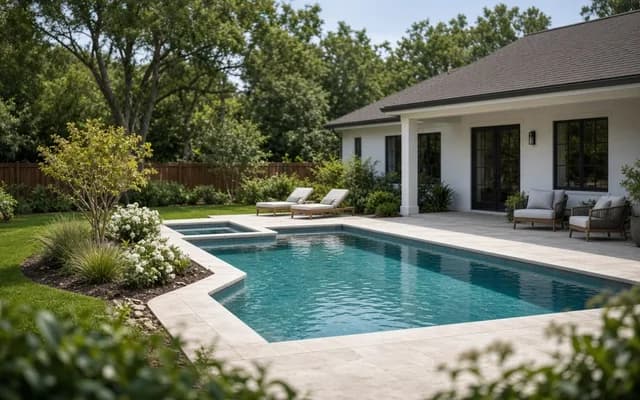
A complete pool remodel coordinates several diagnosed repairs and desired changes, typically interior finish, tile and coping, deck, equipment and features, into one sequence with one drain cycle and one contractor accountable.
 Service guidePool Resurfacing
Pool resurfacing replaces a worn interior finish on a concrete pool with new plaster, quartz, pebble aggregate or tile, or replaces the liner on a vinyl pool.
Size to the pool's gallons, the filter's design flow and the plumbing, not to the old pump's horsepower. Most residential pools are served by a 1.5 to 3 total-horsepower variable-speed unit run at low speed for most of the day; the high end matters only for water features, in-floor cleaning or long plumbing runs. Ask the installer for the turnover math.
Yes, and ENERGY STAR's point that 6 hours instead of 24 cuts energy 75% applies to any pump. But a single-speed pump running 6 hours still uses more than a variable-speed pump running 12 hours on low, and it cannot be bought new above 1 horsepower under the 2021 rule. Reduce hours now; replace when it fails or sooner.
It works wherever air temperature is above about 50°F when you want to swim, which covers the Sun Belt year-round and most of the country from May to September. Below that it loses capacity and a gas heater or a hybrid makes more sense. It also heats slowly, so it is run continuously with a cover rather than fired on demand.
Cartridge filters need no backwash, save water and suit variable-speed pumps because they run at low flow; sand is simple and cheap; DE filters the finest but needs backwashing and DE handling. When replacing, most installers move toward a large cartridge sized generously so cleaning is a few times a season. Match the filter's flow rating to the pump's speeds.
Usually not. Retrofit LED fixtures fit standard 120-volt and 12-volt niches and are swapped from the deck with the water lowered slightly or a diver's help. Bob Vila prices LED lights at $450 to $1,700 in a remodel. If the old niche or its conduit is leaking, which is a common leak source, the niche is replaced during a drain.
A control panel that runs the pump schedule, heater set point, valves, lights and sometimes the salt cell from an app. It is worth it when you have a spa, water features or a heater you want to manage remotely; on a simple pool with a programmable pump, the pump's own controller does most of the job. Budget it as a convenience, not a saving.
Fixr and Bob Vila give 5 to 7 years, and $200 to $700 to replace. Cells last longer with pH kept in range and with cleaning of scale two or three times a season; they die early in hard water with neglected chemistry. Factor the cell into the conversion payback, which is slow but positive on a long-season pool.
Before or during. A new variable-speed pump set to run continuously during the finish cure makes startup easier, and any plumbing or niche work is done while the pool is dry. Doing the pad in the same visit as the interior also avoids a second electrical permit and inspection.
 Free toolPool resurfacing and renovation cost calculator
Size, material tier and complexity in, a realistic budget range out.
 Free toolRenovation comparisons, decided by your pool's condition
Side-by-side tables for the decisions that change the price most.
 Free toolPool renovation quiz: nine facts to know before the first proposal
9 questions that show what you already know and what to check next.
 Free toolPool renovation polls
See what other planners chose and add your vote.
Tell us the size, the condition of what is there now, and what you want to change. Pool Renewal Notes passes your request to independent local professionals, who reply with written, no-obligation estimates. The service is free to use.