What matters most in a renovation contractor?
No votes yet. Yours will be the first. · saved on this device
Loading...

Pool Renewal Notes · Reviews
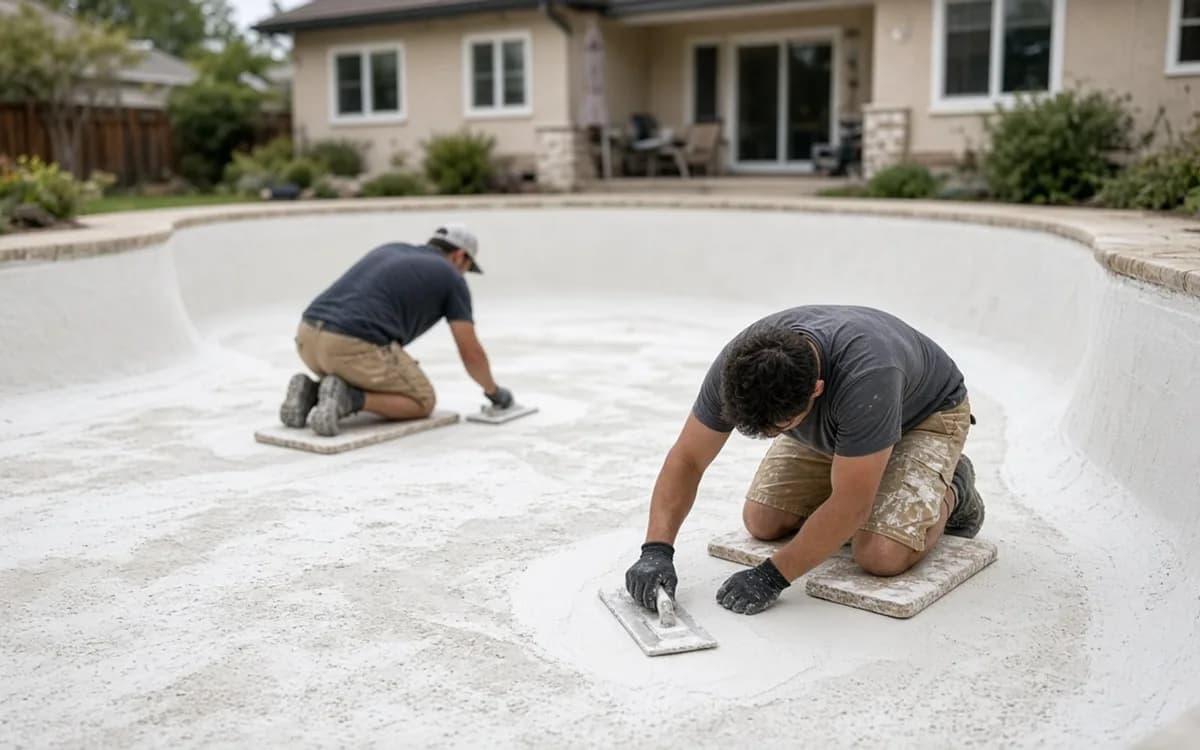
A renovation contractor's public record tells you more than a rating. Look for reviews that describe the diagnosis, the preparation under the finish, the empty-pool weeks and the year-two condition; verify the license and insurance yourself; and pull the permit history. This site does not rate or rank contractors; it shows you how to evaluate them.
Photo: Adheesha Paranagama · License.
Resurfacing and remodel work fails quietly. A finish that looked perfect at fill mottles in month two, delaminates in year three or scales because startup was skipped; a retile pops when the joint was never fixed; a pump is sized to the old pump's horsepower and cavitates at low speed. Reviews written the week of completion miss all of that. The reviews worth reading are the ones written a year or two later.
PHTA's Q3 2025 survey found 42% vs 21% on remodel revenue with margins flat, an environment where crews are stretched and the difference between contractors is process discipline rather than skill. HomeAdvisor's 2026 guide puts routine pool upkeep at $960–$1,800 per year, so over the years a contractor whose reviews mention honest maintenance advice is worth noting.
The scope and the product: 'pebble finish, brand named, with waterline tile and new coping.' The diagnosis: whether the contractor found or checked for leaks and hollows before quoting. The preparation: chip-out or bond coat. The schedule: how many days empty, whether there were gaps. Startup: who brushed, for how long, what instructions were left. And the follow-up: the year-two look of the finish and the tile line, and how the contractor responded to a call.
A review that reports a problem and a fix is worth more than a spotless one, because every renovation has a surprise behind the old finish. The contractor who showed the owner the cracked beam, priced it clearly and fixed it is the one you want. Shasta's lifespan table gives standard plaster , so a five-year-old review that says the plaster still looks new is the strongest kind of evidence.
Homeowner polls
No votes yet. Yours will be the first. · saved on this device
No votes yet. Yours will be the first. · saved on this device
 Service guidePool Resurfacing
Pool resurfacing replaces a worn interior finish on a concrete pool with new plaster, quartz, pebble aggregate or tile, or replaces the liner on a vinyl pool.
 Service guideTile & Coping Replacement
Tile and coping replacement renews the waterline band and the edge cap on the bond beam after the cause of the failure is understood.
 Service guideEquipment Upgrades
Equipment upgrades replace or add the pump, filter, heater, sanitizer, lights, automation and safety hardware on an existing pool.

Tell us the size, the condition of what is there now, and what you want to change. Pool Renewal Notes passes your request to independent local professionals, who reply with written, no-obligation estimates. The service is free to use.
Most states license pool contractors under a specific classification, and the board's website shows status, bond, complaints and discipline by number; ask for the number and look it up rather than accepting a photocopy. Request a certificate of insurance sent directly from the insurer showing general liability and workers' compensation with current dates. Then search the county permit portal by the contractor's name for volume, passed inspections and open permits.
For equipment installers, ask whether they are a registered dealer for the brands they propose, because manufacturer warranties on heaters and pumps often require it for the longer term. For remodelers, ask which trades are subcontracted and whether the remodeler holds the permit. HomeAdvisor lists tile permits at $50 to $300, and a contractor who says no permit is needed for a gas heater is telling you something.

'Prep as needed' with no method. No interior square footage. A finish named only as 'pebble' with no product. No mention of draining responsibility or groundwater. Equipment by brand with no model number. A warranty that is verbal or that lists no care conditions. A deposit larger than the first milestone justifies. And the biggest: a resurfacing price for a pool you told them is losing water, with no leak detection line.
The estimate request page lists what a complete proposal contains. HomeAdvisor's 2026 repair guide prices leak detection at $100 to $500 and the average repair at $725; a contractor who skips the first to sell the second is not saving you money. Shasta Pools prices a replaster at $3,500–$6,500 and Swimply's 2026 guide puts basic plaster at $5,000 to $10,000; when a reference paid well under those ranges, ask whether the saving came from the finish grade or from the preparation.
Finish crews are judged on the year-two surface and on startup. Tile setters on whether the tile is still on the wall after a winter and whether the joint was addressed. Equipment installers on sizing and service: did the pump get programmed to a real schedule, did the heater's minimum flow work at low speed, was the bill actually lower. Bob Vila gives pumps 8–12 years and variable-speed savings of 80% or more, and our analysis of EIA's 2024 survey found 48.2% of pool homes still without one; a review reporting the electric bill before and after is the useful kind.
For a remodeler, the review to find is about coordination, since CostHelper's users report 3 days vs 11 days for a replaster against a full upgrade: did the drained pool sit for weeks between trades, and did one person answer the phone. The remodel page explains why the sequence is the product.
Reviews shortlist; proposals decide. Read reviews and check records to pick three bidders, compare their proposals on diagnosis, preparation and separation of required from elective, call two references each and ask the year-two questions, then compare price. Owners who start with price tend to end with a finish over a leak.
Opendoor's 2026 analysis says a pool in good condition protects 5–8% of home value; a renovation done by the right contractor is what 'good condition' means at sale. The renovation polls show what other owners said mattered most in the contractor after the work was done.
Only as a first filter. Ratings are solicited at completion, when a fresh finish looks perfect and nothing has had time to fail. Read the text, weight reviews 18 months or older, and look for the ones describing startup, the joint and the year-two surface. A few detailed three-star reviews describing fixed problems tell you more than many short five-star ones.
Some states cap deposits by law; where they do not, 10 to 25% at signing with the balance at milestones such as chip-out, tile, and fill is common. A large deposit before draining is a warning, particularly from a contractor whose reviews mention pools left empty between phases.
Search the county permit portal for the contractor's permits without a final inspection, and ask directly how many pools are open and how many crews they run. Ask references whether the pool sat empty for weeks. A finish crew stretched across too many drained pools is the most common source of a two-week job that took two months.
Pick the one whose warranty you can read and whose reviews show it honored. A lifetime finish warranty with unstated care conditions is worth less than a five-year one that names the startup schedule and the chemistry range. Ask what voids it: mottling, scale and chemistry are common exclusions.
Yes, and a confident contractor will offer. Look at the finish for mottling, roughness and scale, the tile line for gaps, the coping joint for sealant condition, and ask the owner how startup was handled and whether a call was ever answered. A three-year-old pool tells you about process; a new one tells you about troweling.
New businesses exist and some are run by foremen from established crews. Verify the license and insurance, ask which company they worked for and check that record, and weight the written proposal and permit history more heavily. Ask for references from jobs they personally ran.
No. It matches your request to independent professionals in your area and shows you how to evaluate them. It publishes no ratings, testimonials or rankings and receives no payment from the contractor you hire. The evaluation is yours, and this page is the method.
A complete pool remodel coordinates several diagnosed repairs and desired changes, typically interior finish, tile and coping, deck, equipment and features, into one sequence with one drain cycle and one contractor accountable.