How many separate problems does the pool have?
No votes yet. Yours will be the first. · saved on this device
Loading...
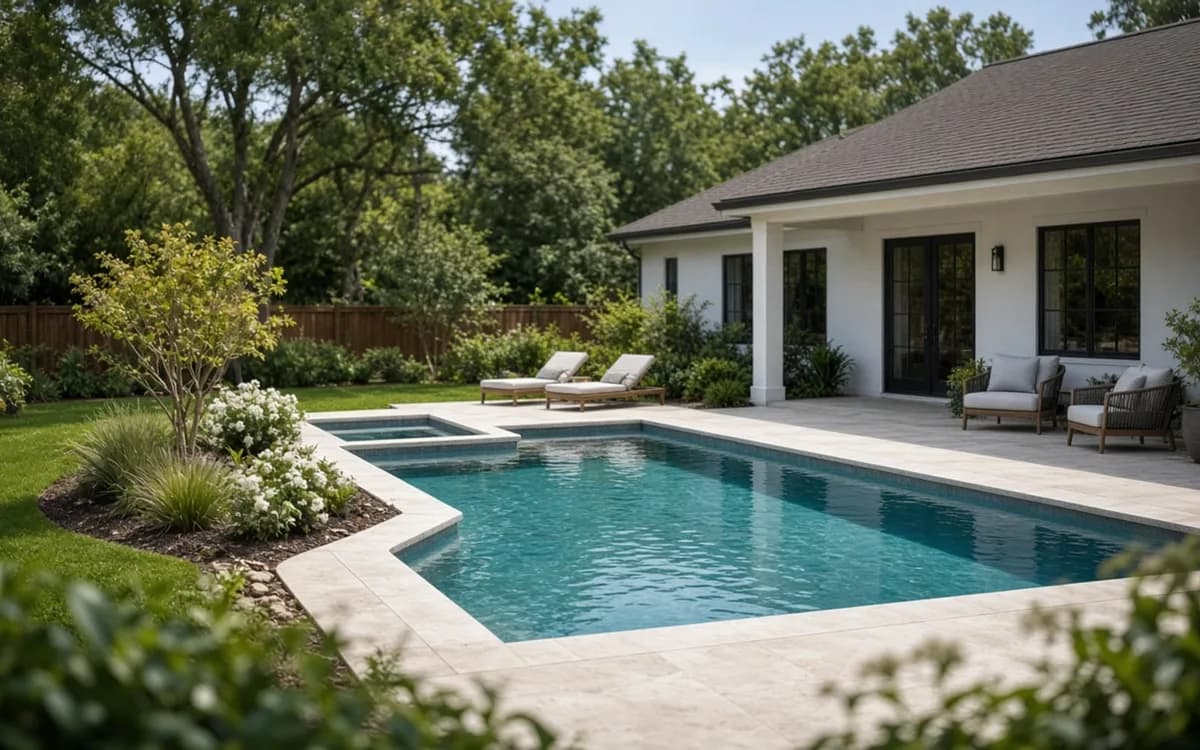
Pool Renewal Notes · Service guide
A complete pool remodel coordinates several diagnosed repairs and desired changes, typically interior finish, tile and coping, deck, equipment and features, into one sequence with one drain cycle and one contractor accountable. It suits pools with multiple problems or owners changing the look and the systems together. Required repairs and elective upgrades are priced as separate lines so the bundle does not hide the diagnosis.
A twenty-year-old concrete pool usually needs several things at once: the plaster is done, the tile line is gone, the deck has cracked at the coping, and the pump is a single-speed unit nobody has seen the inside of. Fixing those one at a time means draining three times, paying startup three times and living with a construction zone for two summers. Bob Vila's 2026 guide puts a remodel at $10,483, with full projects from $1,600 to $30,000 and multi-scope jobs past the average.
Angi's benchmark lands at $10,482, a broad range that mixes project sizes and repair scopes, which is the point: a remodel is whatever list you and the contractor agree on. This page covers how to build that list, how to sequence it, what each piece costs, and how to keep the required work visible under the elective work. For a single-scope problem, the service hub will point you to the smaller page.
Want the numbers only? Read the complete pool remodel cost guide for 2026 ranges, what moves the price, and sample budgets.
| Item | Low | High | Unit | Notes |
|---|---|---|---|---|
| Pool remodel, typical | $5,597 | $15,775 | flat | Bob Vila 2026; avg $10,483 |
| Pool remodel, full range | $1,600 | $30,000 | flat | Angi 2026; avg $10,482 |
| Multi-scope remodel (pebble, tile, deck, equipment) | $30,000 | $50,000 | flat | Sum of component ranges above |
| Deck demolition | $2 | $6 | per sq ft | Shasta 2026 |
| New concrete deck | $5 | $15 | per sq ft | Stamped $15 to $30; stone $20 to $40 |
| Deck overlay | $3 | $15 | per sq ft | SKIN Microplaster 2026 |
| Skimmer replacement | $1,500 | $3,000 | flat | Bob Vila 2026 |
| Leak detection | $100 | $500 | flat | HomeAdvisor 2026 |
When the pool must be drained anyway and more than one interior item is due, or when the deck is coming up and the equipment pad is being re-plumbed. HomeAdvisor's 2026 repair guide puts the average pool repair at $725 and in-ground repairs at $350 to $2,700, and notes that when repairs stack up, a planned remodel is often cheaper than piecemeal fixes. Bob Vila puts the average remodel at $10,483, a single figure that folds those repairs together.
It also makes sense when the owner wants a different pool: a tanning ledge cut into the shallow end, a raised wall with a sheer descent, a spa added, a new deck material, LED lights and automation. Those are elective, and they belong in the remodel as separate lines. What does not belong is an undiagnosed leak or a moving crack folded into a lump sum; those are required repairs and get priced on their own terms after assessment.
Price the spa as the elective it is. Our analysis of the EIA's 2024 household survey found 7.6% of occupied U.S. homes have a hot tub but only 2.1% have both a tub and a pool, and 69.1% of hot-tub homes report no pool at all. A built-in spillover spa is the less common pattern, and a portable tub on a pad beside the pool is a real alternative worth pricing against it.
The interior is the anchor: Shasta's $3,500–$6,500 for replaster, up to $15,000 for pebble. Waterline tile at $1,500 to $2,500 and coping at $30 to $50 per linear foot. The deck: Shasta prices replacing a 900 square foot deck at $5,400–$13,500 with demolition at $2 to $6 per square foot, while SKIN Microplaster's 2026 guide says resurfacing instead of replacing saves 40–60%, with most overlay jobs landing at $3,000 to $12,000.
Equipment: a variable-speed pump, a heater at HomeAdvisor's $3,094 average, a salt cell, LED lights at Bob Vila's $450–$1,700. Features: Bob Vila prices water features at $450 to $5,000, skimmer replacement at $1,500 to $3,000, slides at $1,000 to $15,000. Add them up and a full remodel with pebble, tile, deck overlay, pump, heater and lights runs $30,000 to $50,000 on a typical pool, which is why the Bob Vila average of $10,483 describes a smaller list.
| Remodel component | Typical range | Source |
|---|---|---|
| Interior finish (plaster to pebble) | $3,500 to $15,000 | Shasta 2026 |
| Waterline tile | $1,500 to $2,500 | Shasta 2026 |
| Coping replacement | $30 to $50 per linear ft | Bob Vila 2026 |
| Deck replacement, 900 sq ft | $5,400 to $13,500 | Shasta 2026 |
| Deck resurfacing instead | $3,000 to $12,000; saves 40 to 60% | SKIN Microplaster 2026 |
| Heater installation | $3,094 average | HomeAdvisor 2026 |
| LED lights / water features | $450 to $1,700 / $450 to $5,000 | Bob Vila 2026 |
| Saltwater conversion | $500 to $2,500 | Bob Vila / HomeAdvisor 2026 |
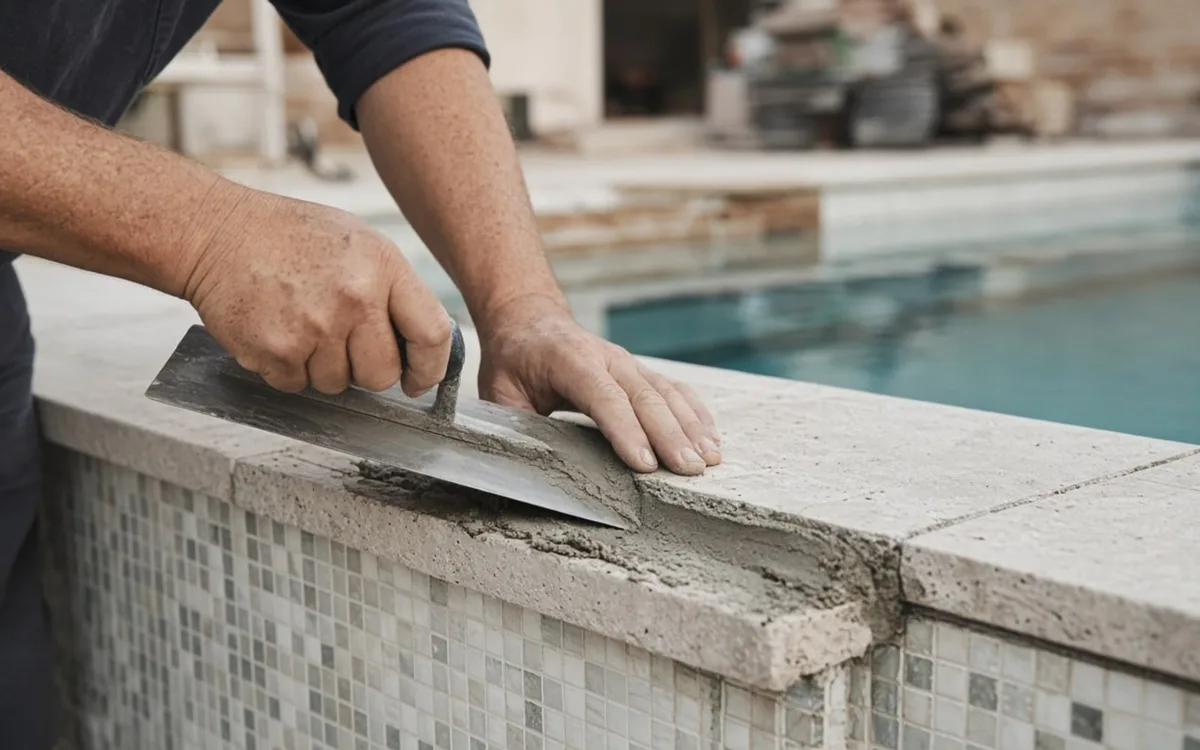
Diagnosis and any structural repair first, with the pool still full where possible. Then equipment pad re-plumbing and electrical rough-in, so new lines to features and lights are ready. Then drain, with the groundwater check. Chip-out of the old finish; beam repair; tile and coping; deck demolition and pour or overlay, with the expansion joint at the coping; then plaster or pebble as the last wet step, and the fill begins the same day. Startup and brushing follow for weeks.
CostHelper's user reports give 3 days vs 11 days, and Bob Vila's 4 to 8 weeks covers scheduling gaps, cure times and inspections. Deck concrete needs a week before the plaster crew walks on it. The pool is unusable throughout and the yard is a work zone, so in freeze climates the sequence must finish with a full pool before frost, and in the South it usually runs in winter.
A concrete deck with surface wear, minor cracks and an ugly color but no heave or settlement is a candidate for an overlay. SKIN Microplaster's May 2026 guide prices concrete overlays at $3 to $6 per square foot with a 10 to 15 year life, cool-deck finishes at $6 to $12, and stamped overlays at $8 to $15 lasting 15 to 25 years. Shasta agrees that resurfacing an intact slab is often the best value in a remodel.
A deck that has heaved, that slopes toward the house, that has cracked the bond beam, or that needs new plumbing runs underneath is replaced. Shasta prices new concrete at $5 to $15 per square foot, stamped at $15 to $30 and natural stone at $20 to $40, plus demolition. Replacement is also the moment to fix drainage and to cut the expansion joint correctly; the tile and coping page explains why that joint decides how long the new tile lasts. The deck resurface versus replace comparison goes deeper.
A compliant anti-entrapment main drain cover, replaced while the pool is dry. A barrier check against current local code: fence height, gate latches, door alarms. GFCI protection and the bonding grid verified before the deck is poured, because the deck buries it. CPSC's June 2026 report counted an average of 376 child drownings a year in pools and spas, with over 70% at a residence, and a remodel is the natural time to close every gap at once.
An automatic safety cover at Fixr's $3,594–$10,782 is the elective safety item that also cuts evaporation and heating cost. On a remodel, the track is set into the new coping or deck, which is far cleaner than retrofitting it later. Decide before the coping is ordered.
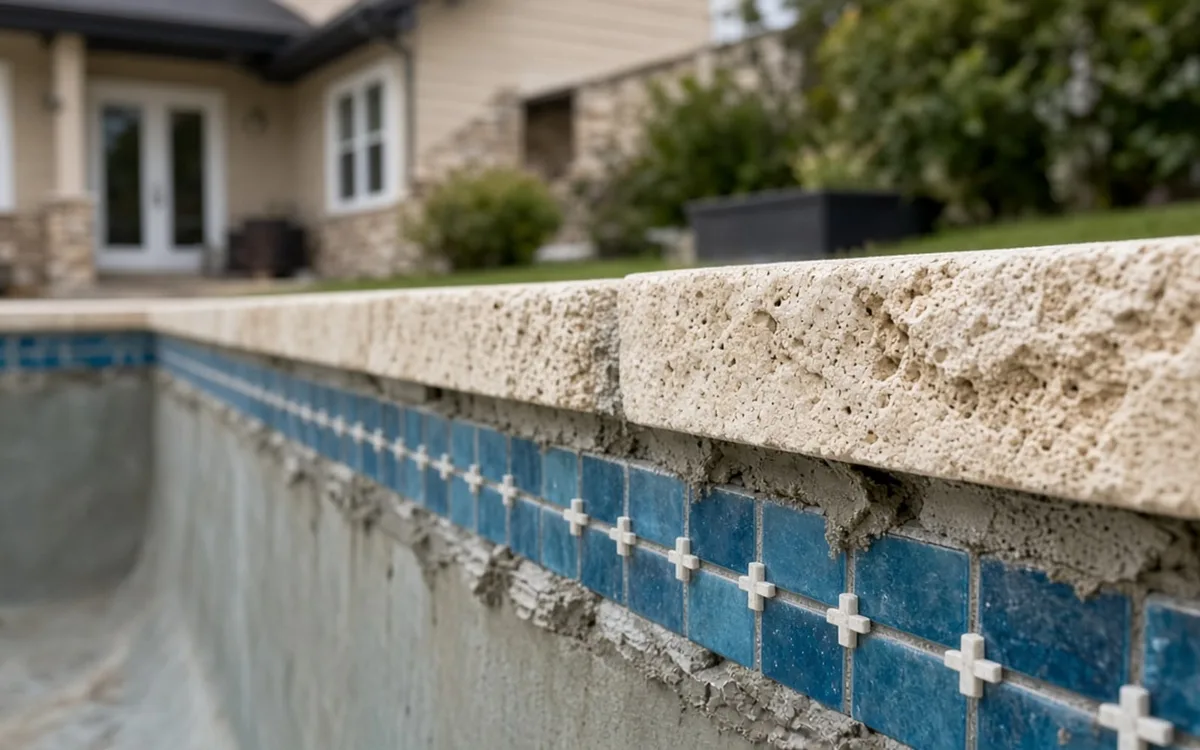
Ask for two sections. Required: what was diagnosed, by what method, and what it costs to fix; leak repair, beam repair, hollow spots, drain cover, bonding, barrier. Elective: the finish grade above standard plaster, tile choice, coping profile, deck material, pump, heater, salt, lights, features, cover. Each elective line should be strikable without changing the required section. The site's own checkpoint is exactly this: clear diagnoses and individual prices for optional upgrades.
The market favors the organized owner. PHTA's Q4 2024 Pulse found 49% vs 19% on remodel revenue, and its Q3 2025 survey found demand still twice as likely rising as falling with flat margins, so contractors are busy and firm on price but responsive to a clear scope. Book fall or winter, send the estimate request with photos of every problem area, and compare the required sections first.
Opendoor's May 2026 analysis puts a pool in good condition at 5–8% of home value, 10 to 15% or more in the Sun Belt, and puts major repairs at $5,000 to $15,000 per event and routine upkeep at $3,000 to $5,000 a year. A pool with a rough finish and a dead heater is a credit at closing; the same pool after a $12,000 replaster-and-tile is a listing photo. The required section of a remodel almost always pays back at sale; the elective section pays back in use.
Opendoor estimates a pool in good condition adds 5–8% to home value, and 10% to 15% in the Sun Belt, a premium that assumes the finish, tile and deck are sound, which is why repair-led renovation comes first. The renovation polls show which remodel items owners here prioritized before listing.
Pool Renewal Notes ran these numbers on the federal government's own household data. You won't find them in a contractor's brochure.
Pool Renewal Notes analysis · 2024
95% interval 65.6%–72.6% · about 6.3 million homes · 1,222 survey households
Most hot tubs sit on their own, not beside a pool. A stand-alone spa pad with its own electrical run is the common project, and it doesn't need to be priced as a pool package.
Source: Pool Renewal Notes analysis of 2024 federal household survey data from the U.S. Energy Information Administration. How we calculated it
Homeowner polls
No votes yet. Yours will be the first. · saved on this device
No votes yet. Yours will be the first. · saved on this device
No votes yet. Yours will be the first. · saved on this device
 Service guidePool Resurfacing
Pool resurfacing replaces a worn interior finish on a concrete pool with new plaster, quartz, pebble aggregate or tile, or replaces the liner on a vinyl pool.
 Service guideTile & Coping Replacement
Tile and coping replacement renews the waterline band and the edge cap on the bond beam after the cause of the failure is understood.
 Service guideEquipment Upgrades
Equipment upgrades replace or add the pump, filter, heater, sanitizer, lights, automation and safety hardware on an existing pool.
Yes. Filling a deep end to a sport depth, adding a tanning ledge or a bench, or cutting a new step is done with formed and shot concrete bonded to the old shell before the new finish. It adds engineering and cost, typically several thousand dollars per change, and the new concrete must cure before plaster. Reshaping a vinyl or fiberglass pool is far more limited.
A raised gunite spa is built on or beside the existing shell with its own plumbing to the pad, sharing the pump and heater through new valves. It is the most expensive route to a spa and usually part of a remodel because the deck comes up for the plumbing. A portable hot tub on a pad next to the pool is the cheaper alternative if the spillover look is not essential.
Almost always for the electrical, gas and any structural changes, often for the deck, and sometimes for the finish. The contractor should list which items trigger permits and who pulls them. Inspections for bonding happen before the deck is poured, so the schedule has to allow for the inspector.
It happens: hollows larger than sounded, a cracked beam behind tile, rusted steel. The proposal should state an allowance for hollow spots per square foot and a unit price for beam repair so surprises are priced in advance. Ask to see the damage before approving a change order, and photograph it.
As short as possible. An empty concrete shell dries and can crack in hot weather, and on a high water table it can float. A well-sequenced remodel keeps the empty period to two or three weeks with continuous work. If the schedule shows the pool empty for a month with gaps, ask why.
Before. The remodel brings equipment, concrete trucks and a drained pool's worth of mess through the yard, and new plumbing and conduit may run under planting areas. Landscaping, irrigation repair and lawn go last, after the deck is finished and the pool is full.
For sequencing, yes: one party owns the drain, the beam elevation, the joint and the schedule. Some pool remodelers subcontract the deck or the electrical, which is fine if the proposal says so and the remodeler remains responsible. Separate trades can be cheaper but need you to coordinate, and gaps between them are when a drained pool sits.
Separate terms for the finish, the tile and coping, the deck and each piece of equipment, since different manufacturers and crews stand behind each. Finish warranties usually depend on documented startup care. Ask for every warranty in writing before the deposit, and ask what voids each one.
 Free toolPool resurfacing and renovation cost calculator
Size, material tier and complexity in, a realistic budget range out.
 Free toolRenovation comparisons, decided by your pool's condition
Side-by-side tables for the decisions that change the price most.
 Free toolPool renovation quiz: nine facts to know before the first proposal
9 questions that show what you already know and what to check next.
 Free toolPool renovation polls
See what other planners chose and add your vote.
Tell us the size, the condition of what is there now, and what you want to change. Pool Renewal Notes passes your request to independent local professionals, who reply with written, no-obligation estimates. The service is free to use.