What triggered the project now?
No votes yet. Yours will be the first. · saved on this device
Loading...
About Pool Renewal Notes
Pool Renewal Notes is an independent planning resource for U.S. owners of existing pools. It explains how to tell a finish problem from a leak, a beam failure or an equipment fault, publishes sourced costs and lifespans for each renovation scope, and matches homeowners with independent local pool professionals for a free written estimate. It does not perform work, employ crews or rank contractors.
Most pool renovation goes wrong before the first hammer swing, when a symptom is turned into a scope without a diagnosis in between. 'The pool looks rough' becomes 'replaster it,' and the leak under the plaster gets a new finish to hide behind. This site exists to put the diagnosis step back: which symptom points where, what each scope actually fixes, and what it costs from sources you can check.
The second function is matching. When you can describe the problem, the estimate request sends your brief to independent pool professionals who work in your area. They respond with written proposals. Nobody here is paid by the contractor you choose, and nobody here will tell you which one to choose.
From published cost guides, manufacturer and contractor guides, and federal and industry data, each named on the figure. Cost guides: HomeAdvisor, Angi, Bob Vila, Fixr, CostHelper. Trade sources: Shasta Pools, We Fix Ugly Pools, SKIN Microplaster, River Pools, Pentair, In The Swim, Pool Goods, each flagged where it sells what it describes. Data: our own analysis of EIA's 2024 Residential Energy Consumption Survey microdata, ENERGY STAR, CPSC, the Pool and Hot Tub Alliance, Pool Corporation's earnings calls, Opendoor and Houzz.
Every figure keeps its period, geography and denominator. EIA's finding that 48.2% of pool homes lack a variable-speed pump is installed stock, not sales. PHTA's finding of 49% vs 19% on remodel revenue is a survey of pool businesses. CostHelper's prices are user-reported. When a number is described here, its limits are described with it.
Because a finish is the most expensive way to hide a problem. River Pools puts concrete resurfacing at every 10–15 years, and a new finish over a leaking fitting or a moving beam does not get its ten years. In practice the site asks three things of every scope: what was diagnosed and how, what preparation and repair is included under the visible work, and what startup and care conditions the warranty depends on.
The same principle applies to equipment. Efficiency claims are kept separate from savings. Pentair cites up to 90% pump energy savings; Pool Goods models about 65%; your run schedule and electric rate decide what you get. The equipment page presents both and says why they differ.

It does not employ, license, insure, inspect or rate the professionals it matches. It publishes no testimonials, star ratings, awards or completion counts. It does not receive payment from the contractor you hire. The review guide shows you how to check a contractor's public record yourself, which is more reliable than any badge a directory could award.
It also does not diagnose your pool remotely. The symptom table on the home page tells you which scope to price first; a leak detection service, a site visit and a proposal tell you what is actually wrong. Use the site to ask better questions of the pros who look at the pool.
You describe the pool, the symptom, the age and finish if known, and the scopes you want priced, and attach photos. The request goes to independent pool professionals who serve your area and handle that scope: resurfacing crews, tile setters, equipment installers or remodelers. They contact you, usually visit, and send a written proposal. You compare, negotiate or decline. There is no fee and no obligation at any stage.
Pool Corporation reports that remodel work is 22% of pool product sales, and by our analysis of the EIA's 2024 household survey 7.2% of occupied U.S. homes have a pool, so the contractor base is large. The quality of the responses tracks the quality of the brief, which is why the contact page lists what to include.
Cost guides update on their publishers' schedules, mostly annually; when a source updates, the figure and year here update with it. Our analysis of EIA's household survey microdata, such as the finding that 69.1% of hot-tub homes report no pool and that 47.7% of pool homes have a variable-speed pump, is labeled by survey year. Industry data from PHTA and Pool Corporation is quarterly and is used for market direction, not pricing. If a proposal you receive conflicts with a number here, the proposal is specific to your pool and the number is a national reference; use the reference to ask why.
Corrections go through the contact page with the page and figure cited. Every statistic links to its source, so a correction is checked against the source rather than against a competing claim.

 Service guidePool Resurfacing
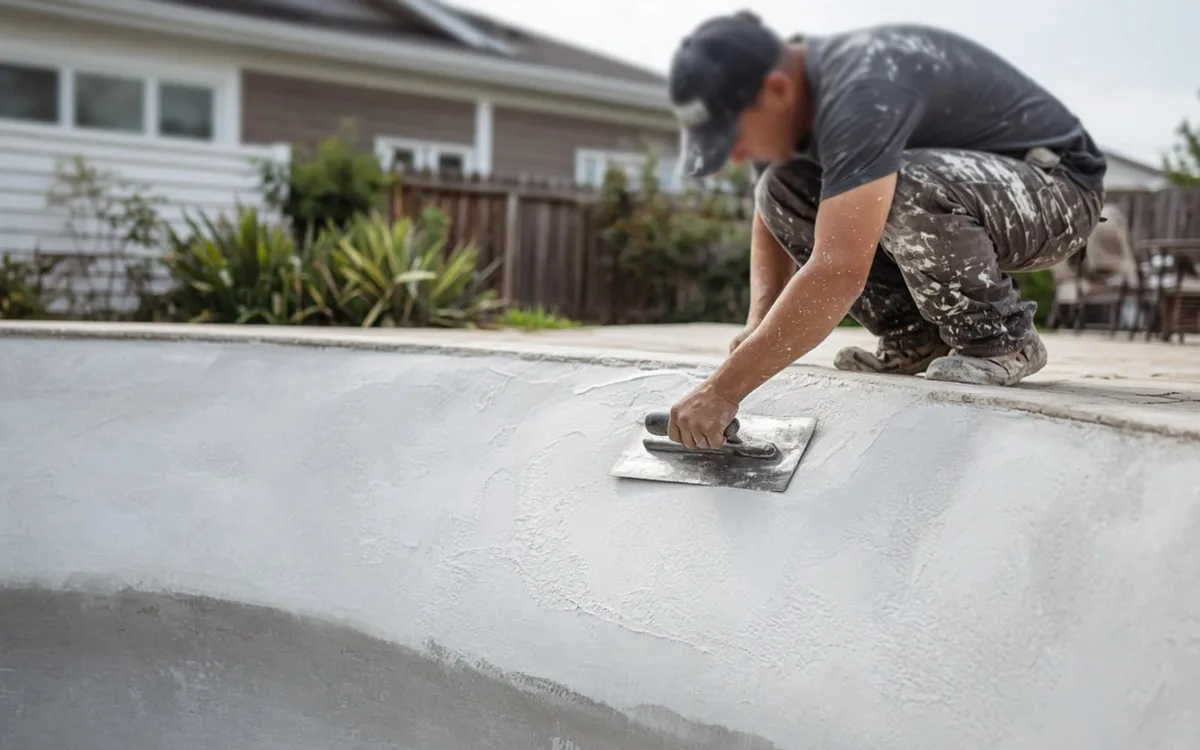
Pool resurfacing replaces a worn interior finish on a concrete pool with new plaster, quartz, pebble aggregate or tile, or replaces the liner on a vinyl pool.
 Service guideTile & Coping Replacement
Tile and coping replacement renews the waterline band and the edge cap on the bond beam after the cause of the failure is understood.
 Service guideEquipment Upgrades
Equipment upgrades replace or add the pump, filter, heater, sanitizer, lights, automation and safety hardware on an existing pool.
 Service guideComplete Pool Remodel
A complete pool remodel coordinates several diagnosed repairs and desired changes, typically interior finish, tile and coping, deck, equipment and features, into one sequence with one drain cycle and one contractor accountable.
Homeowner polls
No votes yet. Yours will be the first. · saved on this device
No. It is a planning resource and a matching service. It does not resurface, tile, install equipment or remodel pools, and it does not employ the professionals who respond to estimate requests. Those are independent businesses you contract with directly.
No. It is free to the homeowner and carries no obligation. Some contractors charge for leak detection or a detailed assessment before quoting, which they should disclose in advance; that fee is between you and them and is often credited if you proceed.
Because the most expensive renovation mistake is a finish over an active problem. Resurfacing at $6,000 to $15,000 over a leak that a $100 to $500 detection would have found is money spent twice. Every service page repeats the rule because every service is vulnerable to it.
For the structure of pricing, yes; they publish detailed component costs that neutral guides do not. For the level, compare with HomeAdvisor, Bob Vila and CostHelper, which the site does on each page. Where a source sells what it describes, the text says so.
Yes, where the scopes apply. Liner replacement is covered on the resurfacing page with HomeAdvisor's and Bob Vila's figures; equipment upgrades are identical across shell types; tile and coping on fiberglass pools sit on the concrete collar. Reshaping and structural repair sections apply mainly to concrete.
By service area and scope. A resurfacing request goes to interior finish contractors; an equipment request to installers; a remodel to remodelers who coordinate trades. The site does not rank them. Verifying license, insurance and references is described in the review guide.
Use the contact page and name the page and figure. Each statistic carries its source link; if the source has changed or was misread, say which. Corrections are made against sources.
 LocationsRegional planning notes
How climate, codes and prices change a project across U.S. regions.
 ArticlesPlanning articles
Cost guides, checklists and mistakes to avoid before you sign.
 ReviewsHow to read reviews
What genuine contractor reviews look like and what they leave out.
Tell us the size, the condition of what is there now, and what you want to change. Pool Renewal Notes passes your request to independent local professionals, who reply with written, no-obligation estimates. The service is free to use.