What symptom started your renovation planning?
The symptom decides which scope to price first.
No votes yet. Yours will be the first. · saved on this device
Loading...
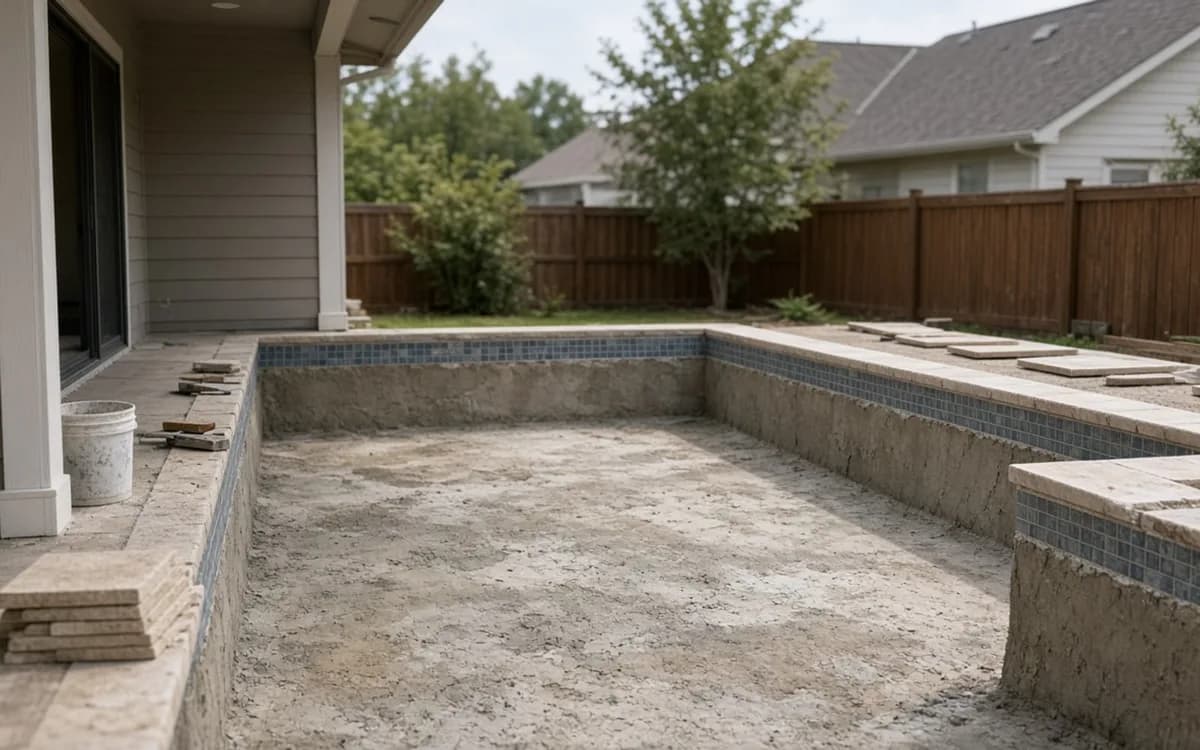
Find out what your pool needs before choosing a new finish.
Pool Renewal Notes is a planning resource for U.S. owners of existing pools weighing resurfacing, tile and coping replacement, equipment upgrades or a coordinated remodel. It separates cosmetic wear from leaks, movement and equipment faults, publishes sourced costs and lifespans, and matches you with independent local pool professionals for a free written estimate with no obligation.
By the numbers
Every figure links to its published source.
$10,482
A U.S. pool remodel averages $10,482, with a range of $1,600 to $30,000
Angi's cost guide, updated August 2026, is the benchmark behind this site. It is a broad range that mixes project sizes and repair scopes; a new surface, structural repair or reshaped pool needs its own diagnosis and quote.
Angi, Pool Remodel Cost (2026)$11,000
Pool resurfacing averages $11,000; most projects land between $6,000 and $15,000
HomeAdvisor's 2026 guide shows resurfacing can run from $1,000 for paint on a small pool to $50,000 for a full tile interior. Size, the finish you choose and how much prep the old shell needs drive the final number.
HomeAdvisor, Pool Resurfacing Cost (2026)5–10 vs 20+ years
Standard plaster lasts 5–10 years; quartz 10–15; aggregate 15–20; pebble 20+
Shasta Pools' lifespan table shows a pebble finish can outlast plaster by two to four cycles. Paying roughly double up front for pebble often costs less per year of service than replastering repeatedly.
Shasta Pools, Cost to Replace Your Pool Tile, Deck or Interior Finish (2026)$30–$50 per linear foot
Pool coping replacement costs $30–$50 per linear foot; re-grouting ~$3 per sq ft
Bob Vila's 2026 remodel guide also prices patching at $65 per linear foot and full step-wall replacement around $4,500. Coping is often replaced together with waterline tile because both sit at the bond beam.
Bob Vila, Pool Remodel Cost (2026)A pool that has gone rough underfoot, lost its waterline tile or started dropping an inch a day is telling you something, and the something is not always 'resurface me.' Angi's 2026 benchmark puts a pool remodel at $10,482 with a range of $1,600 to $30,000, a spread that exists because the word covers everything from a replaster to a reshaped shell with new equipment. The first job is to find out which of those you actually need.
This site is organized around that diagnosis. Read the service pages to see what each scope fixes and what it does not, use the resurfacing calculator for a first number, weigh plaster against pebble on the comparison pages, and send the estimate request once you can describe the symptom rather than the cure.
Pool Renewal Notes ran these numbers on the federal government's own household data. You won't find them in a contractor's brochure.
Pool Renewal Notes analysis · 2024
95% interval 65.6%–72.6% · about 6.3 million homes · 1,222 survey households
Most hot tubs sit on their own, not beside a pool. A stand-alone spa pad with its own electrical run is the common project, and it doesn't need to be priced as a pool package.
Source: Pool Renewal Notes analysis of 2024 federal household survey data from the U.S. Energy Information Administration. How we calculated it
Each guide covers what it costs, what fails first, and how to compare written proposals.
 Service guidePool Resurfacing
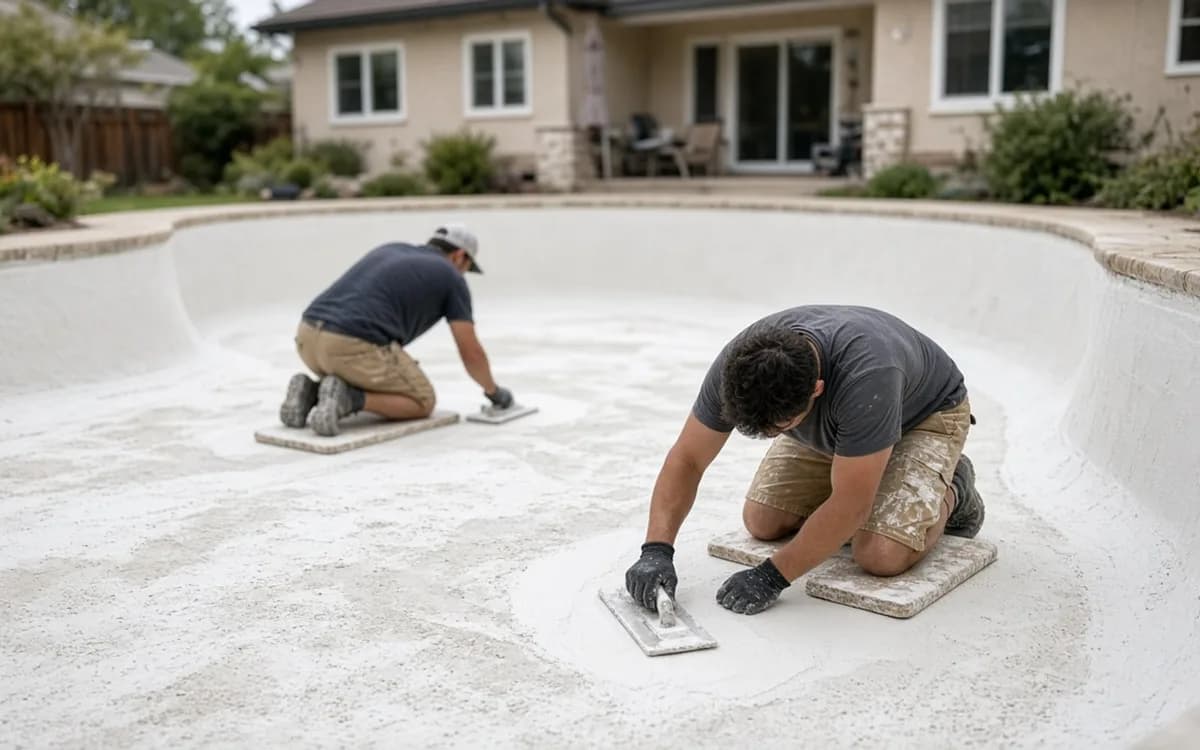
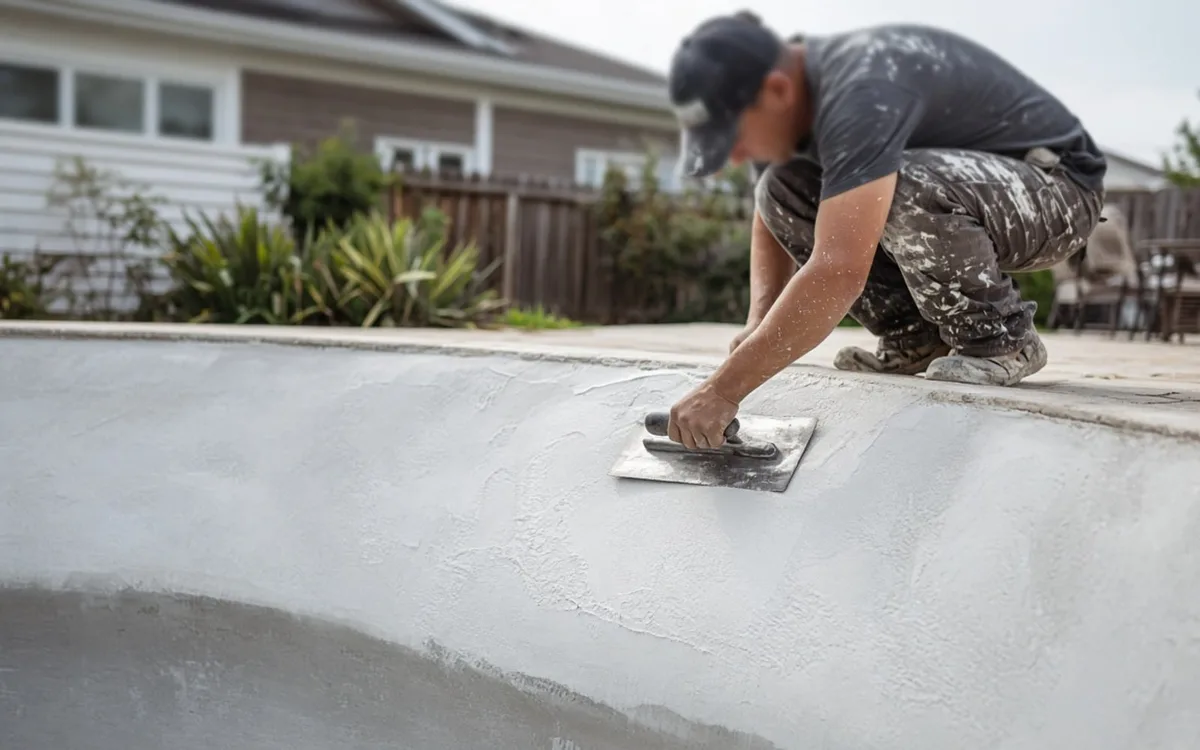
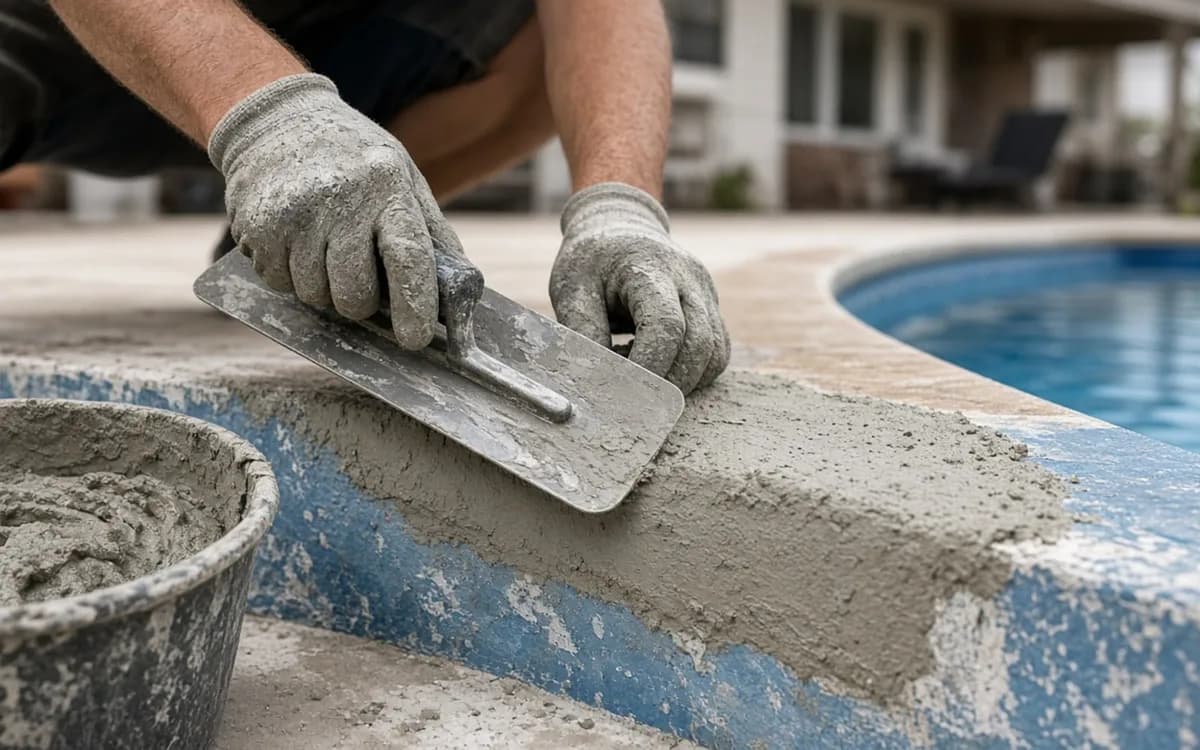
Pool resurfacing replaces a worn interior finish on a concrete pool with new plaster, quartz, pebble aggregate or tile, or replaces the liner on a vinyl pool.
 Service guideTile & Coping Replacement
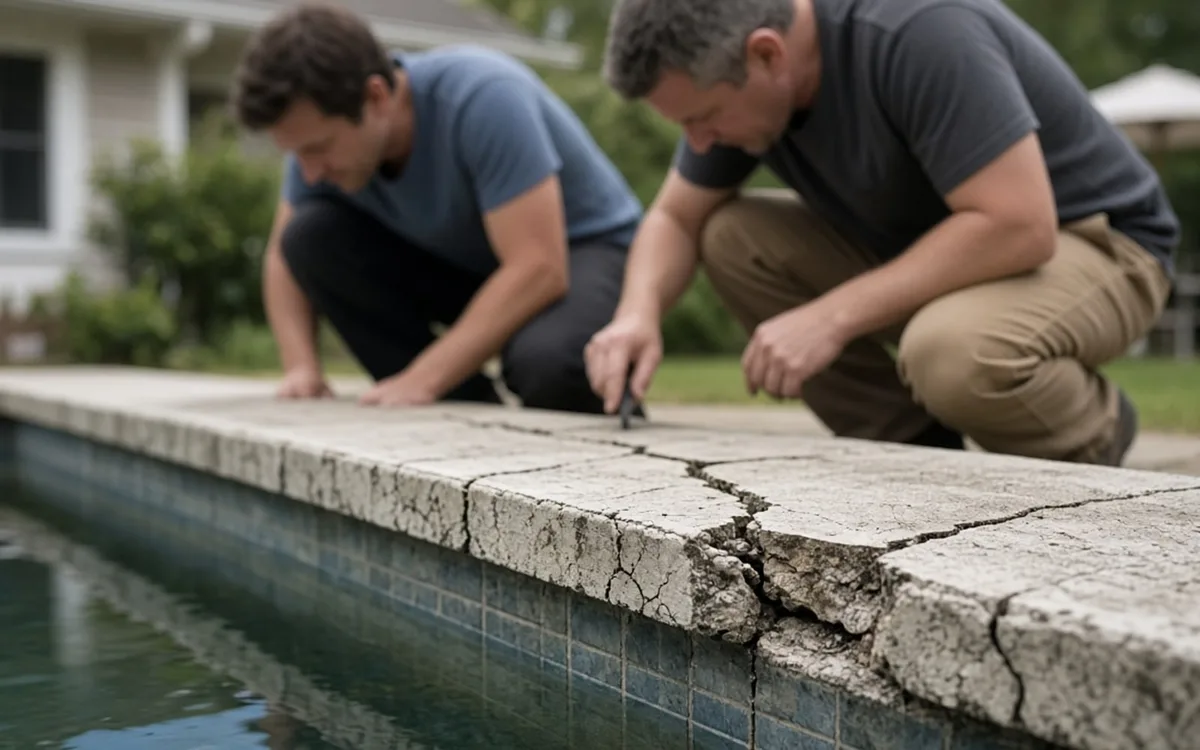
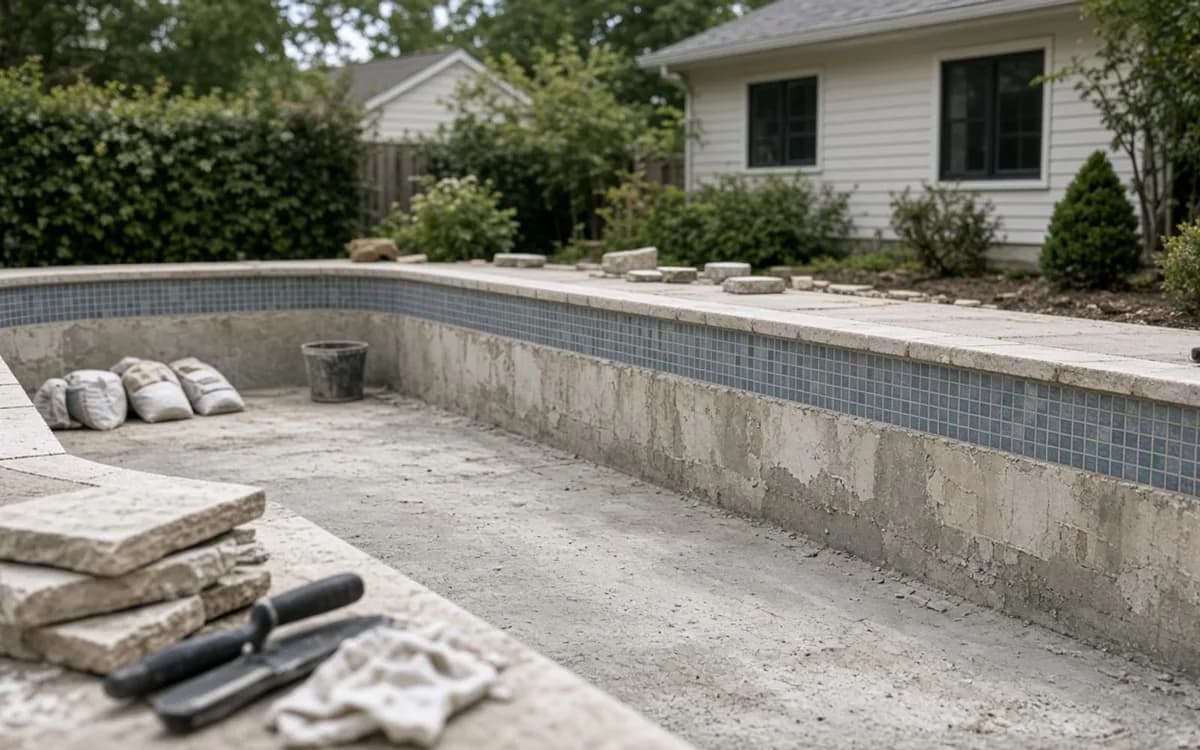
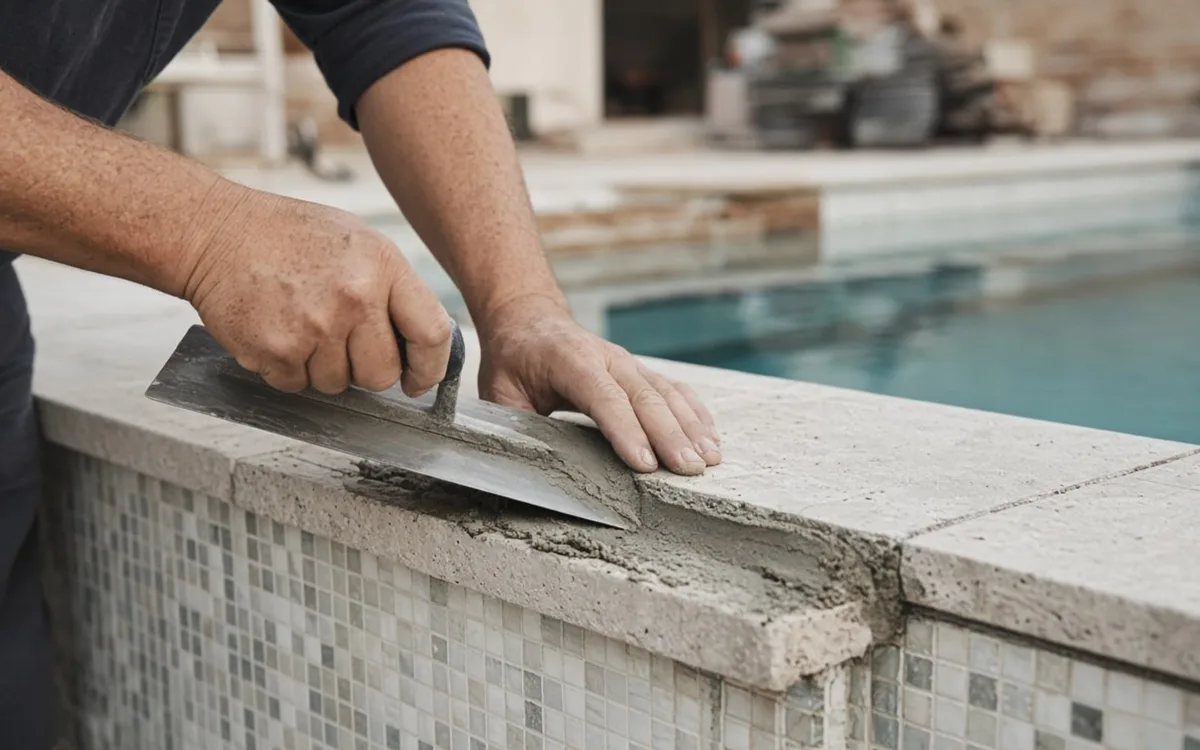
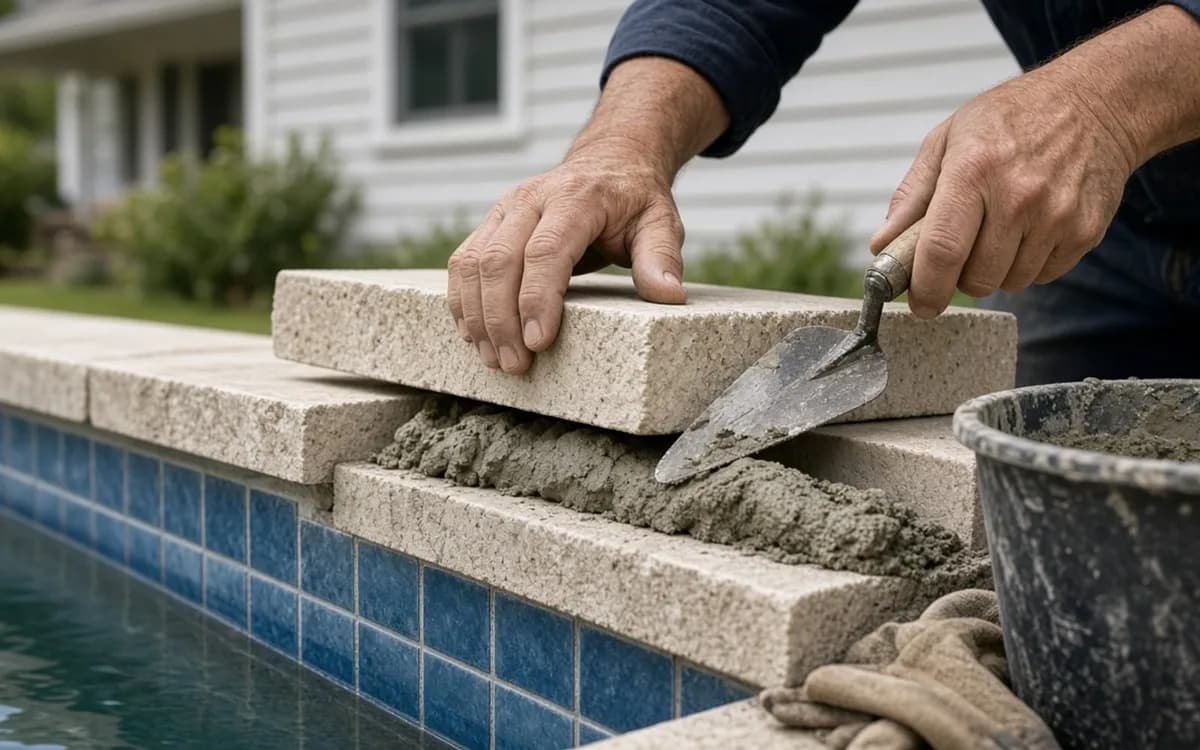
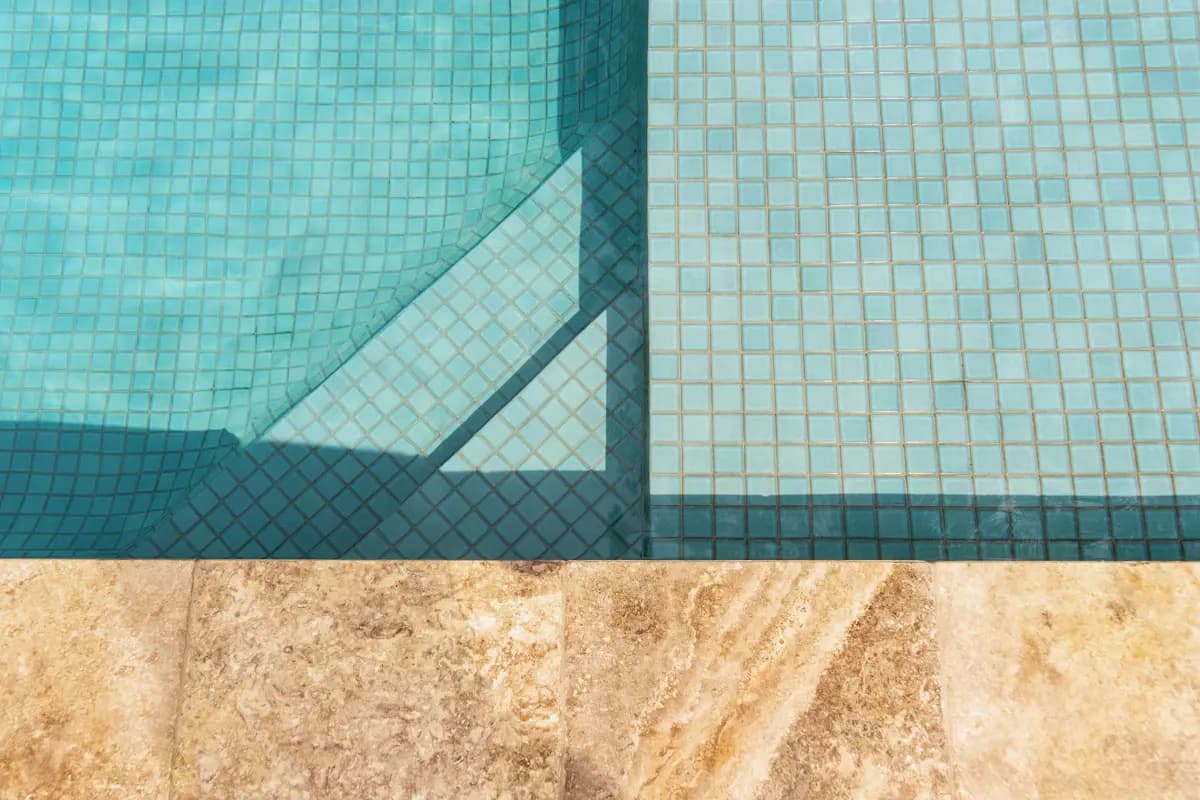
Tile and coping replacement renews the waterline band and the edge cap on the bond beam after the cause of the failure is understood.
 Service guideEquipment Upgrades
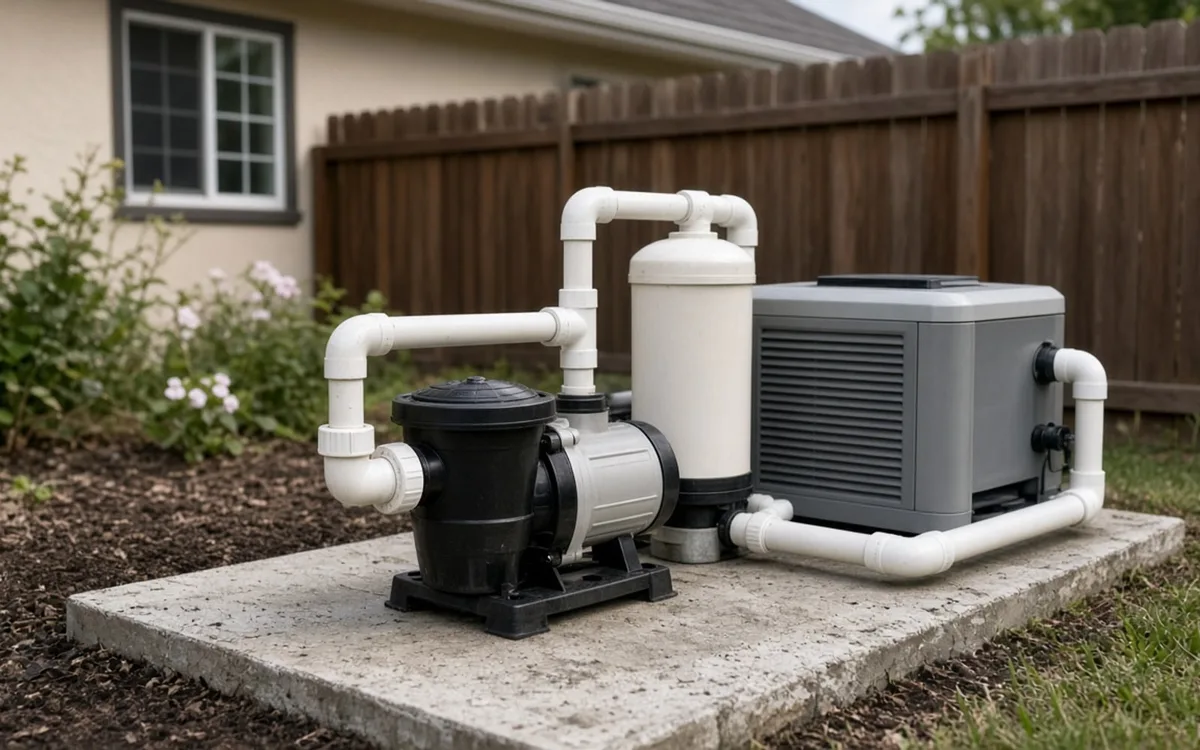
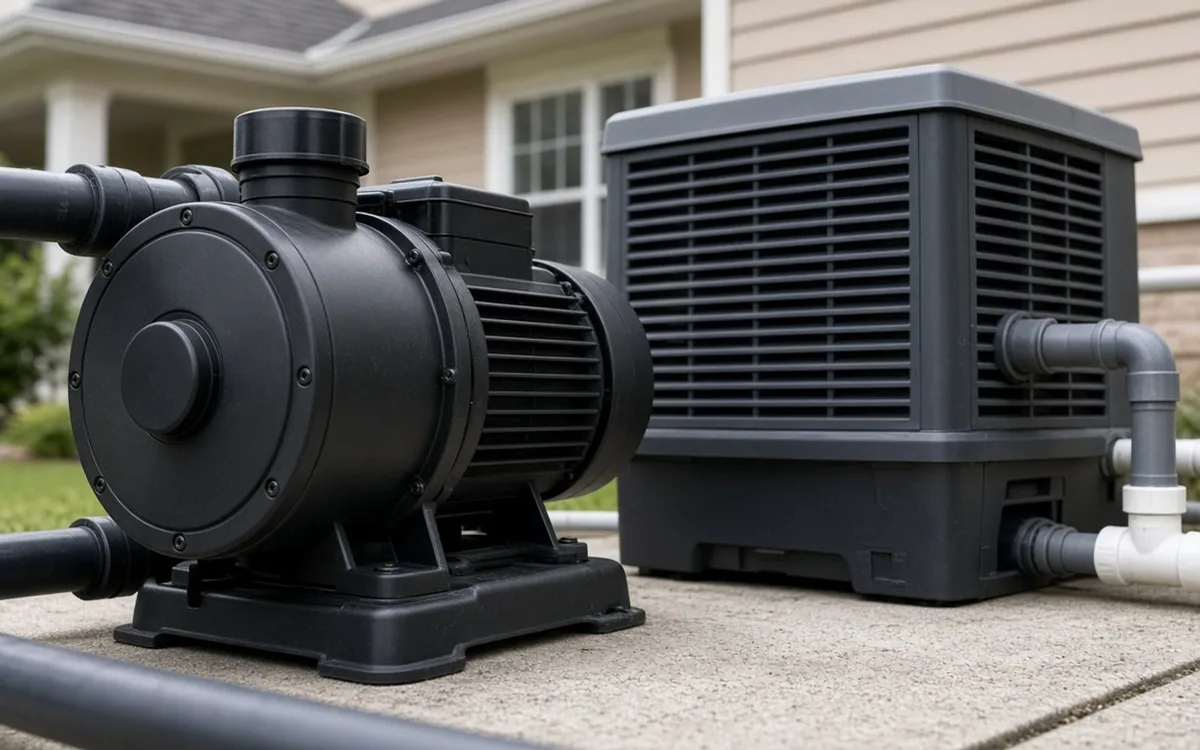
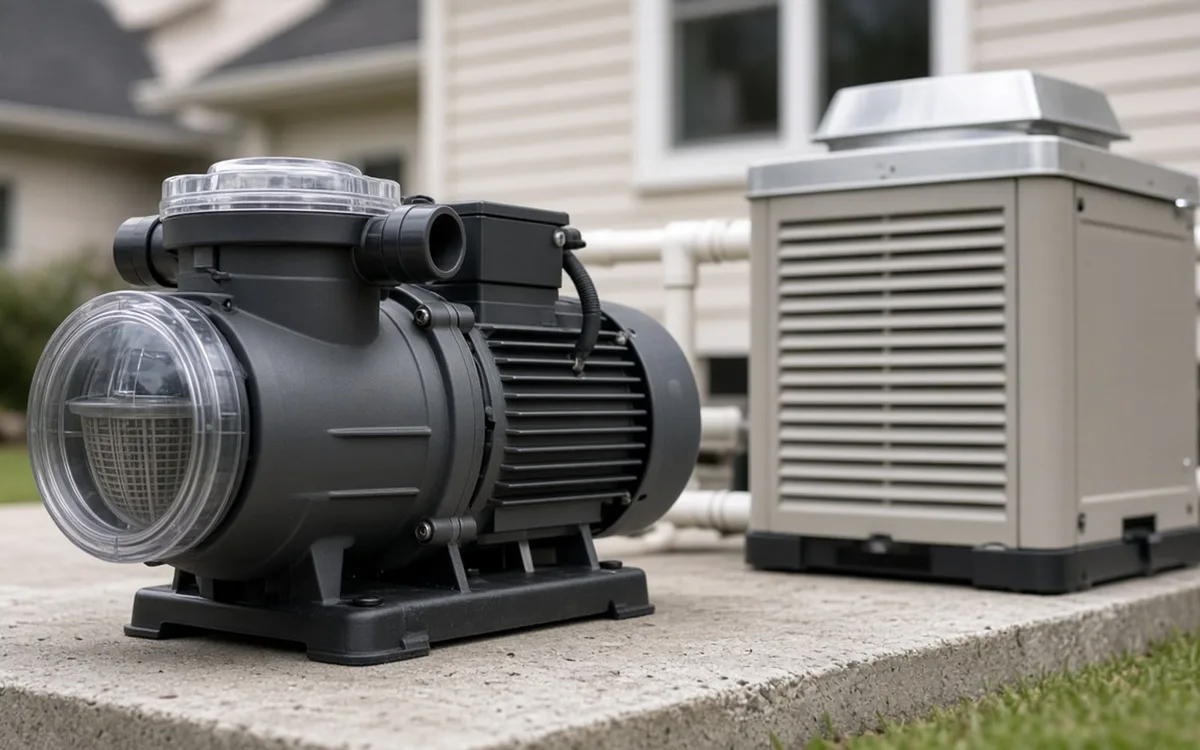
Equipment upgrades replace or add the pump, filter, heater, sanitizer, lights, automation and safety hardware on an existing pool.
 Service guideComplete Pool Remodel
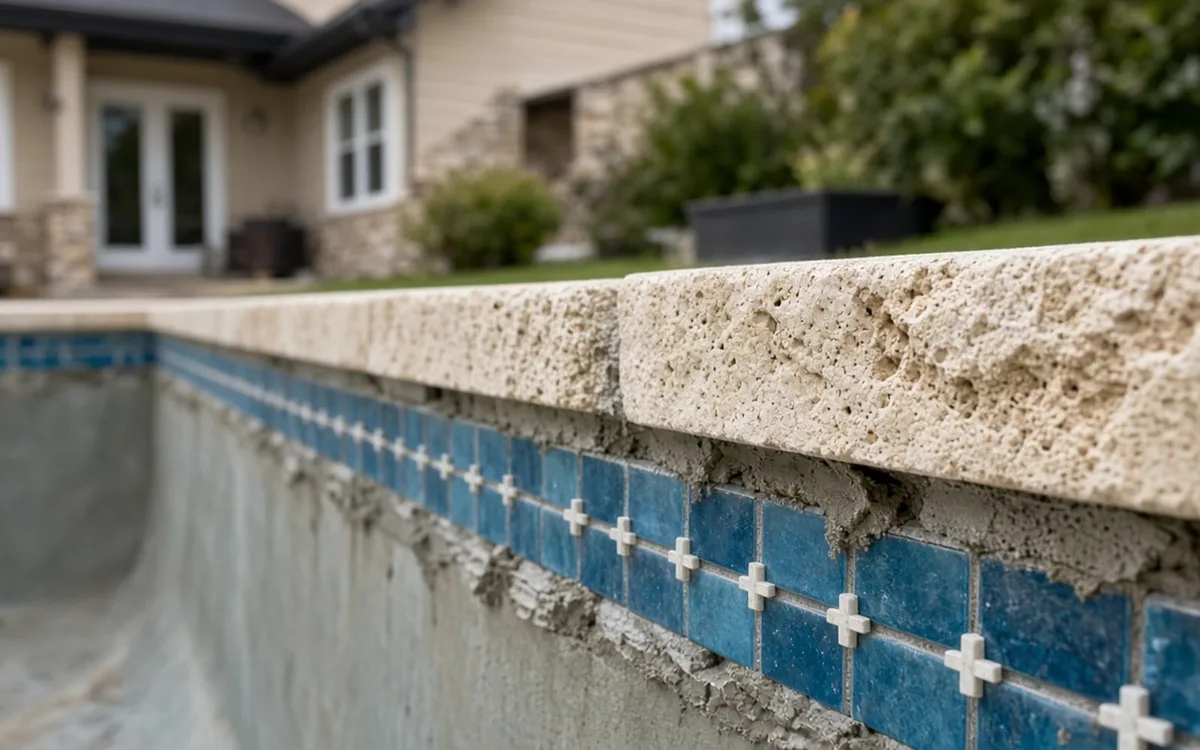
A complete pool remodel coordinates several diagnosed repairs and desired changes, typically interior finish, tile and coping, deck, equipment and features, into one sequence with one drain cycle and one contractor accountable.
Rough, pitted or stained plaster with no water loss is a finish problem and points to resurfacing. Tile popping off at the waterline, cracked coping or a gap opening between deck and pool is a bond-beam problem and points to tile and coping work, after someone checks why the beam moved. A pump you can hear from the kitchen, a heater that trips or a filter that cannot hold pressure is equipment. Three of the above at once is a remodel.
Water loss is the one that fools people. A pool losing more than evaporation, roughly a quarter inch a day in most climates, has a leak in the shell, a fitting, a light niche or the plumbing, and HomeAdvisor's 2026 repair guide prices leak detection at $100 to $500. A new finish will not fix a cracked return line, and a resurfacing contractor who says it will has not looked. Diagnose first; the finish comes after.
| Symptom | Likely cause | Scope to price first |
|---|---|---|
| Rough, etched or stained interior; no water loss | Finish at end of life | Resurfacing |
| Tile falling off at waterline; coping loose | Bond beam movement or deck pressure | Tile and coping, after a movement check |
| Losing more than 1/4 inch a day | Shell, fitting or plumbing leak | Leak detection ($100 to $500) |
| Loud pump, tripping heater, high electric bill | Aging single-speed equipment | Equipment upgrade |
| Deck heaving, cracks radiating from the pool | Soil movement or joint failure | Structural assessment before anything |
| All of the above on a 20-year-old pool | Cumulative age | Coordinated remodel |
HomeAdvisor's 2026 guide puts resurfacing at $11,000, from about $1,000 for paint on a small pool to $50,000 for a full tile interior. By finish, plaster runs about $5,500 per 1,000 sq ft, aggregate about $6,500, and tile up to $30,000. Shasta Pools' January 2026 guide lands in the same place: replaster $3,500 to $6,500, quartz $7,000 to $10,000, pebble $6,000 to $15,000, tile $15,000 to $30,000.
The reason to spend more is lifespan. Shasta's table gives 5–10 vs 20+ years, so a pebble interior can outlast plaster by two to four cycles. River Pools' ownership guide says concrete pools need resurfacing every 10 to 15 years at $10,000 to $20,000 each time. Paying roughly double for pebble often costs less per year of service than replastering repeatedly, which is the math the plaster versus pebble comparison walks through.
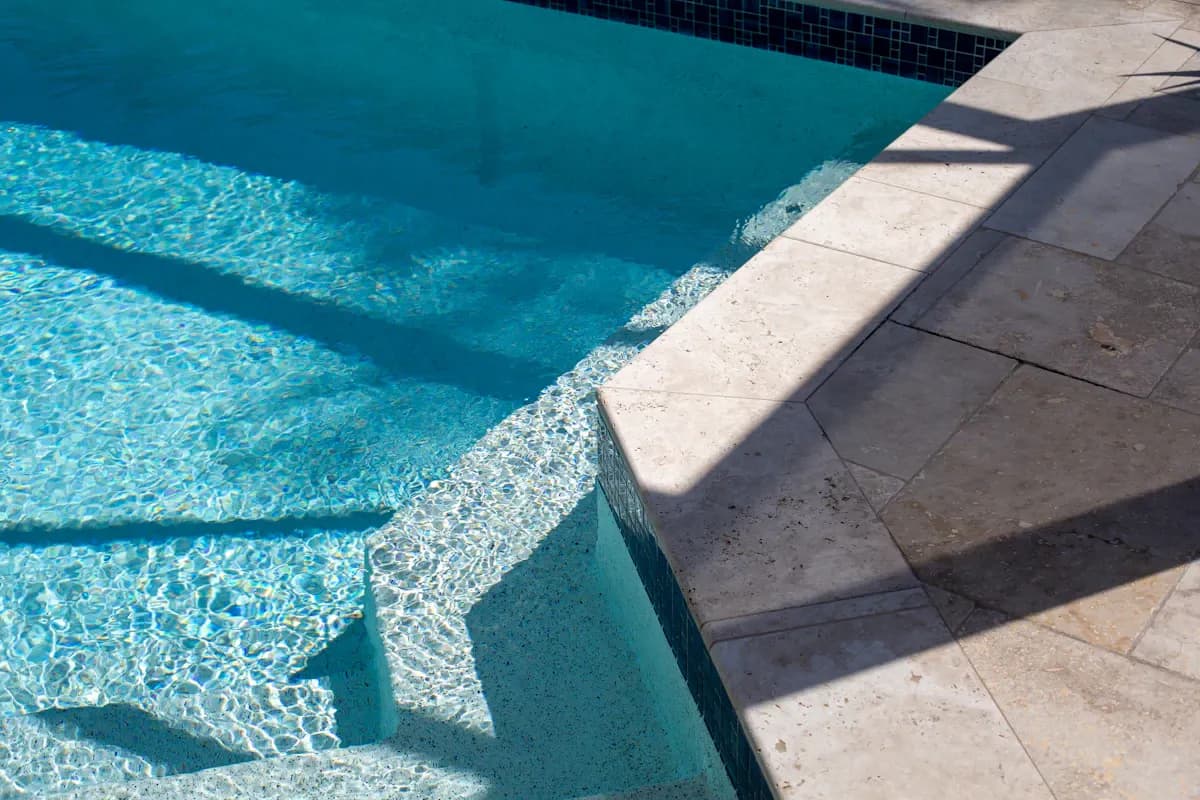
Both sit on the bond beam, the reinforced ring at the top of the shell. When the deck pushes against it because the expansion joint failed, or when water gets behind the tile through a cracked grout line and freezes, the tile pops and the coping cracks in the same season. Bob Vila's 2026 remodel guide prices coping replacement at $30–$50 per linear foot and notes coping is often replaced with waterline tile for exactly that reason.
Waterline retiling is the affordable fix when the beam is sound: Shasta prices it at $25–$30 per linear foot, and We Fix Ugly Pools puts a typical 60 to 100 linear foot job at $1,200 to $6,000. A full interior retile is a different order of magnitude, with HomeAdvisor's range at $3,000 to $20,000 and glass tile at $7 to $50 per square foot. The question to ask before either is what moved the beam and whether it has stopped.
The pump. ENERGY STAR notes an old pool pump can be a home's second-largest energy user at up to $310 per year, and Pool Goods' May 2026 modeling shows a variable-speed replacement saving about $345–$735 per year with a one to three year payback. Our analysis of the EIA's 2024 household survey found 48.2% of U.S. pool homes still report no variable-speed pump against 47.7% that have one, a large installed base of easy wins.
Since July 19, 2021, federal rules mean most residential pumps sold are variable speed anyway, so a failed single-speed pump is replaced with one whether you planned it or not. Heaters are next: HomeAdvisor prices installation at $3,094 and gives gas units 7 to 12 years, while Fixr shows a heat pump running at $200 to $1,800 a year against $800 to $6,000 for natural gas. The equipment page covers sizing, compatibility and the electrical work each swap needs.
When the pool has to be drained anyway. Every interior job, resurfacing, retiling, a new light niche, a skimmer replacement, starts with draining at HomeAdvisor's $175 to $225 and ends with a refill and rebalancing. Doing tile, finish and a new main drain cover in one drain cycle avoids paying that three times and avoids the risk of draining a pool repeatedly on a high water table. Bob Vila's 2026 guide puts a remodel at $10,483, with 55% materials and 45% labor.
CostHelper's user-reported timelines make the point: 3 days vs 11 days. Angi's 2025 Home Spending Pulse found 29% of homeowners who hired a pro bundled repairs to save money, and pools are the clearest case for it. A spa is the add-on to question: our analysis of the federal government's 2024 household survey found 69.1% of hot-tub homes report no pool at all, so a combined pool-and-spa is one choice, not the default. The remodel page explains how to keep required repairs and elective upgrades on separate lines so the bundle does not hide the diagnosis.
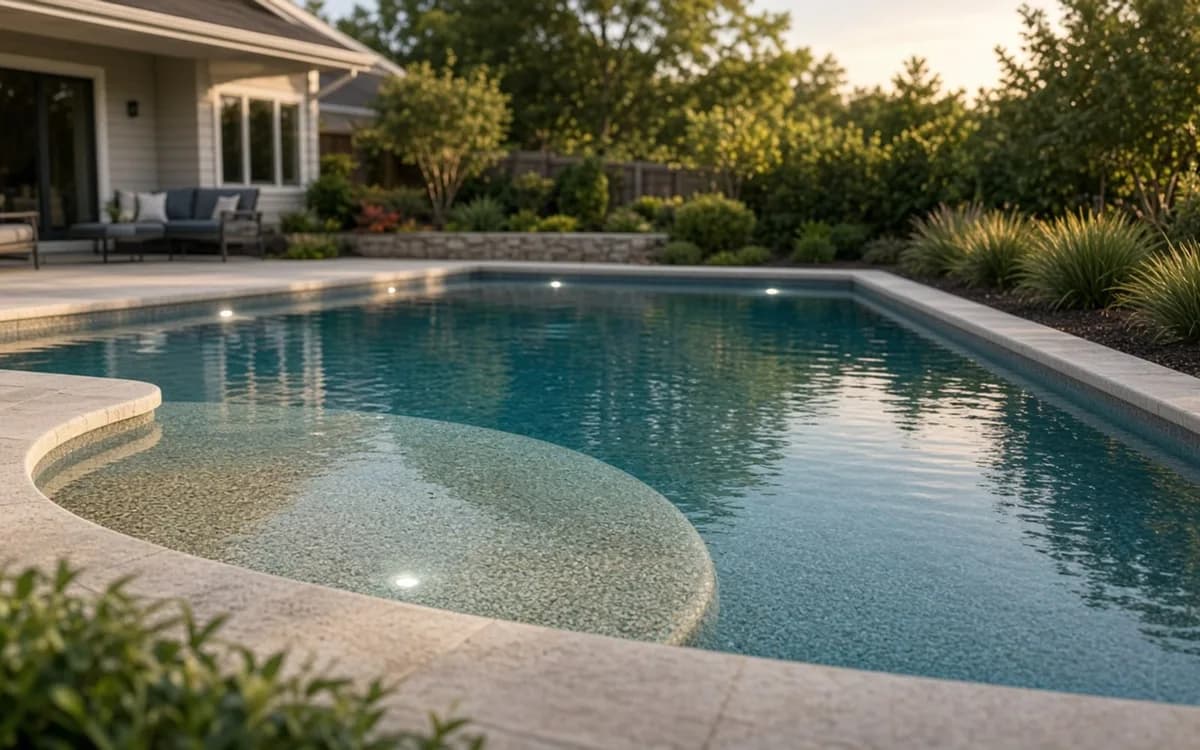
Busy. Pool Corporation, the largest pool products distributor, reported on its Q4 2025 call that remodel work is 22% of U.S. pool product sales against 14% for new builds, with the same mix in 2024, because the installed base, 7.2% of occupied U.S. homes or about 9.6 million by our analysis of the EIA's 2024 household survey, generates far more renovation spending than new construction. PHTA's Q4 2024 Pulse Survey found 49% vs 19% on remodel revenue, the strongest construction segment.
PHTA's Q3 2025 survey showed the same tilt, 42% up against 21% down, with margins flat. For an owner that means remodelers are booked in spring and priced firmly, but responsive to a well-scoped request in fall and winter when a drained pool is no loss. Read the review guide to check a contractor's record and the regional notes for the season that fits your climate.
Opendoor's May 2026 analysis, citing Zillow data, puts a pool in good condition at 5–8% of home value nationally and 10 to 15% or more in the Sun Belt, and estimates major repairs at $5,000 to $15,000 per event. A pool with a rough interior, a missing tile line and a heater that does not fire is a negotiating point for the buyer, not a premium. Keeping it in saleable shape protects a five-figure slice of equity.
That is also the case for doing the work before listing rather than crediting it. A replaster at Shasta's $3,500 to $6,500 or a waterline retile at $1,500 to $2,500 reads as a maintained pool in photos; a $10,000 credit reads as a problem. The renovation polls show which upgrades other owners prioritized before a sale.
Describe the symptom, the pool's age and finish, and what you have already ruled out. Attach photos of the worst area, the waterline, the coping joint and the equipment pad with model labels visible. Ask each contractor which problems they have diagnosed and which remain assumptions, what preparation is included under the new finish, who assesses whether the pool can be drained safely, and what startup and care conditions the finish warranty requires.
Then ask for required repairs and elective upgrades as separate lines. A proposal that folds a hollow-spot repair, a new light and a saltwater conversion into one 'remodel' number cannot be compared with one that lists them. The renovation quiz checks whether you know the facts a contractor assumes you do, and the estimate request page lists what to include.
Homeowner polls
Vote to see live results from other homeowners planning the same project.
The symptom decides which scope to price first.
No votes yet. Yours will be the first. · saved on this device
No votes yet. Yours will be the first. · saved on this device
No votes yet. Yours will be the first. · saved on this device
 Free toolPool resurfacing and renovation cost calculator
Size, material tier and complexity in, a realistic budget range out.
 Free toolRenovation comparisons, decided by your pool's condition
Side-by-side tables for the decisions that change the price most.
 Free toolPool renovation quiz: nine facts to know before the first proposal
9 questions that show what you already know and what to check next.
 Free toolPool renovation polls
See what other planners chose and add your vote.
Drain-free tests first. Run your hand along the wall below the tile: a finish that feels like sandpaper, shows exposed aggregate or has soft spots that flake under a fingernail is at end of life. Stains that acid-wash off and a slightly dull surface are cleaning. Plaster older than about ten years with rough patches will usually not come back with chemistry, and Shasta's lifespan table gives standard plaster only 5 to 10 years.
No. Every interior finish, including plaster, quartz, pebble and tile, is applied to a dry, prepared shell. Paint and some epoxy coatings also need a dry surface. Draining is a step with its own risks on a high water table, which is why the proposal should name who checks groundwater and who is responsible if the shell lifts.
Evaporation rises with heat, wind and low humidity, and a quarter inch a day is normal in a hot dry week. Beyond that, put a bucket of pool water on the step, mark both levels and compare after 24 hours with the pump off, then on. If the pool drops more than the bucket, you have a leak, and whether it changes with the pump running tells you whether it is plumbing or shell.
No. A vinyl pool gets a new liner, not a new finish. HomeAdvisor's 2026 guide puts liner replacement at an average of $2,588, with in-ground liners $1,200 to $2,100 plus labor, and Bob Vila gives liners 5 to 10 years, or 10 to 12 with care. The resurfacing page covers liners separately from plaster and pebble finishes.
Usually for anything involving electrical work, a new heater with a gas line, structural changes or a new barrier, and sometimes for a full resurfacing. HomeAdvisor lists tile permits at $50 to $300. A replaster alone often does not require one, but rules vary by city, so ask the contractor which items in the scope trigger a permit and who pulls it.
Waterline tile and an acid wash, if the finish underneath is sound. Shasta prices waterline retiling at $25 to $30 per linear foot, or $1,500 to $2,500 for a typical pool, and it is the first thing the eye sees. Add LED lights at Bob Vila's $450 to $1,700 and the pool photographs as renovated for well under $5,000. If the plaster is rough, none of this substitutes for resurfacing.
It is the cheapest time to do it, because the equipment pad is already open. HomeAdvisor's 2026 guide prices conversion at $500 to $2,500 and notes about $50 a year in added electricity, with salt cheaper than chlorine over time. Check that the heater and any metal fixtures are salt-rated and that the new deck or coping material tolerates salt splash.
Describe the pool, the symptom and the scopes you want priced, attach photos, and matched independent pool professionals in your area respond with written proposals. It is free and there is no obligation to hire. The proposals should separate diagnosed repairs from elective upgrades; if one does not, ask for it before comparing.




 LocationsRegional planning notes
How climate, codes and prices change a project across U.S. regions.
 ArticlesPlanning articles
Cost guides, checklists and mistakes to avoid before you sign.
 ReviewsHow to read reviews
What genuine contractor reviews look like and what they leave out.
Tell us the size, the condition of what is there now, and what you want to change. Pool Renewal Notes passes your request to independent local professionals, who reply with written, no-obligation estimates. The service is free to use.