How old is your pool pump, and what type?
EIA found 48% of pool homes without a variable-speed pump.
No votes yet. Yours will be the first. · saved on this device
Loading...
Pool Renewal Notes · Equipment Upgrades cost guide
Pool equipment costs range from a variable-speed pump that Pool Goods models as saving $345 to $735 a year, to a heater averaging $3,094 installed per HomeAdvisor, a salt conversion at $500 to $2,500 and an automatic cover at $3,594 to $10,782 per Fixr. Electrical and gas work often add as much as the unit, and running costs decide the long-run value.
Equipment is where purchase price and running cost pull in opposite directions. The cheapest pump to buy can be the most expensive to own, and a heater's fuel decides its bill far more than its sticker. The installation side adds its own variables: circuits, gas lines, clearances and permits that can equal the price of the unit. A budget that ignores either side will be wrong.
The cost table and calculator give per-item figures. This guide covers installed cost, hookup extras, payback logic, timing, which items to prioritize and sample pad budgets. The equipment service page covers sizing and compatibility in detail. Every figure below names its publisher so you can check the edition. Local rates move every line.
| Item | Low | High | Unit | Notes |
|---|---|---|---|---|
| Variable-speed pump, installed | $1,200 | $2,500 | flat | Payback 1 to 3 years (Pool Goods 2026) |
| Heat pump, installed | $2,500 | $7,500 | flat | HomeAdvisor 2026 |
| Gas heater, installed | $1,500 | $6,000 | flat | Plus gas line; 7 to 12 year life |
| Solar heating system | $2,500 | $9,500 | flat | Up to 30 years; no on-demand heat |
| Saltwater conversion | $500 | $2,500 | flat | HomeAdvisor 2026; cell $200 to $700 every 5 to 7 years |
| Automatic safety cover | $3,594 | $10,782 | flat | Fixr 2024 |
| LED light retrofit | $450 | $1,700 | per fixture | Bob Vila 2026 |
| Electrical subpanel | $400 | $1,800 | flat | When panel capacity is short |
A variable-speed pump costs more than a single-speed unit, but Pool Goods' May 2026 modeling shows savings of about $345–$735 per year depending on pool size, with a one to three year payback. ENERGY STAR notes an old pump can cost up to $310 per year to run. And since July 19, 2021, most new residential pumps above one total horsepower must be variable speed anyway.
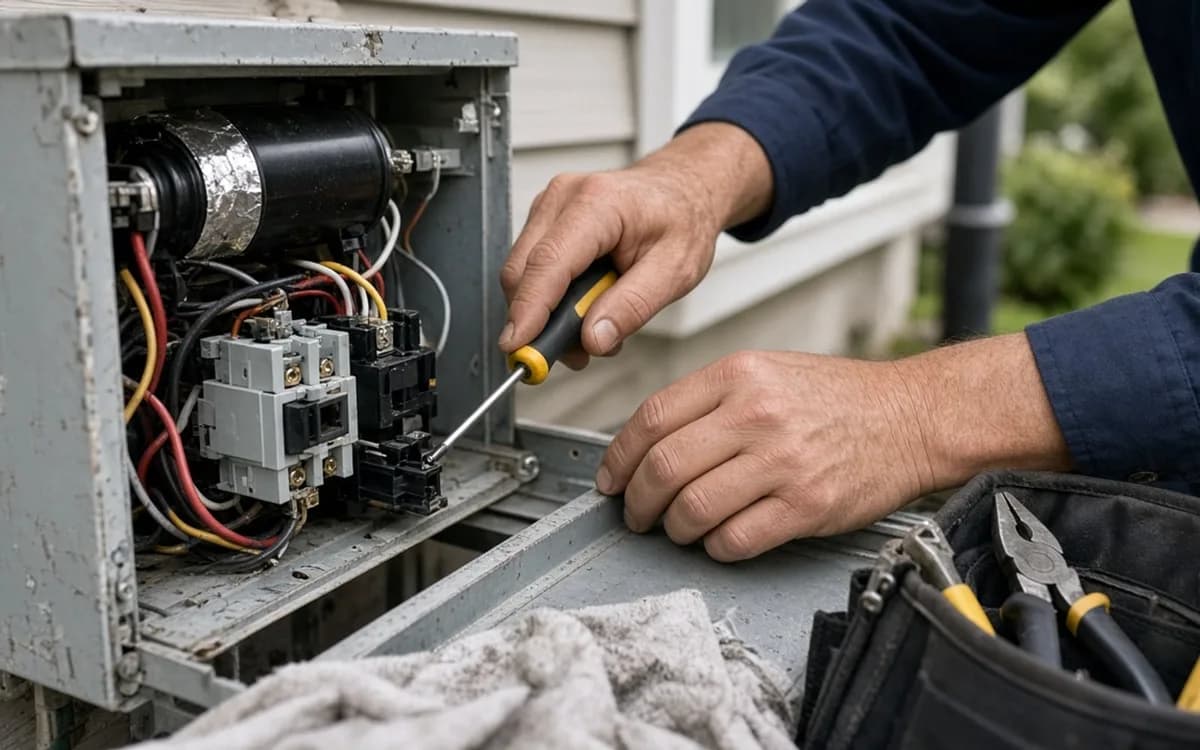
Installation is usually a few hours: re-plumbing unions, wiring to the existing circuit and programming a low filtration speed and a higher cleaning speed. If the circuit lacks current ground-fault protection, an electrician may need to add it, which is a separate line. Bob Vila gives pumps a life of 8–12 years, so an older single-speed pump is often close to replacement regardless.
HomeAdvisor's 2026 average heater installation is $3,094, with heat pumps at $2,500 to $7,500, gas at $1,500 to $6,000 and solar at $2,500 to $9,500. Fixr's running-cost estimates, $200–$1,800 vs $800–$6,000 per year for heat pump against natural gas, show why fuel choice matters more than purchase price once a heater is used steadily for several seasons.
Hookup costs vary widely. A heat pump may need a dedicated circuit and possibly a subpanel if the main panel is full. A gas heater may need a larger gas line and trenching from the meter, plus venting clearances. Either hookup can exceed the price difference between units. Ask every installer to list the hookup as a separate line so you can compare total installed cost rather than unit price. A gas heater that looks cheaper can end up costing more once a new line is trenched.
| Equipment | Installed reference | Running cost or saving |
|---|---|---|
| Variable-speed pump | More than single-speed | Saves $345 to $735 a year (Pool Goods 2026) |
| Heater | $3,094 average (HomeAdvisor 2026) | $200 to $1,800 heat pump vs $800 to $6,000 gas (Fixr 2025) |
| Salt conversion | $500 to $2,500 (HomeAdvisor 2026) | Lower consumables; cell replacement |
| Automatic cover | $3,594 to $10,782 (Fixr) | Cuts evaporation and heat loss |
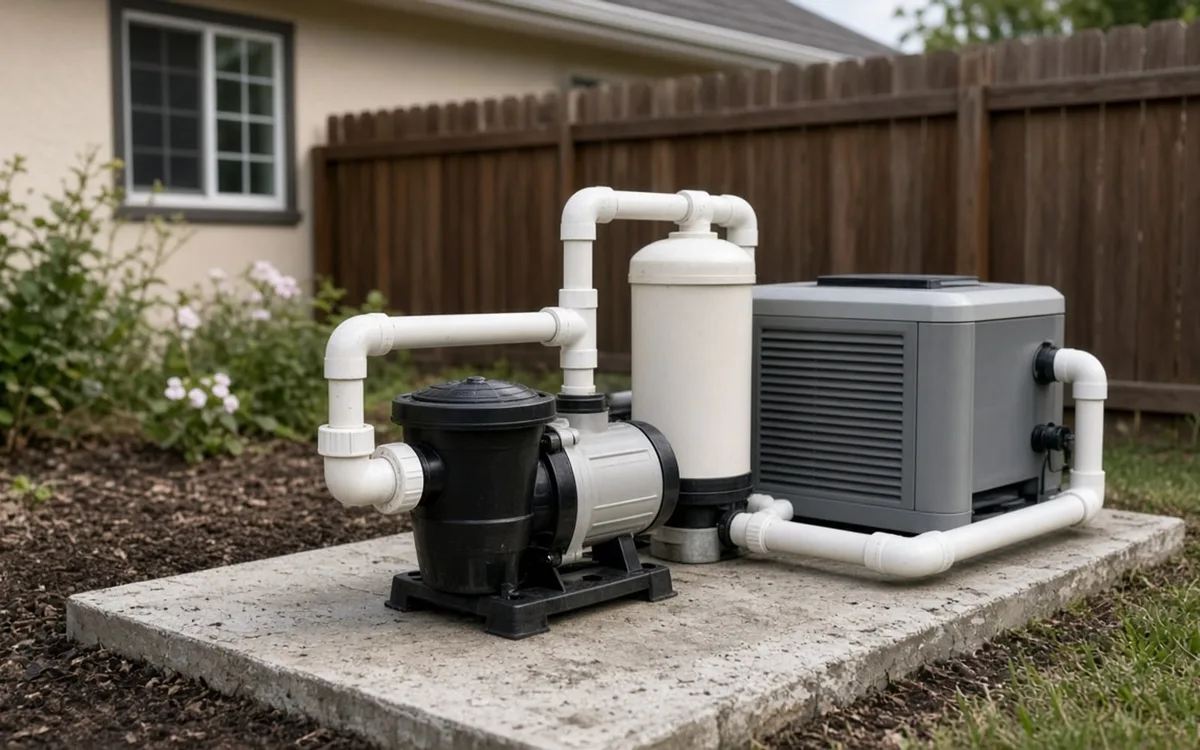
HomeAdvisor prices a salt conversion at $500–$2,500, and Fixr puts a generator at $1,500–$2,500, with replacement cells every several years at $200 to $700. Savings on chemicals are real but modest, so the conversion is mostly a convenience purchase. Check the heater exchanger and coping for salt tolerance before adding it to the budget, since incompatibility creates later costs.
Fixr prices an automatic cover at $3,594–$10,782. A cover reduces evaporation, heat loss and debris, which lowers heating and cleaning costs, and it adds a rated safety layer. Bob Vila prices LED lights at $450–$1,700 in a remodel; LED fixtures draw far less power than incandescent lights and last much longer, which offsets part of their price over time.
Electrical extras include new circuits, ground-fault protection, subpanels and bonding verification. Gas extras include line upsizing, trenching and venting. Permits and inspections add fees and scheduling time, and an older pad may need wiring brought up to the code edition in force when new equipment is installed. None of these appears in a unit price, so budget them explicitly from the start. An electrician's walk-through before bids arrive can turn several unknowns into known lines.
Access and layout matter as well. A crowded pad may need re-plumbing so each unit has service clearance and unions for future removal. Moving equipment to a new location adds plumbing and electrical runs and sometimes trenching across the yard. The permits guide explains which of these items commonly require inspection and how that affects the schedule.
Installers are busiest in spring when pools open and failed equipment is discovered. Replacing a unit that dies in peak season can mean waiting for an appointment or accepting whatever model is in stock, which is rarely the most efficient one. Planning replacements before failure lets you choose the model, compare bids and schedule the work at a convenient time without paying for urgency. Note each unit's install year so you can see replacements coming.
Pairing equipment with a planned renovation adds further savings. The pad is already open, permits and inspections can be combined, and a new variable-speed pump can circulate continuously during a new finish's cure. If a pump or heater is within a couple of years of its expected life, replacing it alongside a resurfacing or remodel is usually the most efficient approach.
Prioritize the pump. It has the fastest payback and affects every other item on the pad. Our analysis of EIA's 2024 household survey found 48.2% of pool homes still without a variable-speed pump against 47.7% with one, so most owners reading this have the opportunity. Next, address a failing heater, choosing the fuel based on how you swim and your climate rather than replacing like for like by default.
Defer automation, lighting upgrades and a salt conversion if money is limited; they improve convenience but pay back slowly or not at all. A cover deserves an early look if you heat the pool, as the 35.8% of pool homes reporting a heating fuel in our EIA analysis do, because it cuts heating costs substantially and makes a smaller heater viable. The salt versus chlorine comparison helps decide whether a conversion belongs in this round.
The sketches below combine the national references above into three common pad plans. They are planning figures only; local electrical and gas work can move totals substantially, and your pool's size affects both pump and heater sizing. Use them to see which tier fits your goals, then ask installers to price your specific pad from photos and a site visit. Budget the electrical line generously on older pads.
Compare heater options on the heater comparison before choosing a fuel, since the running-cost gap usually outweighs the purchase gap. When you are ready, send photos of the pad with labels readable through the estimate request so each installer prices the same starting point and lists hookups separately. Ask for an estimated annual running cost with each bid.
| Budget sketch | Scope | Planning note |
|---|---|---|
| Efficiency first | Variable-speed pump, schedule programming | Fastest payback (Pool Goods 2026) |
| Season extension | Pump plus heat pump or gas heater | Add a heater near HomeAdvisor's $3,094 average plus hookup |
| Full pad | Pump, heater, salt system, LED lights, automation | Add each line from the table; electrical often significant |
By the numbers
Planning figures from published U.S. sources; every card links to where the number came from.
$345–$735 per year
A variable-speed pump saves about 65%, or $345–$735 a year by pool size
Pool Goods' May 2026 modeling shows a large 25,000+ gallon pool dropping from about 7,000 kWh to 2,400 kWh a year, with the pump premium paid back in 1–3 years. High-rate states like Hawaii see savings above $1,700 a year.
Pool Goods, Variable Speed Pool Pump Energy Savings by Pool Size (2026)$310 per year
An old pool pump can be a home's second-largest energy user at up to $310 a year
ENERGY STAR says certified in-ground pumps use 20% less energy than the federal baseline and pay back in under two years, and cutting filter run time from 24 to 6 hours a day cuts pump energy 75%. A pump swap is the cheapest equipment upgrade with a measurable bill impact.
ENERGY STAR, Pool Pumps (2026)$3,094
Heater installation averages $3,094; gas units last 7–12 years, solar up to 30
HomeAdvisor's 2026 guide prices heat pumps at $2,500–$7,500, gas at $1,500–$6,000 and solar at $2,500–$9,500. If your gas heater is past ten years, a replacement is usually a better buy than another repair.
HomeAdvisor, Pool Heater Installation Cost (2026)$200–$1,800 vs $800–$6,000 per year
A heat pump costs $200–$1,800 a year to run versus $800–$6,000 for natural gas
Fixr's 2025 heater guide (national average $3,500) shows propane can reach $12,000 a year while solar runs $0–$120. Swapping an old gas heater for a heat pump is one of the highest-payback equipment upgrades in warm climates.
Fixr, Pool Heater Installation Cost (2025)The calculator uses the same pool renovation benchmarks as this guide. Set the size and tier, then request a written estimate to check it against a real proposal.
Homeowner polls
EIA found 48% of pool homes without a variable-speed pump.
No votes yet. Yours will be the first. · saved on this device
No votes yet. Yours will be the first. · saved on this device
No votes yet. Yours will be the first. · saved on this device
If the old pump is single-speed and runs many hours a day, the energy savings often justify early replacement; Pool Goods models a one to three year payback. If the old pump is already efficient, runs only a few hours or the season is very short, the case is weaker and you can wait for failure.
It depends on the main panel's capacity, the distance to the pad and local labor rates, and it can add noticeably to the electrical line when the existing panel has no room. Ask the installer or an electrician to assess the panel before quoting, so the subpanel appears as a known line rather than a change order.
On heated pools, they recover a meaningful share of their cost through reduced heating, evaporation and chemical use, and they add a safety layer. On unheated pools, the savings come mainly from less water loss and cleaning. Whether that equals the purchase price depends on climate, usage and how consistently the cover is closed.
Fixr and Bob Vila give cells roughly five to seven years, depending on usage, water chemistry and maintenance. Replacement runs $200 to $700 per Fixr, so budget it as a recurring cost. Keeping pH and calcium in range and cleaning scale off the plates extends cell life noticeably.
Plumbing a pump may be within reach for an experienced homeowner, but electrical and gas work typically require licensed professionals and permits. Improper installation can void manufacturer warranties, fail inspection and create shock or gas hazards around water. Most owners save more by choosing efficient equipment than by self-installing it.
For pools with a spa, water features or a heater you want to manage remotely, automation adds real convenience and can help hold efficient schedules. On a simple pool, a programmable variable-speed pump covers most of what automation does. Budget automation as a convenience item and add it after the pump and heater decisions.
The pump first, then any heater near the end of its life, then the filter if it is undersized or worn. Safety items such as the main drain cover should be handled whenever the pool is drained, regardless of the equipment plan. Doing these in the remodel shares permits and avoids a second service visit.
 Pool Resurfacing · Cost guideHow much pool resurfacing costs, and where the money goes
Pool resurfacing averages about $11,000 per HomeAdvisor's 2026 guide, with most jobs between $6,000 and $15,000.
 Tile & Coping Replacement · Cost guidePool tile and coping costs, from a waterline band to a new edge
Waterline tile runs $25 to $30 per linear foot per Shasta Pools, or about $1,500 to $2,500 for a small pool; We Fix Ugly Pools gives $15 to $60 per foot depending on tile.
 Complete Pool Remodel · Cost guideBudgeting a complete pool remodel line by line
A pool remodel averages about $10,483 per Bob Vila and $10,482 per Angi, but those figures describe modest lists.
 Service guideEquipment Upgrades
Equipment upgrades replace or add the pump, filter, heater, sanitizer, lights, automation and safety hardware on an existing pool.
Service guideComplete Pool RemodelA complete pool remodel coordinates several diagnosed repairs and desired changes, typically interior finish, tile and coping, deck, equipment and features, into one sequence with one drain cycle and one contractor accountable.
Service guidePool ResurfacingPool resurfacing replaces a worn interior finish on a concrete pool with new plaster, quartz, pebble aggregate or tile, or replaces the liner on a vinyl pool.
 Free toolPool resurfacing and renovation cost calculator
Size, material tier and complexity in, a realistic budget range out.
 Free toolRenovation comparisons, decided by your pool's condition
Side-by-side tables for the decisions that change the price most.
 Free toolPool renovation quiz: nine facts to know before the first proposal
9 questions that show what you already know and what to check next.
 Free toolPool renovation polls
See what other planners chose and add your vote.
Tell us the size, the condition of what is there now, and what you want to change. Pool Renewal Notes passes your request to independent local professionals, who reply with written, no-obligation estimates. The service is free to use.