What total budget are you planning?
Angi's 2026 benchmark for a pool remodel is $1,600 to $30,000, average $10,482.
No votes yet. Yours will be the first. · saved on this device
Loading...
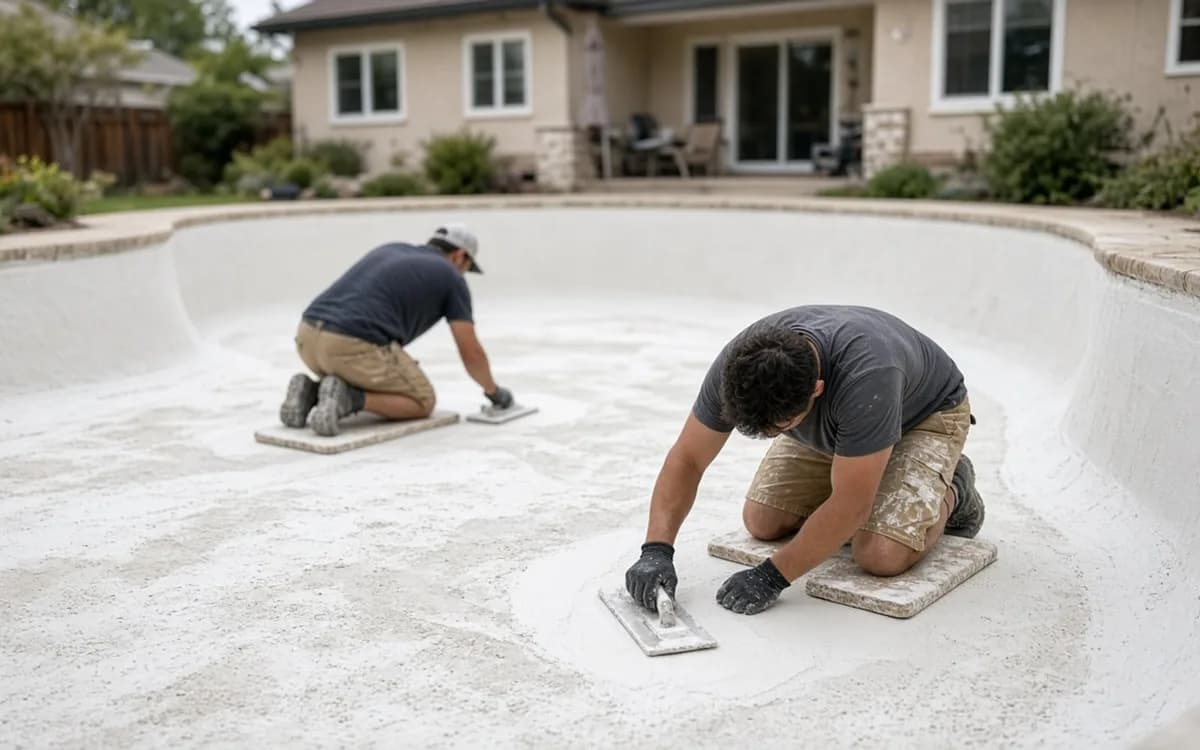
Pool Renewal Notes · Costs
In 2026 a pool resurfacing averages about $11,000 per HomeAdvisor, a waterline retile runs roughly $1,500 to $2,500 per Shasta Pools, coping costs $30 to $50 per linear foot per Bob Vila, and a remodel averages around $10,500 with multi-scope jobs far higher. Preparation, finish grade, access, region and hidden shell damage move each number more than the headline average suggests.
By Pool Renewal Notes editorial · Updated 2026-09-25
A national average is a starting point for a conversation, not a price. Pool renovation averages hide an unusually wide spread because the same word covers a replaster on a small backyard pool and a reshaped shell with new tile, coping, deck and equipment. This guide breaks the spend into scopes, attributes each range to its publisher, and then explains the forces that push a specific proposal above or below those ranges.
Use it alongside the renovation calculator, which prices an interior by square footage and finish grade, and the per-service cost pages such as resurfacing costs. Figures here are 2025 and 2026 editions; regional and site-specific factors can move any of them by a third or more. Where a figure comes from a company that sells the work, the text says so.
The interior is the anchor. HomeAdvisor's 2026 guide puts resurfacing at an average of $11,000, and Shasta Pools prices a whole-pool replaster at $3,500–$6,500, quartz at $7,000 to $10,000 and pebble at $6,000 to $15,000. Vinyl pools follow a different path: HomeAdvisor's liner replacement average is $2,588. Shasta puts a full tile interior at $15,000 to $30,000, the top tier of interior spending and a separate conversation from resurfacing.
At the edge, Shasta prices waterline tile at $25–$30 per linear foot and Bob Vila prices coping at $30–$50 per linear foot. A full interior tile job is a separate tier, with HomeAdvisor's installation range at $3,000–$20,000. For the whole package, Bob Vila's remodel average is $10,483 and Angi's is $10,482, both describing smaller lists than a full multi-scope renovation.
| Scope | 2026 reference range | Publisher |
|---|---|---|
| Plaster replaster, whole pool | $3,500 to $6,500 | Shasta Pools |
| Pebble aggregate, whole pool | $6,000 to $15,000 | Shasta Pools |
| Waterline tile, 10 x 20 pool | $1,500 to $2,500 | Shasta Pools |
| Coping replacement | $30 to $50 per linear ft | Bob Vila |
| Deck replacement, 900 sq ft | $5,400 to $13,500 | Shasta Pools |
| Heater installed | About $3,094 average | HomeAdvisor |
| Remodel, typical | $5,597 to $15,775 | Bob Vila |
Preparation is the biggest hidden lever. A full chip-out to gunite costs more labor than a bond coat over sound plaster, and a pool with many hollow spots, rusted rebar or cracks adds repair time before any finish goes on. Finish grade is the visible lever: moving from plaster to pebble roughly doubles the interior line in Shasta's figures. Size and shape follow, since a freeform pool with benches, steps and a tanning ledge has more trowel work per square foot.
Access and site conditions come next. A backyard reachable only through a narrow side gate means hand-carrying material, and a high water table means dewatering before draining. Prices come down with a simple rectangle, a sound shell, standard plaster or quartz, easy truck access and an off-season start. HomeAdvisor prices plaster at about $5,500 per 1,000 sq ft against $6,500 for aggregate; on a pool, finish grade is the safer place to economize than preparation.
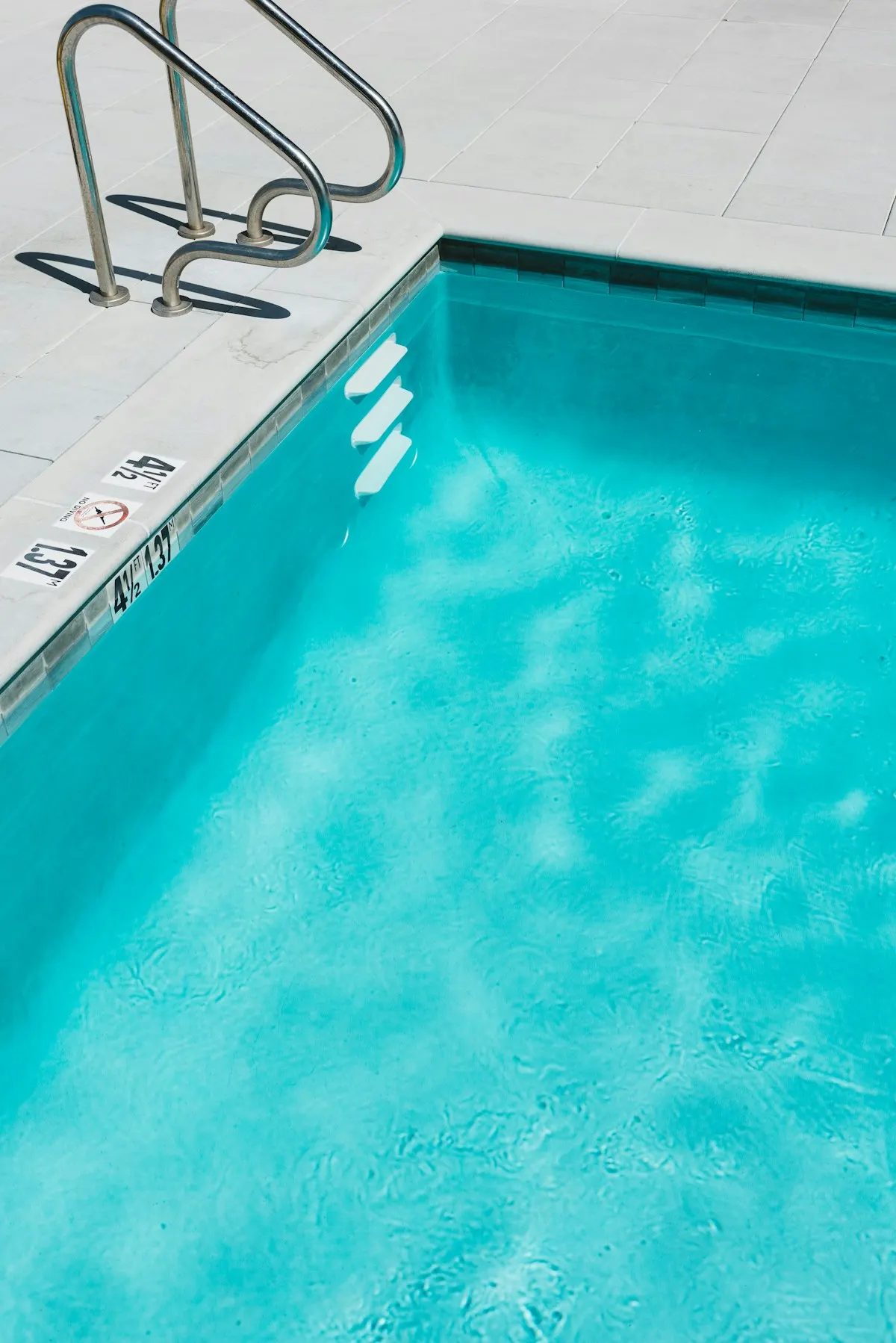
Bob Vila's 2026 remodel guide splits a typical project at about 55% materials and 45% labor, and Shasta notes labor makes up roughly half of a tile job. HomeAdvisor lists resurfacing labor at $45–$65 per hour. Those shares shift by scope: an equipment swap is mostly the unit, a waterline retile is mostly labor, and a pebble interior sits in between because the aggregate is expensive and the application takes a skilled crew.
The labor share explains why two proposals for the same finish differ. A contractor who plans a three-person crew for three days and one who plans five people for two days may land at similar totals, but the one who budgets more days for preparation is usually buying a longer finish life. When comparing, ask how many working days each proposal assumes for chip-out and repairs, not just for application.
Labor rates follow local wages, but climate adds its own lines. In freeze regions, frost-rated waterline tile, epoxy grout and a careful expansion joint add material cost, and the short work window concentrates demand into a few months. Our analysis of EIA's 2024 household survey found 73.4% of Northeastern pool homes without a variable-speed pump, against 48.2% nationally, so equipment lines are more common in proposals there.
In Florida and along the Gulf Coast, groundwater control before draining can add a dewatering line that inland owners never see. In the hard-water Southwest, bead-blasting scale and a startup chemistry plan appear as separate items, and sun-resistant finishes are the norm. Western pads are newer, with our EIA analysis finding 76.95% of pool homes already on variable-speed pumps against 47.7% nationwide, which shifts spending toward heaters, covers and finishes.
Hollow spots larger or more numerous than the walk-around suggested, a crack in the bond beam behind popped tile, rusted rebar showing through the old finish, and a light niche or skimmer that leaks once it is exposed. None of these can be priced precisely before draining, which is why a sound proposal includes a per-square-foot allowance for hollows and a unit price for beam repair instead of a vague promise to handle surprises.
Other costs sit outside the contract entirely. The refill is usually the owner's water bill. Permits for electrical, gas or barrier work may be separate. Startup chemicals, a new cleaner that fits the new floor, and repairs to landscaping crushed by equipment all land on the owner. HomeAdvisor's annual upkeep range of $960–$1,800 per year is also worth revisiting, because a new finish often comes with a tighter chemistry routine for its first month.
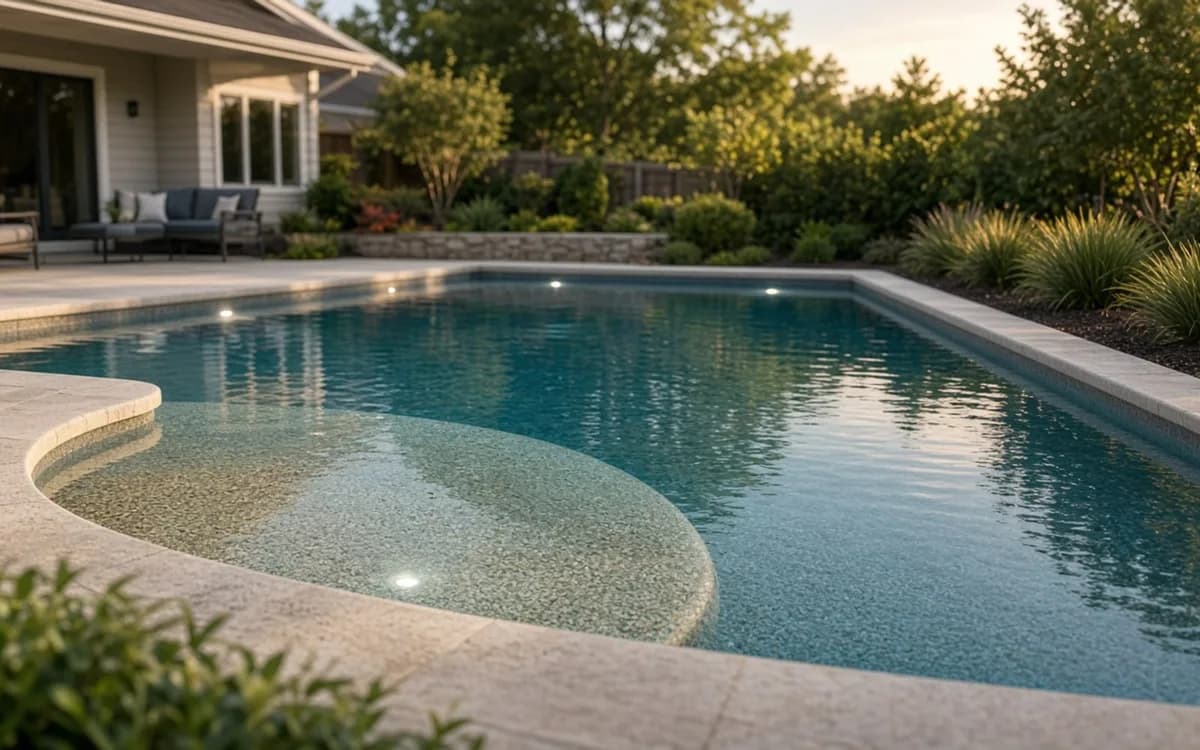
The pump usually does. Pool Goods' May 2026 modeling shows a variable-speed pump saving about $345–$735 per year against a single-speed unit, with a payback of one to three years, and Bob Vila gives pumps a life of 8–12 years. Since July 19, 2021, most new residential pumps above one total horsepower must be variable speed anyway.
Heaters are a fuel decision more than a payback. HomeAdvisor's installed average is $3,094, while Fixr's running-cost ranges of $200–$1,800 vs $800–$6,000 per year for heat pump against gas decide the long-run bill. Salt systems cost $500–$2,500 to add per HomeAdvisor and pay back slowly through cheaper consumables. Put each on its own line so it can be struck without touching the interior price.
All at once, when two or more items need the pool dry. Each drain cycle carries HomeAdvisor's draining charge, a refill, new startup chemistry and weeks without swimming. CostHelper's user reports put 3 days vs 11 days for a replaster against a full upgrade, so the second visit costs almost as many days as the first. Bundling also lets one crew fix the joint, the beam and the drain cover while everything is open.
Staging makes sense when only one item is due or the budget truly will not stretch. Waterline tile can wait a year because it only needs the level lowered, and equipment can wait because it never needs a drain. Deferring a finish that is already delaminating, however, tends to cost more: patches over a failing surface are temporary, and acid washes remove finish thickness each time.
Look for the diagnosis first: what was tested and what was found. Then check the measured quantities, meaning interior square footage, linear feet of tile and coping, and deck area. Next, the preparation method and hollow-spot allowance, the finish product by manufacturer and line, the drain and groundwater responsibility, equipment by model number, and the startup days included. Finally, check payment milestones, permits and who pulls them.
A bid missing any of those lines is not necessarily worse, but it is not comparable yet. Ask for the missing lines in writing before comparing totals. When the bids line up, compare the required section first and the elective section second. The plaster versus pebble comparison helps if the biggest difference between bids is the finish grade, and the estimate request lets you send the same brief to more pros.
| Bid line | What a complete bid states | Why it matters |
|---|---|---|
| Diagnosis | Tests performed and findings | Separates repair from cosmetic work |
| Quantities | Sq ft of interior; linear ft of tile and coping | Prices differ most on measurement |
| Preparation | Chip-out or bond coat; hollow allowance | Decides finish life |
| Finish product | Manufacturer and product line | "Pebble" spans several price points |
| Drain and refill | Who drains, checks groundwater, pays water | Risk and hidden cost |
| Startup | Days of brushing and chemistry included | Often a warranty condition |
Homeowner polls
Angi's 2026 benchmark for a pool remodel is $1,600 to $30,000, average $10,482.
No votes yet. Yours will be the first. · saved on this device
No votes yet. Yours will be the first. · saved on this device
No votes yet. Yours will be the first. · saved on this device
Mostly measurement and preparation. One contractor may price 850 square feet and another 1,050 for the same pool, and one may assume a bond coat where another prices a full chip-out with a hollow-spot allowance. Finish product lines also vary within a category. Ask each bidder to state square footage and preparation method, and the spread usually narrows.
Generally not for a primary residence, since renovations are personal improvements. Improvements can add to the home's cost basis, which matters when you sell, and a pool installed for a documented medical need can be treated differently. Tax rules change and depend on your situation, so check with a tax professional rather than relying on a contractor's claim.
Many owners reserve roughly a tenth to a fifth of the interior line. The better protection is a proposal that prices hollow spots per square foot beyond an included amount and gives a unit price for beam repair, so a surprise has a known cost. Ask to see any additional damage before approving a change order.
Many do, through third-party lenders, and home equity lines are another route. Compare the rate and fees against paying cash for a smaller required scope now and electives later. Financing should not change the scope decision; a larger remodel is only cheaper per item if you actually needed those items.
It should, and the proposal should say so. Chip-out produces a lot of heavy debris, and hauling it away is a real line of labor and disposal fees. If a bid is silent on debris removal, ask whether it is included, whether a dumpster will sit on your driveway, and who repairs any lawn damage from the equipment.
An attached spa adds interior area, typically finished in the same product at the same time, and often adds tile at its spillway and waterline. It also adds complexity at the benches and jets. Ask for the spa's square footage and tile listed separately so you can compare it across bids.
Not necessarily. PHTA survey data shows remodel demand strong with margins flat, so contractors rarely discount. What improves in the off-season is scheduling: shorter waits, fewer gaps between trades and more attention during startup. That still has value, because a tightly run schedule protects the finish.
Sometimes. On a pool with a sound, well-adhered old finish and few hollows, a bond coat can perform well and saves chip-out labor. It is the wrong choice over delaminating or heavily patched plaster. Ask the contractor to sound the walls and explain why they chose the approach, and check whether the finish manufacturer's warranty accepts it.
 Service guidePool Resurfacing
Pool resurfacing replaces a worn interior finish on a concrete pool with new plaster, quartz, pebble aggregate or tile, or replaces the liner on a vinyl pool.
 Service guideComplete Pool Remodel
A complete pool remodel coordinates several diagnosed repairs and desired changes, typically interior finish, tile and coping, deck, equipment and features, into one sequence with one drain cycle and one contractor accountable.
 Service guideEquipment Upgrades
Equipment upgrades replace or add the pump, filter, heater, sanitizer, lights, automation and safety hardware on an existing pool.
 Service guideTile & Coping Replacement
Tile and coping replacement renews the waterline band and the edge cap on the bond beam after the cause of the failure is understood.
 PlanningPlanning a pool renovation in the order the work actually happens
Plan a pool renovation by confirming the symptom, ruling out leaks and structural movement, deciding which scopes share one drain cycle, choosing a season that fits your climate, and sending a written brief that separates required repairs from wishes.
 MaterialsChoosing finishes, tile, coping and equipment that suit the pool you have
The right renovation materials depend on how long you will own the pool, your climate and water, and how the pool is used.
PermitsPermits and codes for pool renovation work, explained plainlyPermit rules for pool renovation vary by city and county, but electrical work, gas lines and heaters, structural changes, deck replacement and barrier changes commonly require a permit and inspection, while a like-for-like replaster often does not.
 Free toolPool resurfacing and renovation cost calculator
Size, material tier and complexity in, a realistic budget range out.
 Free toolRenovation comparisons, decided by your pool's condition
Side-by-side tables for the decisions that change the price most.
 Free toolPool renovation quiz: nine facts to know before the first proposal
9 questions that show what you already know and what to check next.
 Free toolPool renovation polls
See what other planners chose and add your vote.
Tell us the size, the condition of what is there now, and what you want to change. Pool Renewal Notes passes your request to independent local professionals, who reply with written, no-obligation estimates. The service is free to use.