What is your deck plan?
No votes yet. Yours will be the first. · saved on this device
Loading...
Pool Renewal Notes · Resurface the deck (overlay) vs Replace the deck
Resurface a pool deck when the slab is flat, drains away from the house and pool, and has only surface wear or hairline cracks. Replace it when it has heaved, slopes toward the house, pushes on the coping, or must be opened for new plumbing or electrical runs. SKIN Microplaster puts overlay savings at 40 to 60 percent, but only on a sound slab.
The deck is where pool renovations most often overspend or underspend. An overlay on a sound slab is one of the best values in a remodel; an overlay on a moving slab is money spent twice. The difference lies below the surface, in drainage, joints and soil, and a straightedge and a level reveal most of it.
This page covers slab conditions, lifetime cost, climate, the coping joint, resale and bid comparison. For how the deck fits into a full renovation sequence, see the remodel service page. The table on this page summarizes the factors; the sections below explain how to judge your own slab before asking for bids.
An overlay coats a sound slab at $3 to $15 per square foot and saves 40 to 60% over replacement, per SKIN Microplaster's 2026 guide. Replacement demolishes and re-pours at Shasta's $5,400 to $13,500 for 900 square feet, fixes slope, drainage and the expansion joint, and allows new plumbing underneath. The slab's condition decides it.
| Factor | Resurface the deck (overlay) | Replace the deck |
|---|---|---|
| Upfront cost | $3 to $6 overlay; $6 to $12 cool deck; $8 to $15 stamped, per sq ft (SKIN 2026); most jobs $3,000 to $12,000 | $2 to $6 demolition plus $5 to $15 concrete, $15 to $30 stamped, $20 to $40 stone, per sq ft (Shasta 2026) |
| Lifespan | 10 to 15 years overlay; 15 to 25 stamped (SKIN 2026) | Decades for the slab; surface wear over time |
| What it fixes | Surface wear, minor cracks, color, heat | Heave, slope toward house, cracked beam, drainage, plumbing runs |
| Appearance | Textured, stamped or cool-deck looks over the old shape | Any material or layout, including pavers or stone |
| Climate fit | Overlays can delaminate in freeze if the slab is wet or cracked | New joints and air-entrained mix handle freeze |
| Time out of service | Days; usable within a few days | 1 to 2 weeks; 28-day cure for full strength |
| Resale / ROI | Reads as refreshed | Reads as new; travertine or stone adds value in warm markets |
| Best for | Sound slab, cosmetic complaints, budget | Heaved or mis-sloped slab, failed joint at the beam, new plumbing needed |
Overlay wins when the slab is flat, drains away from the house and the pool, has only hairline cracks and simply looks tired or runs hot. SKIN Microplaster's savings of 40–60% are real in that case, and a cool-deck texture fixes the July temperature problem for a few dollars a foot. The expansion joint at the coping can still be cut and resealed under an overlay; insist on it.
Replacement wins when the deck has heaved, when it pushes on the beam, when water runs toward the foundation, or when new lines for a feature, a heater or lights must run beneath it. Shasta's guide agrees that resurfacing an intact slab is the best value and that a moving slab is not intact. The tile and coping page explains why a replaced deck with a proper joint protects the tile line for years.
Check four things. Flatness: lay a straightedge across sections and look for lips at control joints. Slope: pour water near the house and watch whether it runs away from the foundation and away from the pool. Cracks: hairline cracks are acceptable under an overlay; cracks with one side higher than the other or wider at one end suggest movement. The coping joint: a hardened or missing joint means the deck may be pushing on the pool.
If the slab passes all four, an overlay is realistic. If it fails any, the overlay will likely mirror the problem within a few seasons. Overlays bond to what is underneath, so they inherit its cracks and its slope. A contractor should confirm with a level and, where cracks look active, may recommend monitoring them for a season before deciding. Photographs with a ruler across the widest crack, taken a few months apart, are an easy way to track it. The tile and coping page explains how deck movement damages the bond beam.
SKIN Microplaster's May 2026 guide says resurfacing instead of replacing saves about 40–60%, with most overlay jobs between $3,000 and $12,000 and a 10 to 15 year life for standard overlays. Shasta Pools prices replacing a 900 square foot deck at $5,400–$13,500 plus demolition. SKIN sells overlay systems, so its savings estimate should be read as the favorable case.
Over twenty years, a sound slab may take one or two overlays and still cost less than replacement. A marginal slab may need an overlay and then replacement anyway, which costs more than replacing first. The decision therefore depends less on the price per square foot and more on whether the slab will stay still for the overlay's lifespan. When in doubt, a season of monitoring a suspect crack costs nothing and can save a wasted overlay. SKIN Microplaster says resurfacing instead of replacing saves 40–60%; on a suspect slab, a season's wait protects that.
| Factor | Overlay | Replacement |
|---|---|---|
| Typical job cost | $3,000 to $12,000 (SKIN 2026) | $5,400 to $13,500 for 900 sq ft (Shasta 2026) |
| Surface life | 10 to 15 years standard; longer stamped | Slab lasts decades; surface may be refreshed |
| Fixes drainage or slope | No | Yes |
| Allows new under-deck runs | No | Yes |
In freeze climates, water under an overlay can freeze and lift it, especially where the slab is already cracked or drains poorly. Air-entrained concrete, proper slope and working joints matter more than surface texture. If a Northern deck has heaved even slightly, replacement with better base preparation is usually the durable answer. In the Midwest, where frost depth is deep, heave at the pool edge is a common reason decks are replaced rather than resurfaced.
In hot climates, the main complaint is surface heat, and a light cool-deck overlay addresses it for a modest cost. Sun also fades dark overlays and sealers faster. In areas with expansive clay soils, seasonal movement can crack both overlays and new slabs; a contractor familiar with local soil should weigh in before either choice. Drainage details such as channel drains and slope away from the house matter in every climate.
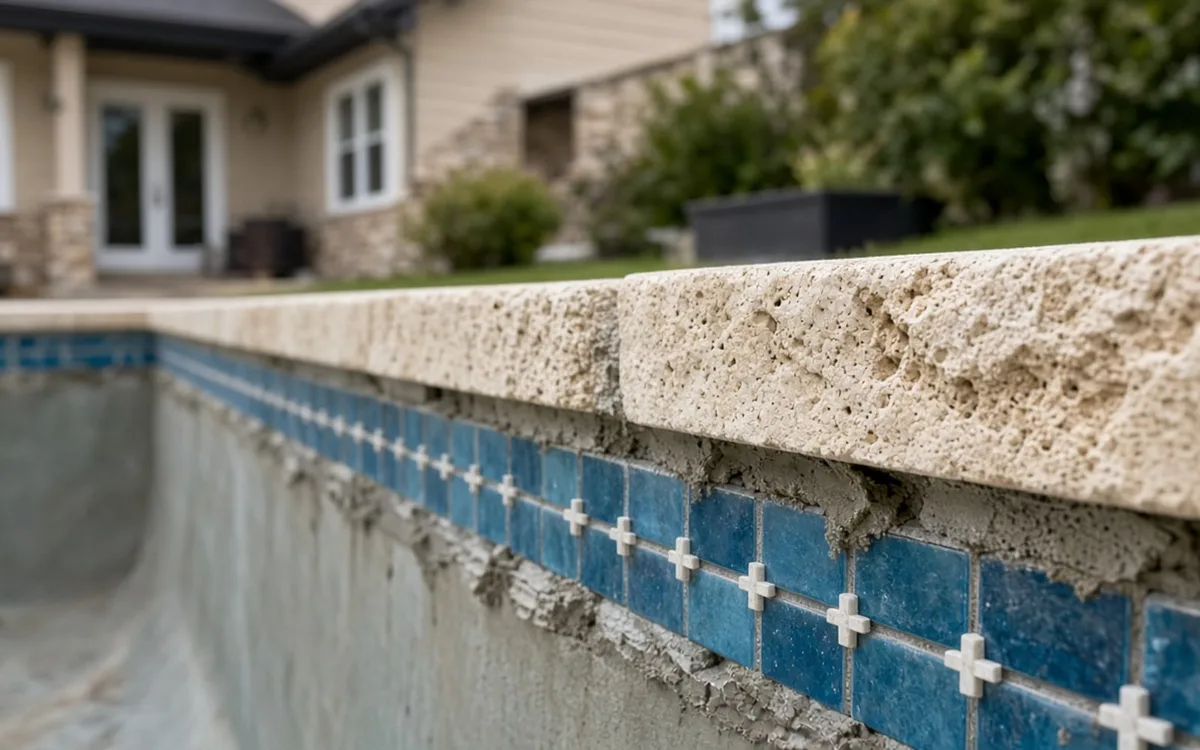
The expansion joint lets the deck move without pushing on the bond beam. When it fails, the deck loads the beam, and tile and coping start popping. An overlay poured across the joint without re-cutting it simply locks the problem in place. Replacement lets the joint be formed correctly from scratch.
Either way, the proposal should include cutting out old sealant, confirming the gap goes full depth, inserting backer rod and sealing with a flexible pool-rated product. On an overlay, the joint is re-cut through the new surface once it cures. It is a small line with a large effect. Bob Vila prices coping at $30–$50 per linear foot, and protecting that coping from deck pressure is the cheapest way to avoid paying for it twice.
Buyers mostly notice whether the deck is level, clean and free of trip hazards. A fresh overlay on a sound slab reads as refreshed and is usually enough. A new deck in stone or pavers reads as upgraded and can matter more in warm markets where the outdoor area is a major selling point. A deck that has heaved, whatever its surface, raises inspection flags. Opendoor estimates a pool in good condition adds 5–8% to home value, more in the Sun Belt, and a deck is where a refreshed outdoor area shows first.
If a sale is near and the slab is sound, the overlay usually returns more per dollar. If the slab is moving, replacement removes a problem a buyer's inspector will likely flag. Opendoor's figure that a well-kept pool adds 5–8% to home value depends on the whole pool area looking cared for, deck included.
Overlay mistakes: covering active cracks, ignoring drainage toward the house, pouring over the coping joint, and choosing a dark color that gets too hot to walk on. Replacement mistakes: skipping base preparation, failing to slope away from the pool and house, forgetting bonding requirements before the pour, and replacing the deck without planning future plumbing or conduit runs underneath.
Another common error is sequencing: replacing the deck after resurfacing the pool, which risks damaging the new finish. The deck work should come before the final interior finish in a combined project. Shasta Pools prices replacing a 900 sq ft pool deck at $5,400–$13,500, and the replaster versus remodel comparison explains why that sequencing favors a single coordinated project. Planning conduit and plumbing sleeves before a new pour avoids cutting a finished deck later.
Check the square footage, surface preparation method, crack repair approach, joint work, product and color, and expected life. For replacement, add demolition, base preparation, thickness, reinforcement, slope, drainage details and bonding inspection. Ask whether the price includes the joint at the coping and any required permit. Ask too for the expected life of the surface and the resealing interval, since both affect the ten-year cost.
Ask each contractor to explain why they recommend their approach for your slab specifically. A contractor who recommends an overlay on a slab you think has heaved should explain how they measured it. Likewise, a contractor recommending replacement for a flat, well-drained slab should explain what they found. Send the same photos and measurements to each through the estimate request so the bids are built on the same information.
Homeowner polls
No votes yet. Yours will be the first. · saved on this device
No votes yet. Yours will be the first. · saved on this device
Often, set in mortar or on a thin base over a sound slab, which raises the surface an inch or more. Door thresholds and the coping height must still work so water does not run into the pool. It costs more than an overlay and less than demolition plus new pavers.
Lay a straightedge across the joint at the coping and along the deck; a lip, a gap under the edge, or a slope back toward the house shows movement. Cracks that are wider on one side than the other and doors that no longer clear the deck are further signs. A contractor confirms with a level.
A light-colored cool-deck texture lowers surface temperature noticeably and adds grip; a dark stamped overlay does not. Ask for a sample panel in full sun on a hot afternoon before choosing color.
Only slightly. Overlays are thin and cannot meaningfully change slope across a large area. If water runs toward the foundation, replacement or at least regrading and drainage correction is usually required. Adding a channel drain can help in some layouts, but it does not fix a slab that has settled.
Many overlays allow foot traffic within a day or two and full use within several days, depending on product and weather. Furniture and heavy loads may need longer. The contractor should give written cure times. Cooler, damp weather slows curing, so plan the pool opening accordingly.
Yes. Many codes require a perimeter bonding conductor around the pool under the deck, and inspectors often want to see it before concrete is poured. A deck replacement is the chance to install or verify it. An overlay leaves existing bonding untouched, so it neither fixes nor exposes gaps.
Before. Demolition, concrete trucks, saw cutting and overlay work all produce debris and impact that can scar a fresh finish. In a combined project the deck and coping joint are finished first, and the interior finish is the last wet step before the fill.
Many overlays benefit from resealing every few years, depending on sun exposure, traffic and product. Resealing maintains color and slip resistance. Ask the contractor for the product's recommended interval. Budget it as routine upkeep, like the expansion joint sealant. Skipping it shortens the overlay's life.
It can be, offering many patterns at lower cost than stone. It needs periodic sealing and can be slippery if sealed with a glossy product. Choose a slip-resistant additive and a lighter color in hot climates. Shasta prices stamped concrete at $15 to $30 per square foot.
 ComparisonStandard plaster vs Pebble aggregate
Choose plaster when you expect to sell within a few years, want the smoothest feel or have a fixed budget; choose pebble when you will keep the pool for a decade or more, live with freeze-thaw or hard water, or want fewer drain cycles.
 ComparisonReplaster only vs Coordinated remodel
Replaster alone when the interior is the only diagnosed problem and the tile, coping, deck and equipment are sound.
 ComparisonElectric heat pump vs Natural gas heater
Choose a heat pump if you heat the pool steadily through a warm season, especially in the South, with a cover and a variable-speed pump.
ComparisonConvert to saltwater vs Stay on chlorineConvert to salt when the pool has a long season, compatible heater and fixtures, and salt-tolerant coping, and when you value softer water and fewer chemical purchases.
 ComparisonWaterline retile only vs Full interior retile
Retile only the waterline when the interior finish is sound and the goal is to fix popped, scaled or dated tile; it costs Shasta Pools' $25 to $30 per linear foot with the water lowered, not drained.
 Service guidePool Resurfacing
Pool resurfacing replaces a worn interior finish on a concrete pool with new plaster, quartz, pebble aggregate or tile, or replaces the liner on a vinyl pool.
 Service guideTile & Coping Replacement
Tile and coping replacement renews the waterline band and the edge cap on the bond beam after the cause of the failure is understood.
 Service guideEquipment Upgrades
Equipment upgrades replace or add the pump, filter, heater, sanitizer, lights, automation and safety hardware on an existing pool.
 Service guideComplete Pool Remodel
A complete pool remodel coordinates several diagnosed repairs and desired changes, typically interior finish, tile and coping, deck, equipment and features, into one sequence with one drain cycle and one contractor accountable.
 Free toolPool resurfacing and renovation cost calculator
Size, material tier and complexity in, a realistic budget range out.
 Free toolPool renovation quiz: nine facts to know before the first proposal
9 questions that show what you already know and what to check next.
 Free toolPool renovation polls
See what other planners chose and add your vote.
Tell us the size, the condition of what is there now, and what you want to change. Pool Renewal Notes passes your request to independent local professionals, who reply with written, no-obligation estimates. The service is free to use.